





Introduction
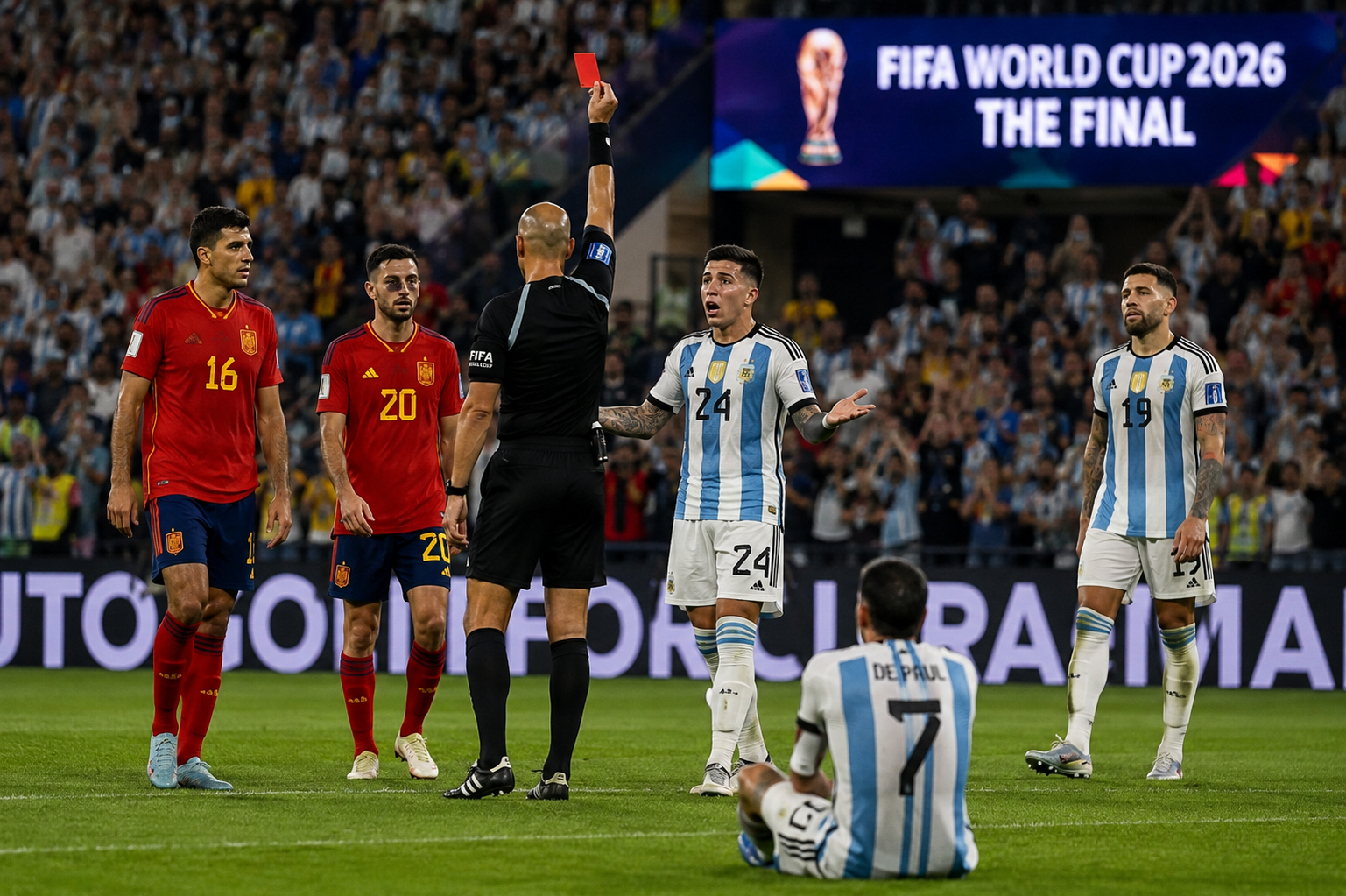
The FIFA World Cup 2026 Final delivered one of the tournament’s most dramatic moments when a crucial red card changed the course of the match between Spain and Argentina. What had been a tightly contested tactical battle suddenly became a test of resilience, discipline, and strategic adaptation. With millions of fans watching around the world, the dismissal forced Argentina to defend with ten men while Spain looked to capitalize on the numerical advantage. The incident immediately became the biggest talking point of the final and could prove decisive in determining the next world champion.
FIFA World Cup 2026 Final: Red Card Changes Everything
The FIFA World Cup 2026 Final had been a tense and evenly contested battle, with Spain controlling possession and Argentina remaining disciplined in defense. Both teams showed tactical maturity, limiting clear scoring opportunities while patiently waiting for mistakes.
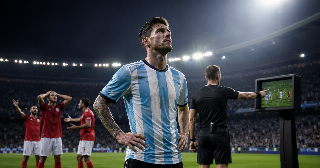
The match took a dramatic turn when Argentina received a red card following a dangerous challenge. After consulting with his officiating team, the referee decided to send the player off, reducing Argentina to ten men for the remainder of the contest.
The decision immediately changed the momentum of the final. Spain gained a numerical advantage and increased the pressure, while Argentina shifted its entire tactical approach to protect the scoreline.
The Red Card Incident
The sending-off came during a highly competitive phase of the match when both teams were battling intensely for control in midfield. The referee judged the challenge to be serious enough to warrant a straight red card.
Argentina’s players protested the decision, but after a brief discussion, the referee confirmed the dismissal. The stadium reacted instantly, with Spanish supporters celebrating while Argentine fans expressed frustration.
The incident quickly became one of the defining moments of the World Cup final.
Spain’s Tactical Response
After Argentina was reduced to ten players, Spain immediately adjusted its tactics.
The Spanish side increased possession, pushed its full-backs higher up the pitch, and committed more players into attack. Their objective was to stretch Argentina’s defensive line and create overloads in wide areas.
Spain also intensified its high press, making it difficult for Argentina to keep possession whenever they recovered the ball.
Quick passing combinations and constant movement between midfield and attack became even more important as Spain searched for the breakthrough goal.
Argentina’s Defensive Adjustment
Despite losing a player, Argentina remained organized and disciplined.
The team dropped into a much deeper defensive block, with midfielders helping the defenders to close every available space. Counter-attacks became less frequent as Argentina focused almost entirely on protecting its goal.
Every player worked harder to compensate for the numerical disadvantage. Communication, teamwork, and tactical discipline became essential as Spain continued to dominate possession.
The goalkeeper also played a crucial role by organizing the defensive line and making important saves whenever Spain created dangerous opportunities.
The Midfield Battle After the Red Card
The dismissal completely changed the midfield contest.
Spain enjoyed greater control of possession and dictated the tempo of the game with short passing and intelligent movement.
Argentina focused on interceptions, tackles, and preventing Spain from finding space between the lines.
Every second ball became increasingly important, while physical fatigue began to influence both teams as the match entered its decisive stages.
Key Moments Following the Dismissal
The final minutes became increasingly intense.
Spain created more attacking opportunities through crosses, quick passing combinations, and set pieces.
Argentina defended with determination, blocking shots, clearing dangerous deliveries, and remaining compact despite having only ten players.
The crowd witnessed an incredible display of resilience from Argentina while Spain continued searching for the winning goal.
Impact on the Final
Red cards are rare in FIFA World Cup finals, making this dismissal one of the most memorable moments of the tournament.
Playing with ten men against a possession-based team like Spain created an enormous tactical challenge for Argentina.
The incident not only changed the rhythm of the game but also forced both coaches to rethink their strategies during the closing stages.
Whether through substitutions, formation changes, or defensive organization, every tactical decision became increasingly important after the red card.
Final Thoughts
The FIFA World Cup 2026 Final will be remembered for far more than goals alone. The dramatic red card transformed the tactical battle and forced Argentina to display extraordinary defensive resilience against relentless Spanish pressure.
Spain attempted to use its numerical advantage through possession and attacking width, while Argentina relied on determination, teamwork, and disciplined defending to remain competitive.
Regardless of the final result, the red card became one of the defining moments of the FIFA World Cup 2026 Final and a major talking point for football fans around the world.