






Introduction
Spain are once again kings of world football. In a dramatic FIFA World Cup 2026 Final, La Roja defeated defending champions Argentina 1-0 after extra time to lift their second FIFA World Cup trophy. The final, played at New York New Jersey Stadium, was a tactical masterclass featuring disciplined defending, midfield dominance, and a decisive late strike that finally separated two of the world’s finest teams. The breakthrough came in the 106th minute when substitute Ferran Torres scored the only goal of the match, ending Argentina’s reign as world champions and completing Spain’s remarkable tournament campaign.
Match Overview
The 2026 FIFA World Cup Final brought together two footballing giants with contrasting playing philosophies. Spain entered the match as European champions, known for their patient possession football and technical brilliance. Argentina, meanwhile, arrived as defending world champions with an experienced squad built around defensive discipline and quick attacking transitions.
The opening stages reflected exactly what many analysts expected. Spain dominated possession from the very first whistle, patiently circulating the ball across midfield while Argentina remained compact and organized inside their own half. Despite Spain enjoying territorial control, Argentina’s disciplined defensive block prevented clear scoring opportunities throughout normal time.
Both goalkeepers remained alert whenever called upon, producing important saves to keep the match scoreless after ninety minutes.
Spain’s Tactical Masterclass
Spain once again demonstrated why they have become one of the world’s most technically gifted teams.
Their tactical system focused on several key principles:
- Building attacks patiently from the back.
- Dominating possession through short passing combinations.
- Rotating midfielders to create passing triangles.
- Stretching Argentina’s defensive shape using wide attackers.
- Applying immediate pressure after losing possession.
Rather than forcing risky passes, Spain consistently recycled possession until gaps appeared in Argentina’s defensive structure. Their calm decision-making frustrated Argentina while steadily increasing attacking pressure.
Manager Luis de la Fuente resisted making unnecessary tactical changes early in the match, trusting his team’s ability to eventually create the decisive opportunity. That patience ultimately proved decisive.
Argentina’s Defensive Game Plan
Argentina approached the final with a completely different strategy.
Knowing Spain would dominate possession, Lionel Scaloni instructed his players to remain compact and disciplined rather than pressing aggressively.
Argentina focused on:
- Maintaining a low defensive block.
- Closing central passing lanes.
- Winning second balls.
- Launching quick counter-attacks.
- Limiting space behind the defensive line.
For long periods, the defending champions successfully frustrated Spain’s attacking players. Their center-backs produced numerous interceptions while the midfield worked tirelessly to deny Spain space between the lines.
Although Argentina created fewer attacking opportunities, they remained dangerous whenever they recovered possession, forcing Spain’s defenders to remain alert throughout the contest.
Midfield Battle Controlled the Final
The midfield contest became the defining feature of the match.
Spain’s trio consistently dictated possession through intelligent movement and accurate passing. Rodri once again demonstrated why he is considered one of the best midfielders in world football, controlling the tempo while protecting Spain’s defense whenever possession changed hands.
Argentina attempted to disrupt Spain’s rhythm through physical challenges and compact positioning. Every interception, loose ball, and passing sequence became increasingly important as both teams searched for a breakthrough.
Neither side allowed many clear-cut chances, turning the match into an intense tactical battle rather than an open attacking spectacle.
The Turning Point
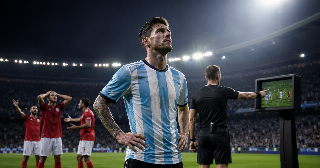
The biggest turning point arrived late in the match when Argentina’s Enzo Fernández received a second yellow card, reducing the defending champions to ten men. The dismissal shifted momentum firmly toward Spain, who increased the pressure during extra time against a tiring Argentine defense.
Recognizing the numerical advantage, Spain pushed more players forward while maintaining defensive balance to prevent counter-attacks.
Ferran Torres Delivers the Winning Goal
The decisive moment finally arrived in the 106th minute.
Spain patiently constructed another attack from midfield, moving Argentina’s defensive line from side to side before creating a crucial opening. Substitute Ferran Torres timed his movement perfectly before receiving the decisive pass inside the penalty area.
Showing remarkable composure, Torres struck a powerful left-footed finish beyond the goalkeeper to give Spain a deserved 1-0 lead in extra time.
The stadium erupted as Spanish players celebrated what would become the tournament’s most important goal.
Torres’ impact from the bench perfectly illustrated Spain’s squad depth and Luis de la Fuente’s excellent tactical management throughout the competition.
Spain’s Defensive Excellence
Although much attention will focus on the winning goal, Spain’s defensive organization deserves equal praise.
Throughout the tournament, Spain consistently limited opponents’ chances through:
- Aggressive counter-pressing.
- Excellent defensive positioning.
- Calm ball distribution.
- Strong communication across the back line.
Even after taking the lead, Spain remained composed and denied Argentina any clear opportunity to equalize during the closing stages of extra time.
Their collective defensive discipline ultimately secured the clean sheet that completed a memorable World Cup triumph.
Tactical Decisions That Won the Trophy
Luis de la Fuente’s management throughout the final proved exceptional.
Several decisions influenced the outcome:
- Keeping faith with Spain’s possession philosophy.
- Avoiding unnecessary tactical panic after ninety minutes.
- Introducing Ferran Torres at the ideal moment.
- Increasing attacking intensity after Argentina were reduced to ten players.
- Maintaining defensive balance while searching for the winning goal.
Instead of abandoning their style, Spain trusted the process that had carried them throughout the tournament.
That tactical consistency eventually delivered football’s greatest prize.
Argentina’s Brave Resistance
Despite defeat, Argentina produced another courageous performance.
The defending champions absorbed enormous pressure for more than one hundred minutes while remaining tactically disciplined against one of the world’s strongest attacking teams.
Even after losing a player, Argentina continued defending bravely until Spain finally found the breakthrough.
Although their World Cup title defense ended, Lionel Scaloni’s side once again demonstrated the resilience that has defined Argentine football in recent years.
What This Victory Means for Spain
Spain’s triumph represents one of the greatest achievements in modern football.
The victory marks:
- Spain’s second FIFA World Cup title.
- The end of Argentina’s reign as world champions.
- Validation of Spain’s possession-based football philosophy.
- Another major international success under Luis de la Fuente.
The tournament showcased Spain’s remarkable consistency, tactical intelligence, squad depth, and technical excellence from the group stage through to the final.
By defeating the defending champions on football’s biggest stage, Spain have firmly re-established themselves among the elite nations in world football.
Final Thoughts
The FIFA World Cup 2026 Final will be remembered as a contest decided by tactical intelligence, patience, and one moment of outstanding quality. Spain controlled possession, trusted their philosophy, and finally broke through in extra time when Ferran Torres scored the championship-winning goal.
Argentina defended heroically throughout the match, but Spain’s relentless pressure eventually proved impossible to contain. The victory not only secured Spain’s second World Cup title but also demonstrated that disciplined tactics, technical excellence, and collective teamwork remain the foundations of success at the highest level of international football.
As celebrations continue across Spain, the 2026 FIFA World Cup Final will be remembered as the night La Roja reclaimed football’s greatest prize through patience, precision, and championship-winning composure.