



Introduction
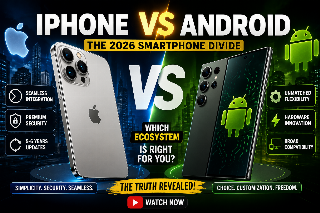
The flagship smartphone market has evolved far beyond the traditional competition of faster processors and better cameras. In 2026, consumers are choosing between two distinct visions of what a smartphone should be. Apple’s iPhone 17 represents refinement, performance, and a tightly integrated ecosystem, while Google’s Pixel 10 showcases an AI-first approach that emphasizes intelligent software, advanced photography, and productivity. Both devices rank among the world’s best smartphones, but they are designed for different types of users with different priorities.
The Hardware Divide
Although both smartphones feature premium designs and flagship-level specifications, their engineering priorities differ significantly. Apple focuses on maximizing hardware efficiency and long-term optimization, while Google balances capable hardware with software-driven intelligence. The result is two flagship devices that deliver excellent experiences through different approaches.
Performance and Processing Power
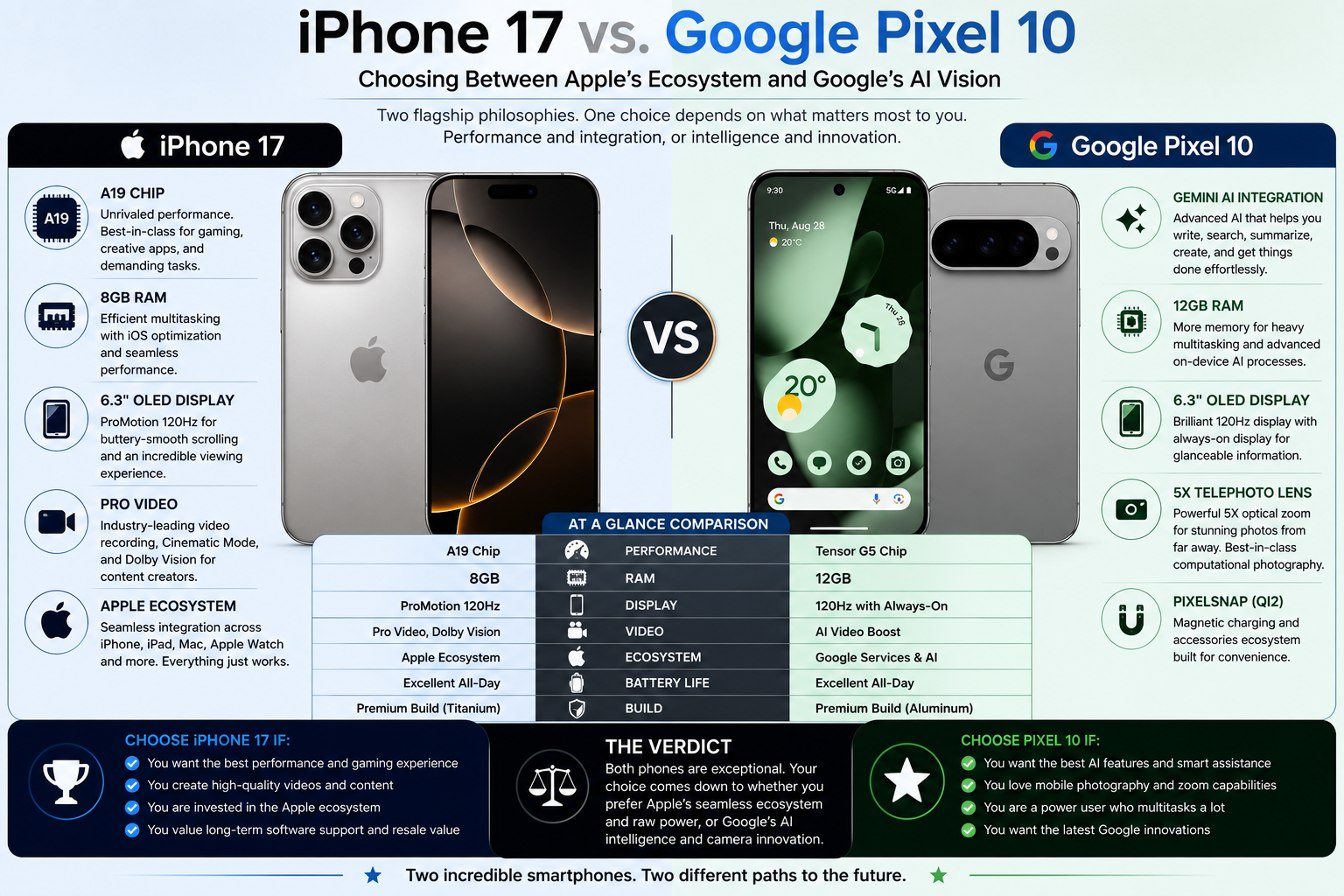
The iPhone 17, powered by Apple’s A19 processor, continues to set the standard for smartphone performance. Its industry-leading single-core and multi-core processing capabilities deliver exceptional speed across demanding applications, including high-end mobile gaming, professional video editing, and advanced creative workflows.
The Google Pixel 10, powered by Google’s latest Tensor platform, emphasizes AI acceleration rather than raw benchmark performance. While it may not outperform Apple’s chipset in synthetic tests, it excels in real-world AI tasks such as live language translation, voice recognition, image processing, and intelligent automation. Users who rely heavily on AI-powered features will appreciate the Pixel’s specialized hardware optimization.
Memory and Multitasking
One of the biggest differences between the two devices lies in memory management.
The Google Pixel 10 includes 12GB of RAM, allowing it to keep more applications active in the background while supporting increasingly complex AI workloads. This extra memory benefits users who frequently switch between productivity apps, edit large files, or depend on advanced multitasking.
The iPhone 17 features 8GB of RAM, but Apple’s deep integration between hardware and iOS enables remarkably efficient memory management. Despite having less physical memory, the iPhone delivers smooth multitasking and excellent application performance through software optimization rather than higher RAM capacity.
Display Quality
Both smartphones feature stunning 6.3-inch OLED displays capable of reaching approximately 3000 nits of peak brightness, making them excellent choices for outdoor visibility and HDR content.
Apple’s ProMotion technology provides an adaptive refresh rate of up to 120Hz, creating an exceptionally smooth experience while scrolling, gaming, and navigating the interface.
Google’s Pixel 10 counters with an excellent Always-On Display that delivers glanceable notifications, widgets, weather information, and AI-generated insights without requiring users to unlock their devices. Both displays rank among the finest available in the premium smartphone market.
The AI vs. Ecosystem Battle
The biggest difference between the iPhone 17 and the Google Pixel 10 extends beyond specifications. It reflects two completely different philosophies about the future of smartphones.
Apple believes the smartphone should seamlessly connect every device within its ecosystem while remaining simple, consistent, and reliable.
Google believes artificial intelligence should become the user’s personal assistant, automating tasks and delivering proactive assistance throughout the day.
This philosophical difference influences nearly every aspect of the user experience.
Google’s AI-First Vision
The Pixel 10 is designed for users who want artificial intelligence integrated into nearly every interaction.
Powered by Google’s latest Gemini AI platform, the phone offers advanced writing assistance, intelligent voice commands, contextual search, image editing, language translation, meeting summaries, and proactive recommendations.
Google continues to push smartphone AI beyond simple voice assistants by making AI an integral part of photography, productivity, communication, and everyday decision-making.
The addition of Pixelsnap with Qi2 magnetic charging also improves convenience, giving Pixel users a magnetic accessory ecosystem similar to Apple’s MagSafe experience.
Apple’s Refined Ecosystem
Apple approaches smartphone innovation differently.
Rather than introducing experimental features rapidly, Apple prioritizes stability, consistency, and seamless integration across its ecosystem.
Features such as AirDrop, Handoff, Continuity Camera, iCloud synchronization, FaceTime, Apple Watch integration, Mac connectivity, and iPad compatibility create a unified experience that competitors continue to challenge.
For users already invested in Apple products, the iPhone 17 becomes far more valuable because every device works together effortlessly.
Apple also maintains its reputation for industry-leading video recording, making the iPhone the preferred smartphone for many filmmakers, journalists, vloggers, and content creators.
Camera Experience
Photography remains one of the strongest selling points for both smartphones.
The Google Pixel 10 continues Google’s tradition of computational photography excellence. Its advanced image processing, AI-powered editing tools, impressive low-light photography, and powerful 5X optical telephoto lens make it one of the best smartphones for still photography.
The iPhone 17 focuses on delivering natural colors, consistent image quality, and exceptional video recording performance. Features such as Cinematic Mode, Dolby Vision recording, and professional stabilization continue to make Apple the leader in mobile videography.
Choosing between them ultimately depends on whether photography or video production is the higher priority.
Battery and Everyday Experience
Both smartphones comfortably provide all-day battery life under normal usage conditions.
Apple continues improving battery efficiency through tight hardware and software optimization, while Google relies on intelligent battery management powered by machine learning to maximize endurance based on individual usage habits.
Fast charging, wireless charging, and premium battery optimization features ensure that both devices remain dependable throughout demanding daily routines.
Which Phone Is Right for You?
The choice between the iPhone 17 and the Google Pixel 10 ultimately depends on personal preferences rather than overall superiority.
Users who value maximum processing performance, premium build quality, professional video recording, and seamless integration with other Apple devices will likely find the iPhone 17 to be the better long-term investment.
On the other hand, users who prioritize AI-powered productivity, computational photography, advanced zoom capabilities, and intelligent software experiences will appreciate everything the Google Pixel 10 offers.
Neither smartphone is objectively better for everyone. Instead, each excels within its own philosophy and target audience.
Conclusion
The competition between the iPhone 17 and Google Pixel 10 represents the future direction of the smartphone industry. Apple continues refining a premium ecosystem built around performance, reliability, and integration, while Google is redefining the smartphone as an intelligent AI companion capable of assisting users throughout every aspect of daily life.
Both flagships represent the best of modern smartphone technology, and neither choice is wrong. The ideal device depends entirely on how you use your smartphone. If you prefer seamless ecosystem integration and industry-leading video capabilities, the iPhone 17 remains an outstanding choice. If your priority is AI innovation, intelligent photography, and powerful multitasking, the Google Pixel 10 stands as one of the most compelling Android smartphones available.