




For decades, the fundamental experience of attending a live sporting event or concert has remained largely unchanged. You navigate chaotic entry gates, find your seat amidst a sea of people, wait in endless lines for overpriced concessions, and crane your neck to catch a glimpse of the action, often feeling disconnected from the granular details and statistics that modern television broadcasts provide so effortlessly. While the atmosphere of a live crowd is electric, the logistical friction has always been a significant trade-off.
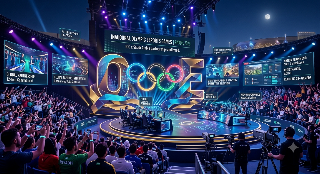
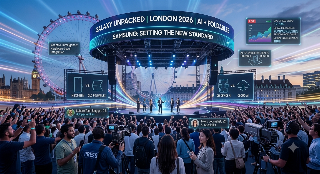
That era is rapidly coming to an end. A technological revolution is sweeping through the world of sports and entertainment architecture, giving rise to the "Smart Stadium." By integrating cutting-edge Internet of Things (IoT) infrastructure, high-density 5G networks, artificial intelligence, and immersive mobile applications, venues worldwide are transforming from concrete bowls into hyper-connected digital ecosystems. The goal is simple yet ambitious: to create a seamless, personalized, and deeply engaging experience that merges the energy of the physical crowd with the data-rich customization of the digital world.
1. The Digital Backbone: Connectivity as a Foundation
You cannot build a modern smart venue on legacy infrastructure. The cornerstone of any smart stadium is robust, pervasive connectivity capable of handling tens of thousands of simultaneous data-heavy connections. Without reliable bandwidth, advanced features like AR and instant replays are impossible.
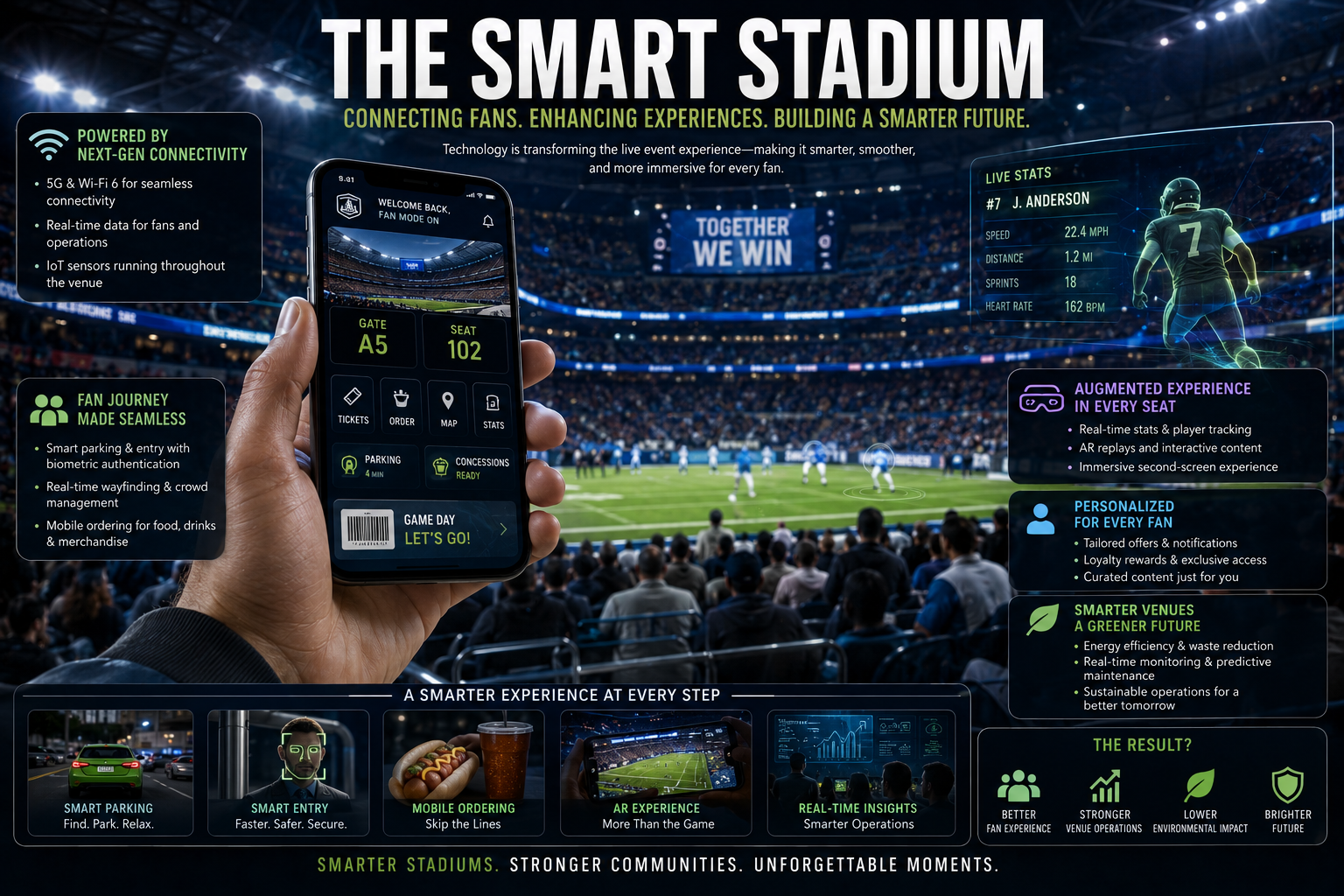
Modern venues are installing dedicated, carrier-grade Wi-Fi 6 and private 5G networks. This ensures that fans can instantly upload high-definition videos, stream supplementary content, and utilize venue apps without battling network congestion. This connectivity backbone doesn't just serve the fans; it connects thousands of sensors embedded throughout the facility, monitoring everything from structural stress to restroom occupancy levels, creating an operational nervous system that allows venue managers to react to issues in real-time.
2. Frictionless Fan Journey: From Biometric Entry to Smart Parking
The fan experience begins long before kickoff. Smart stadiums aim to eliminate the traditional pain points of attendance, starting with the commute and entry.
Integration with smart city infrastructure and venue apps allows for dynamic parking guidance, directing ticketholders to pre-booked spots via the most efficient route. Upon arrival, the era of paper tickets and bottlenecks is fading. Digital ticketing, often integrated with biometric authentication—such as facial recognition or palm scanning—enables "walk-through" entry. This dramatically reduces wait times at gates, improving security while enhancing the crucial first impression of the venue.
Once inside, wayfinding technology within the mobile app guides fans via the shortest routes to their seats, the nearest restrooms with the shortest queues, or the closest premium concession stand, optimizing the flow of human traffic throughout the concourses.
3. The Augmented Spectator: AR and Immersive Second Screens
One of the biggest historical advantages of watching sports at home has been access to instant replays, telestrator analysis, and on-demand statistics. Smart stadiums are now bringing that context-rich layer directly to the live seat through Augmented Reality (AR) delivered via the fan's smartphone.
By pointing their device at the field, court, or stage, fans can unlock real-time player tracking data, superimposed statistics (like shot velocity or pitch speed), and heatmaps. During a break in play, fans can access exclusive AR mini-games or view interactive 3D visualizations of key plays. This "second screen" experience doesn't replace the live action; it augments it, providing a depth of information that was previously exclusive to broadcast television.
4. Hyper-Personalization and the "Stadium App"
The central hub of the smart stadium experience is the official venue mobile application. It is no longer just a digital program; it is a personalized concierge service designed to enhance every moment of the event.
Through deep integration with loyalty programs and customer relationship management (CRM) systems, the app delivers personalized content and offers. A fan consistently identified as a supporter of a specific player might receive an alert about exclusive merchandise just before kickoff. Another fan might receive a push notification for a complimentary concession upgrade during a low-traffic period.
Furthermore, mobile ordering for food, beverages, and merchandise has become a standard feature. Fans can order a hot dog and a drink from their seat and receive a notification when it is ready for express pickup, ensuring they never miss a critical play while waiting in line. Some advanced venues even offer in-seat delivery, pushing convenience to its absolute limit.
5. Operational Efficiency and Sustainability
While the fan-facing technology garners the most headlines, the silent revolution happening behind the scenes regarding operational efficiency and sustainability is equally impactful.
Smart stadiums are inherently "green" stadiums. IoT sensors monitor energy usage, automatically adjusting lighting and HVAC systems based on real-time occupancy data in different zones of the venue. Waste management systems track bin fill levels, optimizing collection routes for cleaning staff. Structural health monitoring sensors provide continuous data on the integrity of the building, predicting maintenance needs before they become critical failures.
AI-driven predictive analytics help management forecast crowd surges, allowing them to dynamically deploy security personnel or open additional concession lanes before bottlenecks form. This data-driven approach reduces the venue's environmental footprint while simultaneously lowering operational costs.
The Road Ahead: Challenges and Privacy Concerns
Despite the glittering promise, the widespread adoption of smart stadium technology is not without significant challenges. The primary hurdle is the massive upfront capital investment required to retrofit existing venues or build new hyper-connected arenas. Furthermore, the rapid pace of technological change means that infrastructure risks becoming obsolete quickly.
The most significant concern, however, revolves around data privacy and security. The collection of vast amounts of fan data—especially sensitive biometric data used for entry—raises serious questions about how that information is stored, secured, and utilized. Venues must implement ironclad cybersecurity measures to protect against data breaches and ensure transparency with fans about data usage policies. If trust is broken, the technological enhancements will be viewed as invasive rather than innovative.
Conclusion: A New Standard for Entertainment
The smart stadium represents the inevitable evolution of the live event experience. It is a response to an increasingly digitized world where audiences demand personalization, connectivity, and convenience.
By successfully weaving advanced technology into the fabric of the live environment, stadiums are not just future-proofing their business models; they are elevating the emotional connection between fans and the events they love. The future of the stadium is not just about bigger screens or louder speakers—it is about creating a smarter, more intuitive venue that understands and anticipates the needs of every single visitor, ensuring the live experience remains unrivaled in the digital age.