





Quick Summary
Formula 1's 2026 season introduced its most significant technical regulation changes in years, and the effect on the championship has been immediate: a tighter, more unpredictable title fight than the sport has seen in recent seasons. Heading into the Hungarian Grand Prix — the final round before the August shutdown — Ferrari and McLaren have been trading dominant weekends, with drivers openly discussing how differently this year's cars behave.
Key Takeaways
- 2026 marked one of F1's biggest regulation resets in recent memory, changing how cars behave on track
- Ferrari and McLaren have each had recent race-winning weekends, with the title picture swinging between them
- Drivers including Lando Norris have publicly acknowledged the adjustment period the new rules demanded
- The Hungarian Grand Prix is the final round before F1's mandatory August summer break
A Genuinely Different Car to Drive
Formula 1 regulation changes happen periodically, but 2026's overhaul has been described by multiple drivers as a bigger shift than usual — enough that adapting driving style itself, not just car setup, has become part of the competitive equation. Lando Norris addressed this directly, stating plainly that drivers who aren't ready to adapt to F1's changing driving styles this year simply "aren't good enough" — a comment that reflects just how much the new technical rules have altered what makes a car fast in 2026 compared to previous seasons.
That shift matters competitively because it resets some of the advantages teams built up under the old rules. A car that dominated under the previous regulation cycle doesn't automatically carry that advantage into a fundamentally different aerodynamic and mechanical rulebook — which helps explain why this season's competitive order looks less settled than in recent years.
A Championship Swinging Week to Week
The title picture has moved several times over just the past few race weekends. Charles Leclerc and Ferrari came close to back-to-back victories in Belgium, while McLaren's Lando Norris has been positioning himself as the driver ending Ferrari's recent run at the front. Meanwhile, George Russell's Mercedes has had an inconsistent stretch — a win in Austria followed by a strong second place at Silverstone, then a puzzling straight-line speed deficit in Belgium that the team estimated cost him several tenths of a second per lap.
Also Read: The 2026 FIFA World Cup Is Breaking Records on a Scale Football Has Never Seen Before
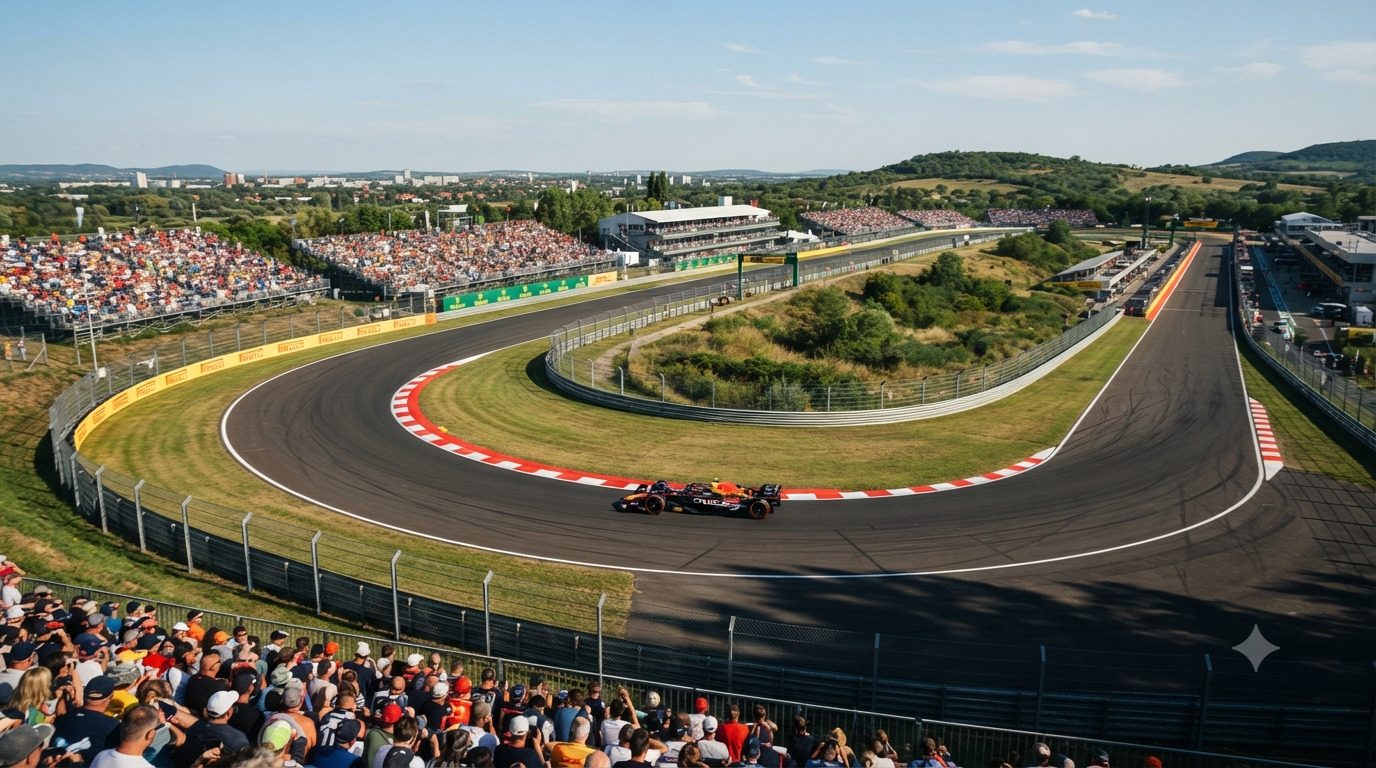
This kind of back-and-forth, with different teams capable of winning depending on track characteristics, is a direct byproduct of the new rules narrowing the performance gap between the top constructors. The Hungaroring itself — a tight, low-average-speed circuit with few long straights — is considered a track that could favor Ferrari again, given how closely Leclerc came to winning in Belgium.
Aston Martin's Delayed Response
Not every team has been racing with a fully updated 2026 car. Aston Martin, under Adrian Newey's technical leadership, opted not to introduce regular in-season updates early in the year while working through unexpected performance deficits in their original design. Instead, the team has developed what's effectively a B-spec car, with its significant upgrade package arriving for the first time at the Hungarian Grand Prix — making this weekend a genuine data point for whether Aston Martin can close the gap to the front-runners in the second half of the season.
Red Bull and Verstappen's Uncertain Position
Red Bull, one of the dominant forces of the previous regulation era, has openly admitted they currently lack the pace to compete at the front under the new rules, with the team specifically flagging concerns heading into Hungary. Max Verstappen, for his part, has offered a notably calm public response regarding his future with the team, describing Red Bull as feeling "like a second family" — comments that come amid broader speculation about driver movement given the team's more difficult start to the new regulation era.
Why the Summer Break Matters This Year
The Hungarian Grand Prix carries extra weight in 2026 because it's the last race before F1's mandatory August shutdown — a period when teams cannot work on their cars at all. Whichever team leaves Budapest with momentum effectively carries that psychological advantage into a month-long pause, with no opportunity for rivals to respond on track before the season resumes. Given how tightly contested recent races have been, that timing adds real stakes to a weekend that might otherwise be just another round on the calendar.
Also Read: Cristiano Ronaldo Retirement News: Has Ronaldo Retired After His Final World Cup?
What to Watch For
With six races having been run in just eight weeks leading into this Hungarian round, teams and drivers alike are heading into the break fatigued, and the competitive picture remains genuinely unresolved. Whether Ferrari can convert Leclerc's recent pace into the championship lead, whether McLaren can respond immediately, and whether Aston Martin's Hungary upgrade signals a real turnaround are all open questions the sport won't fully answer until racing resumes after the shutdown.
FAQ
Q: Why has the 2026 F1 season been so competitive?
F1 introduced major technical regulation changes for 2026 that significantly altered how cars handle, narrowing the performance gap between the leading teams and resetting some of the advantages built up under the previous rules.
Q: When is F1's summer break in 2026?
The mandatory August shutdown follows the Hungarian Grand Prix, which is the final round of the first half of the 2026 season.
Q: Is Red Bull struggling under the new 2026 regulations?
Yes, Red Bull has publicly acknowledged lacking competitive pace heading into the Hungarian Grand Prix, a notable shift from their dominance in recent regulation eras.
Q: What is Aston Martin's B-spec car?
It's a significant upgrade package Aston Martin developed after choosing not to introduce regular updates early in the 2026 season, debuting for the first time at the Hungarian Grand Prix.