






F1 2026 Title Race at the Summer Break: How New Rules Turned the Championship Upside Down

Formula 1's biggest rule overhaul in years has reshuffled the competitive order in 2026, with Ferrari and McLaren locked in a genuine title fight heading into the summer shutdown.

F1 2026 Title Race at the Summer Break: How New Rules Turned the Championship Upside Down

Quick Summary

Formula 1's 2026 season introduced its most significant technical regulation changes in years, and the effect on the championship has been immediate: a tighter, more unpredictable title fight than the sport has seen in recent seasons. Heading into the Hungarian Grand Prix — the final round before the August shutdown — Ferrari and McLaren have been trading dominant weekends, with drivers openly discussing how differently this year's cars behave.

Key Takeaways

  • 2026 marked one of F1's biggest regulation resets in recent memory, changing how cars behave on track
  • Ferrari and McLaren have each had recent race-winning weekends, with the title picture swinging between them
  • Drivers including Lando Norris have publicly acknowledged the adjustment period the new rules demanded
  • The Hungarian Grand Prix is the final round before F1's mandatory August summer break

A Genuinely Different Car to Drive

Formula 1 regulation changes happen periodically, but 2026's overhaul has been described by multiple drivers as a bigger shift than usual — enough that adapting driving style itself, not just car setup, has become part of the competitive equation. Lando Norris addressed this directly, stating plainly that drivers who aren't ready to adapt to F1's changing driving styles this year simply "aren't good enough" — a comment that reflects just how much the new technical rules have altered what makes a car fast in 2026 compared to previous seasons.

That shift matters competitively because it resets some of the advantages teams built up under the old rules. A car that dominated under the previous regulation cycle doesn't automatically carry that advantage into a fundamentally different aerodynamic and mechanical rulebook — which helps explain why this season's competitive order looks less settled than in recent years.

A Championship Swinging Week to Week

The title picture has moved several times over just the past few race weekends. Charles Leclerc and Ferrari came close to back-to-back victories in Belgium, while McLaren's Lando Norris has been positioning himself as the driver ending Ferrari's recent run at the front. Meanwhile, George Russell's Mercedes has had an inconsistent stretch — a win in Austria followed by a strong second place at Silverstone, then a puzzling straight-line speed deficit in Belgium that the team estimated cost him several tenths of a second per lap.

Also Read: The 2026 FIFA World Cup Is Breaking Records on a Scale Football Has Never Seen Before

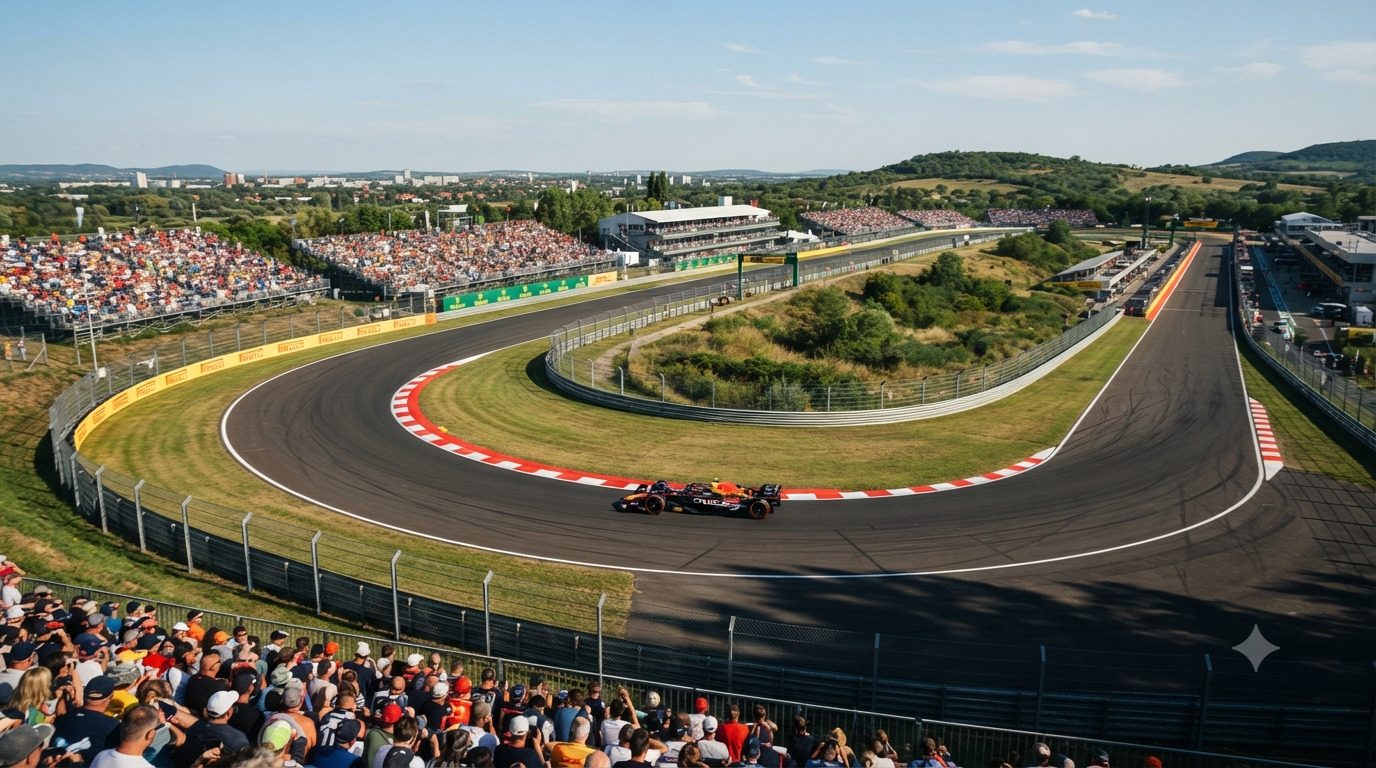
This kind of back-and-forth, with different teams capable of winning depending on track characteristics, is a direct byproduct of the new rules narrowing the performance gap between the top constructors. The Hungaroring itself — a tight, low-average-speed circuit with few long straights — is considered a track that could favor Ferrari again, given how closely Leclerc came to winning in Belgium.

Aston Martin's Delayed Response

Not every team has been racing with a fully updated 2026 car. Aston Martin, under Adrian Newey's technical leadership, opted not to introduce regular in-season updates early in the year while working through unexpected performance deficits in their original design. Instead, the team has developed what's effectively a B-spec car, with its significant upgrade package arriving for the first time at the Hungarian Grand Prix — making this weekend a genuine data point for whether Aston Martin can close the gap to the front-runners in the second half of the season.

Red Bull and Verstappen's Uncertain Position

Red Bull, one of the dominant forces of the previous regulation era, has openly admitted they currently lack the pace to compete at the front under the new rules, with the team specifically flagging concerns heading into Hungary. Max Verstappen, for his part, has offered a notably calm public response regarding his future with the team, describing Red Bull as feeling "like a second family" — comments that come amid broader speculation about driver movement given the team's more difficult start to the new regulation era.

Why the Summer Break Matters This Year

The Hungarian Grand Prix carries extra weight in 2026 because it's the last race before F1's mandatory August shutdown — a period when teams cannot work on their cars at all. Whichever team leaves Budapest with momentum effectively carries that psychological advantage into a month-long pause, with no opportunity for rivals to respond on track before the season resumes. Given how tightly contested recent races have been, that timing adds real stakes to a weekend that might otherwise be just another round on the calendar.

Also Read: Cristiano Ronaldo Retirement News: Has Ronaldo Retired After His Final World Cup?

What to Watch For

With six races having been run in just eight weeks leading into this Hungarian round, teams and drivers alike are heading into the break fatigued, and the competitive picture remains genuinely unresolved. Whether Ferrari can convert Leclerc's recent pace into the championship lead, whether McLaren can respond immediately, and whether Aston Martin's Hungary upgrade signals a real turnaround are all open questions the sport won't fully answer until racing resumes after the shutdown.

FAQ

Q: Why has the 2026 F1 season been so competitive?
F1 introduced major technical regulation changes for 2026 that significantly altered how cars handle, narrowing the performance gap between the leading teams and resetting some of the advantages built up under the previous rules.

Q: When is F1's summer break in 2026?
The mandatory August shutdown follows the Hungarian Grand Prix, which is the final round of the first half of the 2026 season.

Q: Is Red Bull struggling under the new 2026 regulations?
Yes, Red Bull has publicly acknowledged lacking competitive pace heading into the Hungarian Grand Prix, a notable shift from their dominance in recent regulation eras.

Q: What is Aston Martin's B-spec car?
It's a significant upgrade package Aston Martin developed after choosing not to introduce regular updates early in the 2026 season, debuting for the first time at the Hungarian Grand Prix.


Quick Summary

Formula 1's biggest rule overhaul in years has reshuffled the competitive order in 2026, with Ferrari and McLaren locked in a genuine title fight heading into the summer shutdown.

Key Takeaways

  • 2026 marked one of F1's biggest regulation resets in recent memory, changing how cars behave on track
  • Ferrari and McLaren have each had recent race-winning weekends, with the title picture swinging between them
  • Drivers including Lando Norris have publicly acknowledged the adjustment period the new rules demanded
  • The Hungarian Grand Prix is the final round before F1's mandatory August summer break

Quick Facts

Category: Sports
Published: July 26, 2026
Updated: October 7, 2026
Reading time: 5 min
45 views
Updated Oct 7, 2026 5 min read

Related Articles

View all

Popular

View all

Mixed Content

Sports
News Sports

The Post-Automation Economy: Architecting Human Skill Premiums in the Age of Autonomy

The rapid proliferation of agentic workflows and large action models is structurally inverting the traditional corporate skill pyramid. While routine analytical processes and information retrieval tasks are being automated into low-cost utility, uncommoditizable human traits—emotional intelligence, strategic ambiguity management, and ethical governance—are commanding an unprecedented value premium. Succeeding in the post-automation enterprise requires re-engineering workforce development to focu

Mutwassim 3 min 72
The Decline of Friction: Inside the FinTech Revolution in Cross-Border Settlement and Digital Identity Sports
News Sports

The Decline of Friction: Inside the FinTech Revolution in Cross-Border Settlement and Digital Identity

The traditional plumbing of global finance—characterized by multi-day delays, hidden fees, and fragmented identity silo—is undergoing a profound transformation. A new generation of FinTech architectures, combining distributed ledger technology (DLT), synchronized liquidity pools, and decentralized digital passports, is enabling cross-border instant payments with near-zero friction.

Mutwassim 1 min 44
The City as a Switch: Architecting IoT Logistics for the Post-Congestion Urban Era Sports
News Sports

The City as a Switch: Architecting IoT Logistics for the Post-Congestion Urban Era

The traditional model of urban delivery—reliant on high-emission diesel vans navigating static street grids—is creating unsustainable levels of congestion and pollution in global metros. To reclaim urban space, cities are transitioning to IoT-orchestrated logistics. This data-driven framework utilizes autonomous delivery swarms, automated micro-fulfillment centers, and dynamic digital kerb-side management to route goods with the efficiency of internet packets, transforming static streets into fl

Mutwassim 4 min 71
Beyond the Coffee Shop: How Cross-Border Employment and Sovereign Visas Are Institutionalizing Remote Work Sports
News Sports

Beyond the Coffee Shop: How Cross-Border Employment and Sovereign Visas Are Institutionalizing Remote Work

Remote work is transitioning from an informal perk into an institutionalized pillar of international commerce. Over 60 nations have launched dedicated digital nomad visa regimes, while multi-jurisdictional compliance platforms and Employer of Record (EOR) frameworks dismantle traditional geographic barriers. As knowledge workers disperse globally, enterprises and municipal governments are formalizing policies around tax residency, permanent establishment risk, and asynchronous operational workfl

Mutwassim 3 min 71
The Death of Syntax: Inside the Shift to Intent-Driven Software Engineering Sports
News Sports

The Death of Syntax: Inside the Shift to Intent-Driven Software Engineering

The day-to-day discipline of software engineering is undergoing its most radical abstraction leap since the transition from assembly language to high-level compilers. Generative code synthesis and deterministic reasoning engines are automating boilerplate syntax, turning software developers into systems architects. Survival in this new paradigm demands mastering intent formalization, specification design, and continuous verification.

Mutwassim 3 min 71
The Post-Visual Threat: Architecting Zero-Trust Defense Against Weaponized Deepfakes Sports
News Sports

The Post-Visual Threat: Architecting Zero-Trust Defense Against Weaponized Deepfakes

The rapid weaponization of real-time voice cloning and synthetic video generation has transformed social engineering from opportunistic phishing into targeted executive identity emulation. High-profile incidents involving multi-million-dollar wire transfers authorized via synthetic video calls prove that sight and sound can no longer authenticate authorization. Securing modern enterprises requires an uncompromising zero-trust identity layer capable of neutralizing synthetic deception.

Mutwassim 3 min 137
Beyond the Battery: How Electric Mobility Is Forcing a Overhaul of the Global Power Grid Sports
News Sports

Beyond the Battery: How Electric Mobility Is Forcing a Overhaul of the Global Power Grid

The global transition toward electric vehicles is no longer constrained primarily by battery chemistry or vehicle range. Instead, the real bottleneck has shifted directly to the electrical grid. As commercial fleets and passenger cars electrify at scale, utilities and city planners are racing to deploy vehicle-to-grid (V2G) bidirectional systems, AI-driven dynamic load balancers, and decentralized microgrid storage to avoid grid failure.

Mutwassim 3 min 58
Cloud 3.0: The Shift Toward Sovereign Data Architectures and Edge Computing Sports
News Sports

Cloud 3.0: The Shift Toward Sovereign Data Architectures and Edge Computing

The architectural assumption that enterprise compute and storage should reside in a handful of centralized hyperscaler data centers is fracturing. Driven by strict cross-border data sovereignty regulations and the demand for millisecond-latency AI inference, global IT leaders are pivoting to Cloud 3.0—a model centered on distributed, locally governed, and hybrid sovereign architectures.

Mutwassim 3 min 61