






Pakistan Football: Current Condition, New Talent, and National Team Ranking
Football in Pakistan is full of passion, but the sport is still fighting for structure, stability, and serious investment. Millions of people follow football across the country, especially in Lyari, Karachi, Quetta, Chaman, Lahore, Islamabad, and parts of Khyber Pakhtunkhwa, but Pakistan has not yet turned that passion into a strong national football system.
The good news is that there are signs of recovery. The Pakistan Football Federation is trying to revive domestic football, youth competitions are being restarted, and diaspora players continue to bring attention to the national team. But the road is still long.
Pakistan’s Current Place in World Football
Pakistan’s men’s national team is currently ranked 198th in the FIFA men’s ranking, according to FIFA’s latest official update from June 11, 2026 FIFA. This ranking shows the reality of Pakistan football right now: the country has talent, but it is still far behind most serious football nations.
Pakistan’s highest-ever FIFA ranking was 141st, while its lowest point was 205th FIFA. That means Pakistan has moved up from its worst position, but it still needs consistent matches, better coaching, a professional league, and proper youth development to climb further.
The Biggest Problem: Lack of Structure
The biggest issue in Pakistan football is not talent. It is structure.
For years, Pakistani football has suffered from federation problems, FIFA suspensions, political interference, weak domestic competitions, and a lack of long-term planning. FIFA suspended the Pakistan Football Federation in February 2025 over governance issues, but the suspension was lifted in March 2025 after the PFF Congress approved the FIFA and AFC-backed constitution FIFA.
This was an important step, but it did not solve everything overnight. Pakistan still needs a reliable domestic calendar, stronger clubs, better facilities, and a system where young players can progress from school football to district football, then to professional clubs and the national team.
Domestic Football Is Trying to Return
One positive development is that the PFF has announced plans to revive domestic football. In June 2026, the federation unveiled a nationwide plan to strengthen provincial, regional, and district football structures PFF.
This matters because no national team can become strong without a serious domestic system. Pakistan cannot depend only on short training camps before international matches. Players need regular competitive football throughout the year.
The PFF has also announced district-level competitions and youth championships, which can help identify new talent from across the country. If these plans are actually implemented properly, they can become the foundation of Pakistan’s football future.
Newcomers and Young Talent
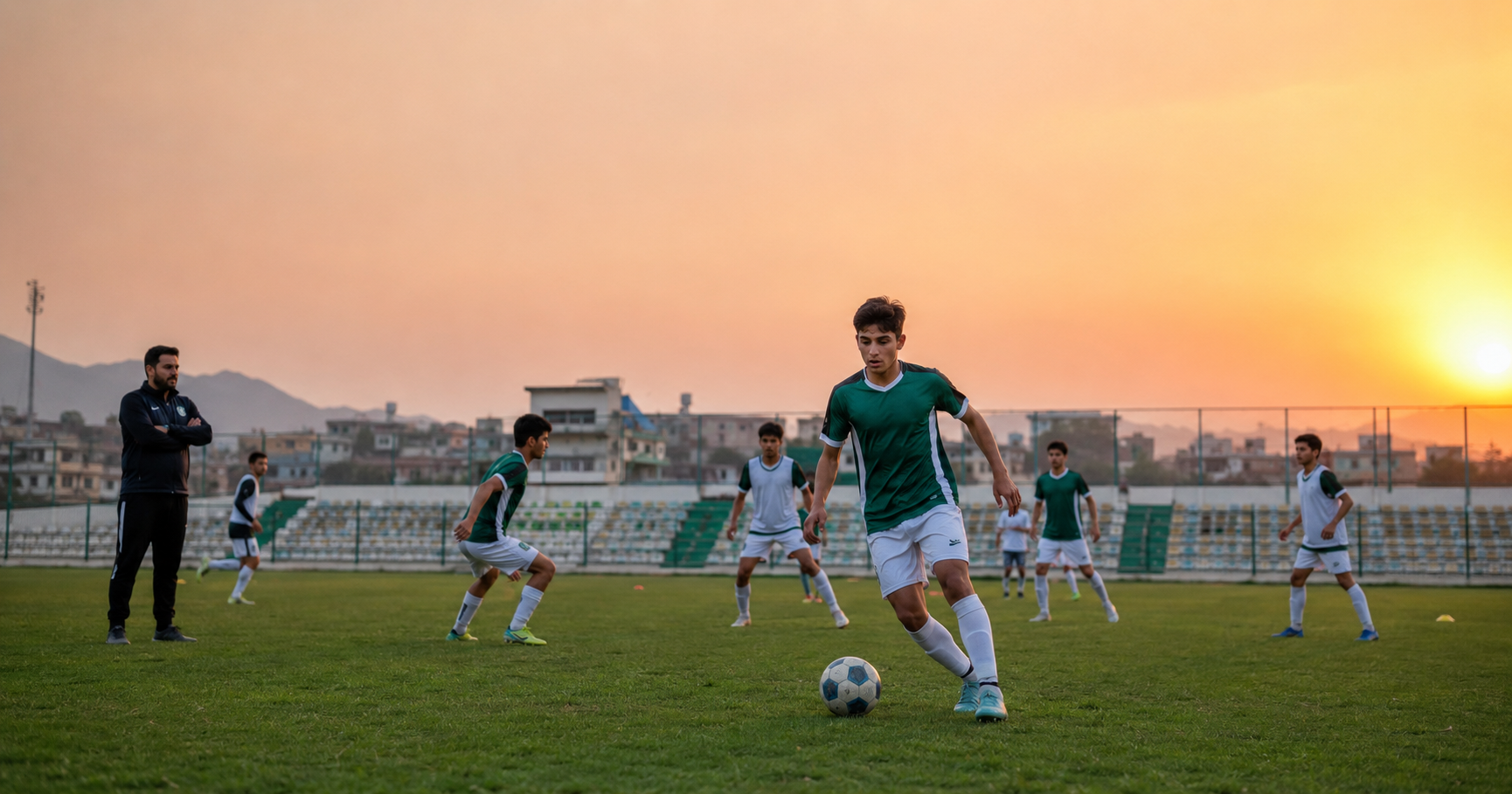
The most important area for Pakistan football right now is youth development. The PFF has launched the National Under-17 Championship as part of its effort to rebuild the football pyramid UrduPoint.
This is a good move because young players need proper tournaments, scouting, and coaching. Pakistan has many talented boys playing in streets, schools, colleges, academies, and local grounds, but most of them never get a professional pathway.
If the Under-17 Championship, district championships, and school-level football programs continue regularly, Pakistan can start producing players who are technically better, physically stronger, and tactically more prepared.
School and Grassroots Football
Grassroots football is another important area. In April 2026, the PFF signed an MoU with Beaconhouse School System to develop structured football pathways at school level, including inter-school football and futsal competitions, training camps, and talent identification PFF.
This is exactly the type of system Pakistan needs. Football should not start only when a player is 18 or 20. It should start in schools, academies, and local clubs at a young age.
If school football becomes competitive and organized, Pakistan can find talent earlier and develop it properly.
Diaspora Players and Their Impact
Diaspora players have also become important for Pakistan football. Players with Pakistani roots who grew up in England, Europe, or other football systems can bring professional experience, better tactical understanding, and higher-level training habits.
Otis Khan is one example. FIFA previously highlighted his eligibility through Pakistani family roots and his desire to represent Pakistan FIFA. Other diaspora players have also been discussed by fans because Pakistan needs stronger competition for places in the national team.
However, Pakistan should not depend only on overseas players. Diaspora players can help immediately, but the long-term solution must be local development. The best future is a mix: locally developed Pakistani players plus strong overseas Pakistani footballers.
What Pakistan Needs to Improve
Pakistan football needs five major improvements.
First, the country needs a stable domestic league. Without regular league football, players cannot improve consistently.
Second, Pakistan needs proper youth academies connected to clubs, schools, and districts.
Third, coaching standards must improve. Young players need trained coaches who understand modern football.
Fourth, the PFF must stay stable and avoid political disruption. Every suspension damages players, fans, and the national team.
Fifth, the national team needs regular international matches. Ranking improves only when a team plays, competes, and learns.
Is There Hope for Pakistan Football?
Yes, there is hope, but only if the current plans become real action.
Pakistan has the population, passion, and raw talent. The country has football hotbeds like Lyari and Chaman. It has young players who dream of representing the national team. It has overseas Pakistani players who can raise the level. What it needs is discipline, planning, investment, and continuity.
Countries do not become strong in football by accident. They build systems. Pakistan has started talking about that system again. Now the challenge is to actually maintain it.
Final Verdict
The condition of football in Pakistan is still weak, but not hopeless. The national team’s FIFA ranking of 198th shows how far Pakistan has to go, but the revival of domestic football, Under-17 competitions, district championships, school partnerships, and diaspora involvement are positive signs.
Pakistan football needs patience, structure, and honesty. If the federation, clubs, schools, coaches, and players work together, Pakistan can slowly move from survival mode to real development.
The talent is there. The passion is there. Now Pakistan needs a football system that can finally support both.