





A New Olympic Era
The Olympic movement is entering one of the most transformative chapters in its modern history. For more than a century, the Olympic Games have celebrated athletic excellence through traditional physical sports, bringing together the world's finest competitors every four years. However, the rapid growth of digital entertainment and competitive gaming has reshaped how younger generations experience competition. Recognizing this global shift, the International Olympic Committee (IOC) has officially approved the creation of the Olympic Esports Games, marking the first time esports will have its own official Olympic competition.
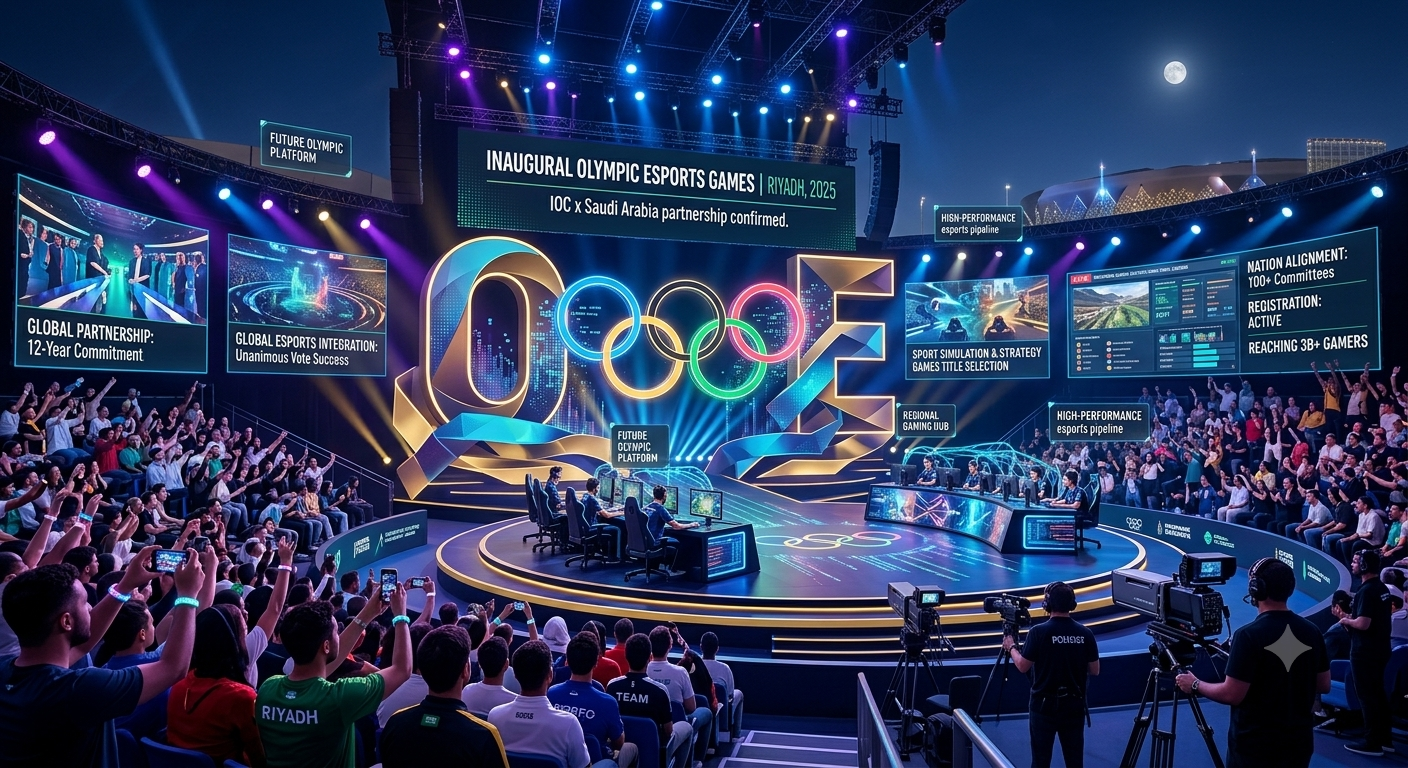
The landmark decision was unanimously approved during the 142nd IOC Session, signaling the committee's commitment to embracing the digital future while maintaining the core Olympic values of excellence, respect, and fair competition. Rather than treating esports as a temporary trend, the IOC has acknowledged that competitive gaming has become one of the world's fastest-growing sporting industries, attracting hundreds of millions of viewers and generating billions of dollars in annual revenue. The launch of the Olympic Esports Games represents a historic moment that bridges traditional sports with the rapidly evolving world of digital competition.
The Growing Global Influence of Esports
Over the last decade, esports has transformed from a niche hobby into a mainstream global phenomenon. Professional tournaments now fill massive stadiums, attract international sponsorships, and are watched online by audiences that rival some of the world's biggest sporting events. Elite esports athletes dedicate years to mastering their games, following strict training schedules that include mechanical practice, strategic analysis, physical fitness, nutrition planning, and mental conditioning.
Universities across many countries now offer esports scholarships, while professional organizations invest heavily in coaching staffs, performance analysts, psychologists, and sports scientists. This level of professionalism has strengthened the argument that competitive gaming deserves recognition alongside more traditional sports.
The IOC's decision reflects this remarkable evolution. By creating an official Olympic platform for esports, the organization aims to connect with younger generations while expanding the Olympic movement into one of the fastest-growing forms of global entertainment.
Saudi Arabia's Historic Partnership
To bring this ambitious vision to life, the IOC has signed a 12-year strategic partnership with the National Olympic Committee of Saudi Arabia. The agreement establishes the kingdom as the long-term host of the Olympic Esports Games, making it one of the most significant investments in the future of digital sports.
Saudi Arabia has spent recent years developing world-class gaming infrastructure through large-scale investments in esports arenas, technology hubs, tournament organizations, and digital entertainment initiatives. The country has successfully hosted several international gaming competitions and has become an increasingly important destination for major esports organizations.
The long-term partnership provides stability for the new Olympic competition while allowing organizers to build consistent infrastructure, improve tournament standards, and create a sustainable competitive ecosystem for athletes and fans worldwide.
A Different Olympic Structure
Although it carries the prestigious Olympic name, the Olympic Esports Games will operate under a unique organizational framework specifically designed for the gaming industry.
Unlike the Summer and Winter Olympics, the esports competition will maintain its own financial structure, operational management, sponsorship model, and event scheduling. This separation allows both competitions to grow independently while preserving the identity and traditions of the Olympic movement.
The IOC is also working closely with international game publishers, esports federations, and industry experts to determine which titles will be included in the inaugural competition. Priority is expected to be given to games that emphasize strategic thinking, teamwork, technical skill, and electronic simulations of traditional sports, while avoiding titles that conflict with Olympic values.
This collaborative selection process is intended to ensure fairness while maintaining strong relationships with the companies that own and develop competitive gaming titles.
Building the Next Generation of Olympic Athletes
The announcement has already encouraged National Olympic Committees around the world to begin developing dedicated esports programs. Countries are establishing professional coaching systems, talent identification programs, and athlete development pathways designed specifically for competitive gaming.
Modern esports preparation extends far beyond playing video games. Professional players now train in high-performance environments where reaction speed, concentration, communication, teamwork, stress management, and physical health are carefully monitored. Many organizations employ sports psychologists, fitness coaches, nutritionists, physiotherapists, and performance analysts to help athletes perform at the highest possible level.
As esports becomes part of the Olympic movement, many countries are expected to invest even further in youth development programs, creating structured pathways for talented players to represent their nations on the international stage.
Technology Driving Modern Competition
One of the defining characteristics of the Olympic Esports Games is its deep integration with modern technology. Advanced tournament systems will ensure competitive integrity through secure servers, anti-cheat software, standardized equipment, and real-time performance monitoring.
Artificial intelligence and advanced analytics are also becoming valuable tools for coaches and athletes. Match data can be analyzed to identify strategic weaknesses, optimize team coordination, improve reaction times, and develop more effective competitive strategies.
Broadcast technology will play an equally important role. High-definition live production, virtual reality experiences, multilingual commentary, interactive audience engagement, and digital streaming platforms will allow millions of fans worldwide to follow every match regardless of their location.
Economic and Cultural Impact
The Olympic Esports Games are expected to create significant economic opportunities across multiple industries. Host cities will benefit from increased tourism, hotel bookings, transportation demand, technology investment, and international media coverage.
Game developers, hardware manufacturers, streaming platforms, sponsorship partners, and digital content creators are also expected to benefit from increased global exposure. The event could stimulate further innovation in gaming technology while encouraging investment in education, software development, and digital infrastructure.
Beyond its economic value, the competition also represents a cultural milestone. For millions of young gamers who have grown up watching esports tournaments, Olympic recognition validates years of dedication and demonstrates that digital competition has earned worldwide respect.
Challenges and Future Development
Despite widespread excitement, several important challenges remain before the inaugural competition begins. The IOC must finalize the list of official game titles, establish qualification systems, develop standardized competition rules, and ensure that selected games remain fair, inclusive, and aligned with Olympic principles.
Balancing the interests of game publishers, esports organizations, national Olympic committees, and international sporting bodies will require careful cooperation. The rapidly changing nature of the gaming industry also means that future Olympic editions may regularly update their featured titles to reflect evolving technology and player communities.
Organizers must also address issues such as competitive integrity, cybersecurity, player welfare, anti-doping policies, and long-term sustainability to ensure the event maintains the same credibility associated with the traditional Olympic Games.
Looking Ahead
The creation of the Olympic Esports Games marks one of the most significant developments in the history of international sport. It reflects the reality that competition continues to evolve alongside technology and that excellence can be demonstrated in both physical and digital arenas.
As preparations continue for the inaugural event in Saudi Arabia, excitement is growing across the global gaming community. Millions of aspiring esports athletes now have the opportunity to pursue a dream that was once unimaginable—the chance to compete under the Olympic banner while representing their countries on one of the world's biggest sporting stages.
The Olympic movement has always evolved to reflect changing generations, and the introduction of esports demonstrates its willingness to embrace innovation while preserving its core values. By welcoming competitive gaming into the Olympic family, the IOC is not replacing traditional sports but expanding the definition of global competition for the digital age. The Olympic Esports Games have the potential to inspire a new generation of athletes, unite gaming communities across continents, and establish a lasting legacy that will shape the future of international sport for decades to come.