



Introduction
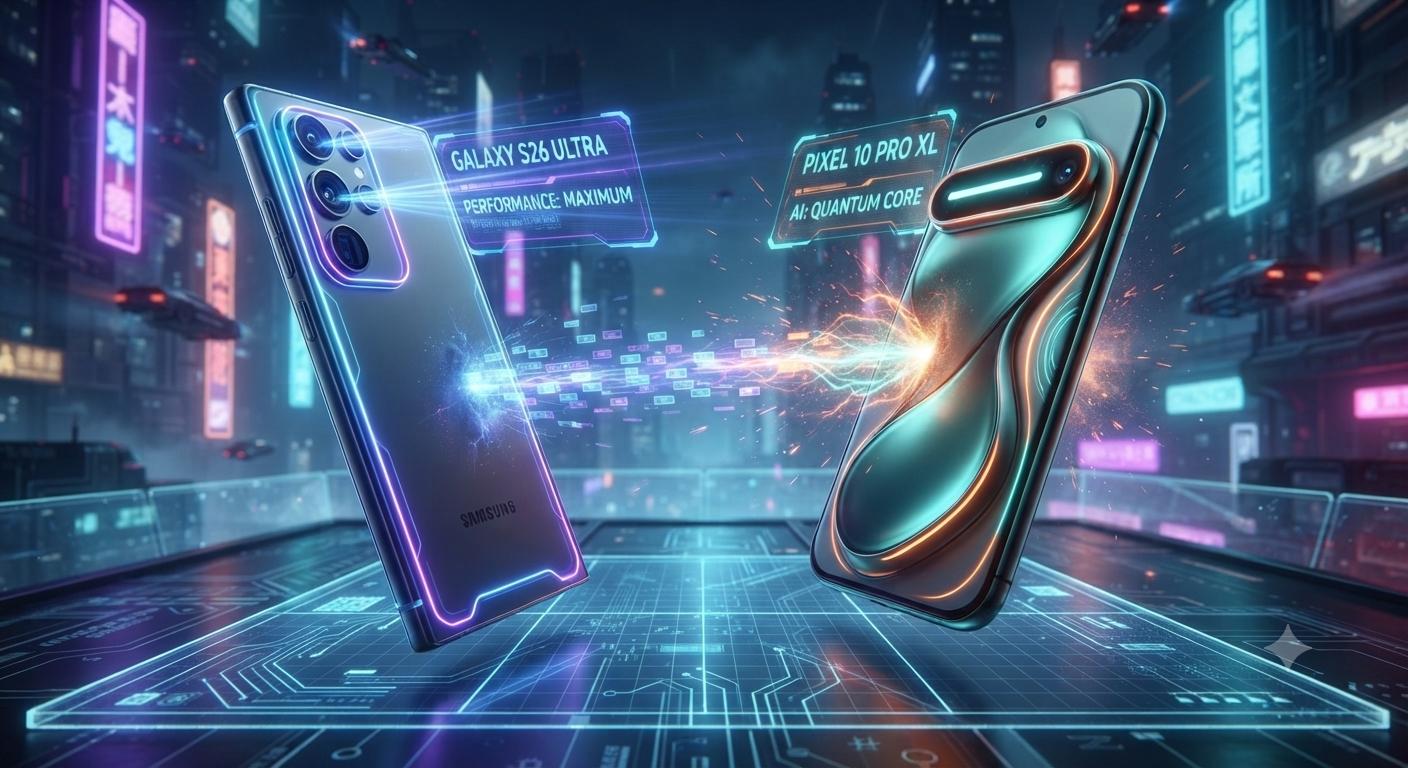
The flagship smartphone market has reached an exciting new chapter in 2026, with two of Android’s biggest contenders competing for the top spot: the Samsung Galaxy S26 Ultra and the Google Pixel 10 Pro XL. Both smartphones represent the very best each company has to offer, featuring cutting-edge hardware, advanced artificial intelligence, exceptional camera systems, and premium designs. However, despite sharing the Android operating system, these devices deliver noticeably different experiences.
Samsung continues its tradition of pushing hardware boundaries with a feature-packed flagship designed for power users, creators, and productivity enthusiasts. Google, meanwhile, focuses on delivering a smarter smartphone experience by combining refined hardware with industry-leading AI software and computational photography.
If you’re planning to invest in a premium flagship smartphone this year, understanding the strengths and weaknesses of each device is essential. This comprehensive comparison covers every important category, including design, display, performance, cameras, battery life, software, AI capabilities, gaming, security, pricing, and overall value to help you decide which flagship deserves your money.
Premium Design and Build Quality
Both smartphones instantly feel premium the moment you hold them. Samsung and Google have refined their flagship designs to provide a luxurious look while improving durability.
The Samsung Galaxy S26 Ultra continues Samsung’s iconic boxy design language with flat edges and squared corners. Its titanium frame enhances durability while keeping the phone relatively lightweight for its size. The device also includes Samsung’s signature built-in S Pen, making it the only mainstream flagship with a stylus integrated directly into the phone. This remains one of Samsung’s biggest advantages for productivity users.
Samsung also equips the S26 Ultra with Corning Gorilla Armor 2 protection, reducing reflections while increasing scratch resistance. The anti-glare coating makes outdoor visibility noticeably better under direct sunlight.
The Google Pixel 10 Pro XL takes a different design approach. Rounded edges and smooth curves make it more comfortable for prolonged use. Google’s recognizable camera bar remains, although it has been refined to blend more naturally into the phone’s frame. The Pixel emphasizes simplicity and elegance rather than aggressive styling.
Both devices feature premium glass backs, IP68 water and dust resistance, strong aluminum or titanium construction, and excellent build quality. Choosing between them largely comes down to personal preference.
Samsung appeals to users who enjoy a bold, professional appearance, while Google offers a softer, more minimalistic aesthetic.
Display Quality: Two of the Best Smartphone Screens Ever Made
The display is one of the most important aspects of any smartphone, especially for streaming, gaming, reading, and photography.
Samsung equips the Galaxy S26 Ultra with a stunning 6.9-inch Dynamic LTPO AMOLED 2X display featuring adaptive refresh rates from 1Hz to 120Hz. Samsung has once again raised the bar in color accuracy, HDR performance, and brightness. Blacks are incredibly deep, colors remain vibrant without looking oversaturated, and motion feels exceptionally smooth.
The addition of Gorilla Armor 2 significantly reduces screen reflections, making outdoor viewing much more comfortable.
Google counters with a gorgeous 6.8-inch QHD+ LTPO OLED display capable of reaching peak brightness levels of approximately 3,300 nits. This makes the Pixel one of the brightest smartphones ever produced. Colors appear natural and realistic, making it particularly attractive for photographers and content creators who prefer accurate color reproduction.
Both displays support HDR content, adaptive refresh rates, Always-On Display, and high touch sampling rates for responsive interactions.
Samsung slightly leads in display technology thanks to its anti-reflective coating and exceptionally vivid AMOLED panel, while Google’s display excels in brightness and natural color calibration.
Performance: Raw Power Meets Intelligent Optimization
Performance has become increasingly important as smartphones handle more demanding tasks like gaming, AI processing, multitasking, and professional content creation.
The Samsung Galaxy S26 Ultra is powered by Qualcomm’s Snapdragon 8 Elite Gen 5 processor paired with up to 16GB of RAM. Built using an advanced manufacturing process, the chip delivers significant improvements in CPU performance, graphics rendering, AI processing, and energy efficiency.
Heavy multitasking feels effortless. Apps launch instantly, demanding games maintain consistently high frame rates, and professional editing applications run smoothly.
Google takes a different path with its Tensor G5 processor. Rather than chasing benchmark records, Tensor focuses heavily on machine learning and artificial intelligence.
Everyday performance feels extremely fluid thanks to Google’s close integration between hardware and Android 16. Voice recognition, translation, image processing, spam detection, and smart assistant features all benefit from Tensor’s AI-first architecture.
Benchmark enthusiasts may prefer Samsung’s superior raw processing power, but many everyday users will appreciate Google’s intelligent software optimization.
Camera System: Hardware Power vs Computational Photography
Camera performance remains one of the biggest deciding factors for flagship buyers.
Samsung equips the Galaxy S26 Ultra with a highly versatile quad-camera setup led by a remarkable 200MP primary sensor. Supporting cameras include advanced ultra-wide and multiple telephoto lenses, including a 50MP periscope camera offering impressive 5x optical zoom.
Samsung’s strengths include:
- Outstanding zoom photography
- Incredible detail in daylight
- Excellent portrait photography
- Professional-grade manual controls
- High-resolution video recording
- Exceptional low-light zoom performance
Google approaches photography differently.
Instead of relying on extremely high megapixel counts, the Pixel 10 Pro XL combines a 50MP main sensor with 48MP ultrawide and 48MP telephoto cameras enhanced by Google’s industry-leading computational photography.
Google excels in:
- Natural color science
- Skin tone accuracy
- HDR processing
- Night photography
- Motion capture
- AI-enhanced image editing
Features such as Magic Editor, Best Take, Magic Eraser, Audio Magic Eraser, and advanced AI image enhancement make the Pixel incredibly easy to use.
Samsung gives photographers more hardware flexibility, while Google consistently produces stunning photos with minimal effort.
Video Recording Capabilities
Video creators have become an increasingly important audience for flagship smartphones.
Samsung supports extremely high-resolution recording, advanced stabilization, professional video controls, multiple focal lengths, and outstanding zoom during recording. Content creators who frequently shoot travel videos, sports, or wildlife will appreciate Samsung’s versatile camera hardware.
Google focuses on intelligent video improvements. AI automatically enhances lighting, reduces unwanted background noise, stabilizes footage, and improves overall video quality with minimal user input.
For professional manual video work, Samsung offers more flexibility.
For effortless point-and-shoot recording with excellent AI enhancements, Google remains extremely competitive.
Artificial Intelligence: Google’s Biggest Strength
Artificial intelligence has become one of the defining features of modern smartphones.
Google has built the Pixel 10 Pro XL around AI from the ground up.
Helpful features include:
- Live Translate
- Circle to Search
- Call Assist
- Smart Replies
- AI-powered summaries
- Magic Editor
- Best Take
- Real-time voice transcription
- Intelligent photo organization
- Context-aware Google Assistant improvements
These features work naturally throughout the operating system without feeling intrusive.
Samsung has also significantly expanded Galaxy AI.
Features include:
- AI Writing Assist
- Interpreter Mode
- Note Summaries
- AI Image Editing
- Generative Wallpaper
- Live Translation
- Productivity enhancements
- AI-powered search
Samsung’s AI emphasizes productivity, while Google’s AI feels more deeply integrated into everyday smartphone usage.
Software Experience
Both devices run Android 16, but the experience differs dramatically.
Samsung’s One UI offers extensive customization options.
Users can personalize nearly every aspect of the interface, including:
- Themes
- Icons
- Widgets
- Lock screen layouts
- Split-screen multitasking
- Desktop mode
- Advanced automation routines
Power users often prefer Samsung because of its flexibility.
Google’s Pixel UI remains clean, minimal, and incredibly smooth.
There are fewer duplicate apps, less pre-installed software, and faster access to new Android features.
Those who enjoy a simple, uncluttered interface will likely prefer the Pixel experience.
Battery Life and Charging
Battery life continues to improve with each generation.
Samsung includes a reliable 5,000mAh battery supported by faster 60W wired charging, wireless charging, and reverse wireless charging.
Even with heavy multitasking, gaming, and photography, the S26 Ultra comfortably lasts an entire day.
Google equips the Pixel 10 Pro XL with a slightly larger 5,200mAh battery and 45W wired charging.
Google’s software optimization helps maximize endurance, particularly during lighter daily tasks.
Although Samsung charges more quickly, Google’s efficient power management often delivers similarly impressive real-world battery life.
Both devices easily support all-day usage.
Gaming Performance
Gaming enthusiasts demand powerful processors, excellent cooling, responsive displays, and stable frame rates.
Samsung clearly targets gamers with the Snapdragon 8 Elite Gen 5 processor, advanced vapor chamber cooling, high GPU performance, and excellent sustained performance during long gaming sessions.
Popular games run smoothly at high graphics settings with stable frame rates.
Google’s Tensor G5 also handles modern games well, but its priorities lie more in AI efficiency than maximum graphics performance.
Casual gamers will be satisfied with either device, while competitive mobile gamers will likely prefer Samsung.
Productivity Features
Samsung remains unmatched in productivity.
The integrated S Pen transforms the smartphone into a digital notebook.
Users can:
- Take handwritten notes
- Edit documents
- Sign PDFs
- Sketch artwork
- Control presentations
- Capture screenshots with annotations
Samsung DeX further enhances productivity by allowing the phone to function like a desktop computer when connected to a monitor.
Google focuses less on hardware productivity and more on intelligent software assistance through AI-powered organization and automation.
Business professionals and students who frequently multitask may find Samsung’s productivity tools invaluable.
Security and Software Updates
Both companies have strengthened their long-term software support.
Samsung promises years of Android updates alongside regular security patches.
Google offers similarly impressive software support while delivering Android updates immediately upon release.
Security features on both phones include:
- Secure facial recognition
- Ultrasonic fingerprint sensors
- Encrypted storage
- Advanced privacy controls
- Theft protection
- AI-powered scam detection
Users can confidently expect long-term reliability from either flagship.
Pricing and Value
Premium smartphones represent significant investments.
Samsung positions the Galaxy S26 Ultra as an ultra-premium flagship packed with every feature imaginable, including the S Pen, advanced camera hardware, superior gaming performance, and extensive productivity tools.
Google’s Pixel 10 Pro XL typically offers slightly better overall value for users primarily interested in photography, artificial intelligence, and a clean Android experience.
The final decision depends less on price and more on which strengths align with your daily needs.
Final Verdict: Which Flagship Should You Buy?
The Samsung Galaxy S26 Ultra and Google Pixel 10 Pro XL are two of the finest Android smartphones available in 2026, but they serve different audiences.
Choose the Samsung Galaxy S26 Ultra if you want maximum performance, industry-leading hardware, exceptional zoom photography, faster charging, advanced multitasking, desktop-like productivity with Samsung DeX, and the convenience of the built-in S Pen. It is an ideal choice for power users, gamers, professionals, and creators who demand the most versatile flagship experience.
Choose the Google Pixel 10 Pro XL if you value intelligent AI features, effortless photography, natural image processing, timely Android updates, a clean software experience, and seamless integration with Google’s ecosystem. It is perfect for users who want a smart, intuitive smartphone that excels at everyday tasks while delivering some of the best computational photography in the industry.
Ultimately, neither device is objectively better for everyone. Samsung leads in hardware innovation, productivity, and raw performance, while Google shines in artificial intelligence, software refinement, and photography. Your ideal choice depends on whether you prioritize power and versatility or intelligent software and simplicity. Regardless of which flagship you choose, both the Samsung Galaxy S26 Ultra and the Google Pixel 10 Pro XL represent the pinnacle of Android smartphone technology in 2026.