



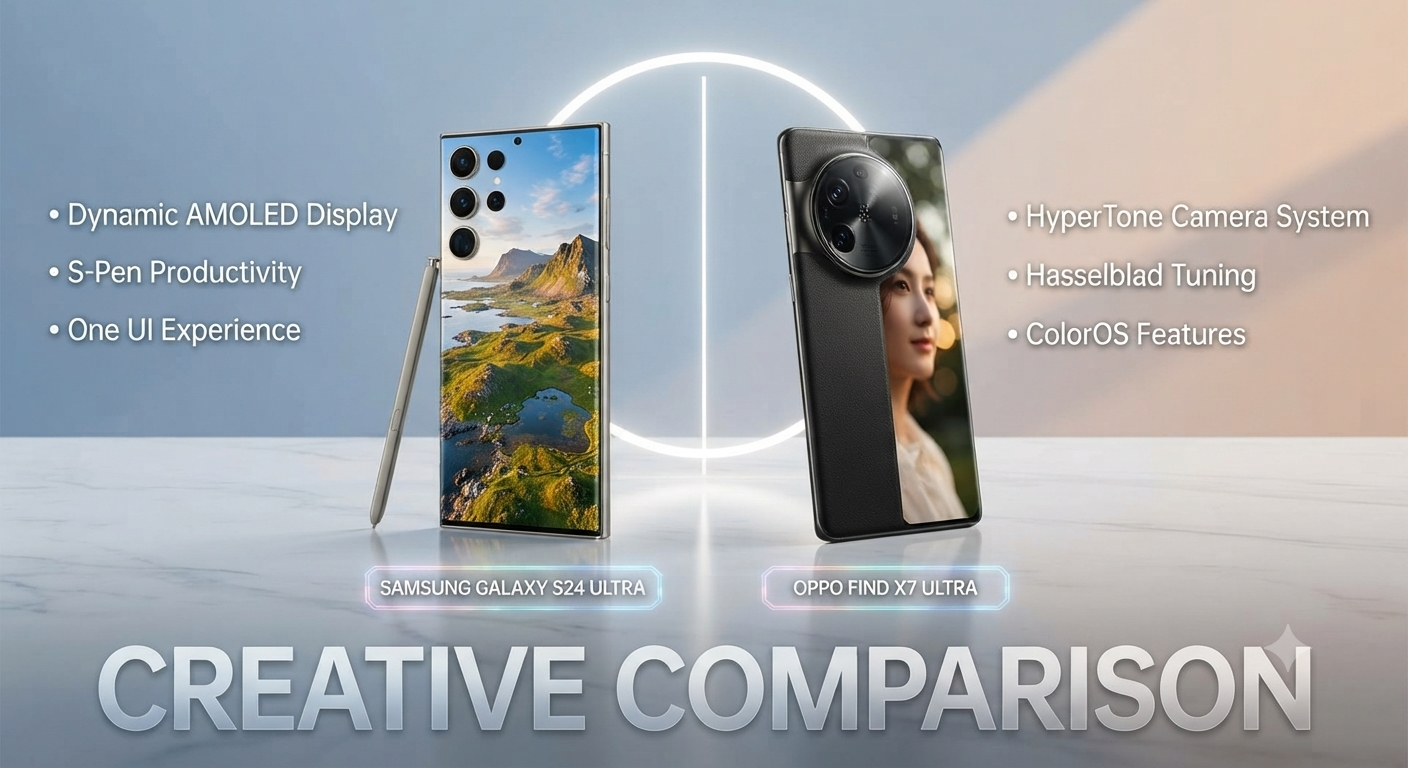
The smartphone market is dominated by intense rivalries, but few battles capture the attention of tech enthusiasts quite like the ongoing clash between Samsung and Oppo. Both brands command massive global followings, yet they achieve success through drastically different philosophies. Samsung represents legacy polish, ecosystem depth, and uncompromised flagship dominance. Meanwhile, Oppo champions bold aesthetic innovation, lightning-fast charging speeds, and incredible value, particularly in the portrait and mid-range photography sectors.
If you are standing at a retail crossroads trying to decide whether to invest in a Galaxy device or an Oppo powerhouse, you are not alone. This comprehensive breakdown dives deep into design, display technology, raw performance, camera mechanics, battery endurance, and long-term value to help you determine which brand truly reigns supreme.
1. Design and Build Quality: Refinement vs. Bold Aesthetics
When you first pull a phone out of its box, tactile feel dictates your initial impression. Samsung’s design language across its high-end Galaxy S and foldable Z series screams corporate sophistication and robust durability. Utilizing armor aluminum frames, matte glass backs, and advanced Corning Gorilla Glass protection, Samsung builds devices designed to withstand the rigors of everyday life while maintaining a clean, professional aesthetic. Furthermore, Samsung's pioneering work in foldables—such as the Z Flip and Z Fold lines—proves the brand's willingness to push hardware boundaries.
Oppo, on the other hand, approaches design with a focus on lightness, slim profiles, and visual flair. Devices in the Reno and Find X series often feature curved edges, ergonomic weight distribution, and eye-catching gradient finishes that catch the light dynamically. Oppo targets users who want a phone that feels feather-light in the hand yet looks like an avant-garde piece of fashion. While Samsung wins outright on rugged structural durability and foldable variety, Oppo leads the conversation in sleek, lightweight comfort.
2. Display Technology: The AMOLED Superiority
Display quality is an area where both brands excel, but Samsung historically holds a definitive edge. Almost all of Samsung's modern lineup—ranging from budget-friendly Galaxy A series units to top-tier flagships—leverages Super AMOLED or Dynamic AMOLED 2X panels. These screens deliver striking contrast ratios, deep blacks, incredible outdoor peak brightness, and buttery-smooth adaptive refresh rates (up to 120Hz). HDR content handling on Samsung panels remains an industry gold standard.
Oppo is no slouch in this department; its high-end and mid-range devices utilize vibrant AMOLED screens boasting high color accuracy, excellent DCI-P3 color gamuts, and massive peak brightness figures that rival any competitor. However, when stacking them side-by-side under direct sunlight, Samsung's motion handling, clarity, and color calibration tend to edge out the competition slightly, making Samsung the go-to choice for pure media consumption and immersive mobile gaming.
3. Performance and Hardware: Raw Power vs. Efficient Multi-Tasking
Under the hood, the performance narrative depends heavily on the price bracket you are shopping in. Samsung flagships typically pack top-tier Qualcomm Snapdragon processors (or Samsung's custom-tuned variants), delivering blistering app-launch speeds, incredible thermal management during extended gaming sessions, and superior long-term hardware sustainability. Multitasking feels effortless, and Samsung’s One UI software optimization ensures that phones remain snappy even after years of heavy usage.
Oppo utilizes a smart mix of MediaTek Dimensity and Snapdragon silicon, depending on the model. In daily use, app switching, social media scrolling, and moderate gaming feel instantaneous and fluid on Oppo devices. Oppo also tends to pack higher baseline RAM configurations (often starting at 12GB or 16GB) into lower price tiers compared to Samsung. Nevertheless, for extreme, sustained graphics rendering and heavy processing tasks over long periods, Samsung’s flagship silicon pulls ahead cleanly.
4. Camera Showdown: Realism and Zoom vs. Portraits and AI Magic
Photography is often the ultimate deciding factor for smartphone buyers, and here Samsung and Oppo target completely different consumer desires:
- Samsung’s Strengths: Samsung focuses heavily on shot realism, consistent color science, low-night performance, and incredible long-range zoom capabilities. Ultra-series devices featuring 200MP main sensors and robust periscope lenses excel at capturing distant subjects with stunning clarity. Furthermore, Samsung dominates the videography space, offering ultra-stable 4K and 8K recording with advanced stabilization and professional-grade editing engines.
- Oppo’s Strengths: Oppo shines brightest in portrait photography, selfie capture, and AI-driven enhancements. Through strategic partnerships with legendary camera brands like Hasselblad, Oppo devices yield organic, highly flattering skin tones, artistic background blurs, and vibrant color profiles straight out of the box. For everyday users who love posting flawless portraits and selfies without editing, Oppo is a dream come true.
5. Battery Life and Charging Speeds: Endurance vs. Lightning Velocity
When evaluating power delivery, a clear philosophical divide emerges: Samsung prioritizes all-day battery health and safe, conservative charging, while Oppo aims to eliminate battery anxiety altogether through blistering charge speeds.
Samsung phones generally offer exceptional day-to-day battery endurance due to deep software optimization and efficient processors, comfortably lasting a full day under heavy workloads. However, their wired charging speeds hover around standard metrics, taking over an hour to reach maximum capacity.
Oppo, conversely, revolutionized the industry with its proprietary SuperVOOC fast-charging technology. Many Oppo devices ship with high-capacity batteries that can juice up from 0% to 50% in under 15 minutes, and hit a full 100% charge in roughly half an hour. If you live a fast-paced lifestyle where forgetting to plug in your phone overnight is common, Oppo's rapid-charging capability is an absolute game-changer.
6. Software Support and Ecosystem Longevity
Buying a smartphone today is an investment in software longevity. Samsung has set a monumental industry benchmark by offering up to 7 years of major OS upgrades and security patches on its flagship devices, alongside a robust ecosystem of tablets, smartwatches, and laptops that rival Apple's seamless integration.
Oppo’s ColorOS interface is smooth, highly customizable, and packed with intuitive shortcuts, and the brand has vastly improved its update commitments in recent years. However, Samsung’s multi-year update roadmap and enterprise security integrations (Knox) still provide greater peace of mind for buyers looking to keep their devices for four to five years or more.
Final Verdict: Which Brand Should You Choose?
Choosing between Samsung and Oppo ultimately boils down to what you value most in your mobile experience:
- Choose Samsung if: You want top-tier video recording capabilities, industry-leading display panels, reliable long-range zoom, superior ecosystem integration, and guaranteed long-term software support.
- Choose Oppo if: You prioritize lightweight stylish designs, stunning portrait photography, AI-enhanced imaging filters, generous RAM configurations, and lightning-fast SuperVOOC charging speeds at a competitive price point.
Both manufacturers produce phenomenal technology—it’s simply a matter of aligning their strengths with your personal daily needs.