





Introduction
For decades, cities around the world were defined by towering concrete buildings, asphalt roads, and dense urban development. While these structures supported economic growth and accommodated rapidly increasing populations, they also created significant environmental challenges. One of the most serious problems facing modern cities is the Urban Heat Island (UHI) effect, a phenomenon in which urban areas become significantly warmer than surrounding rural regions due to heat-absorbing materials such as concrete, steel, and asphalt. Rising global temperatures, increasing energy consumption, and declining air quality have made this issue even more urgent.
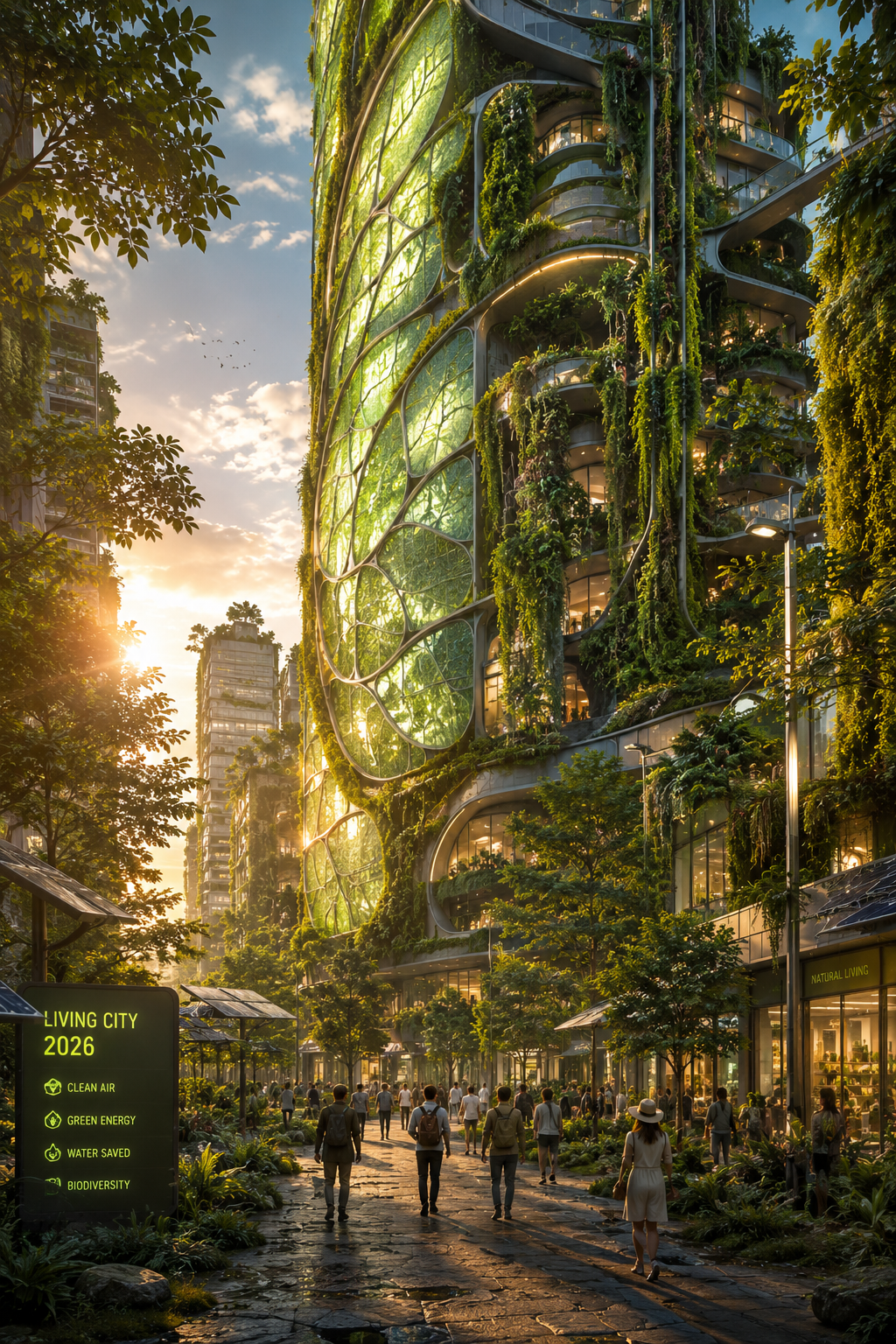
By 2026, architects, urban planners, and environmental scientists are embracing a revolutionary concept known as Bio-Architectural Urbanism. Rather than treating buildings as static structures, this approach views them as living systems that actively contribute to the surrounding environment. Instead of simply adding rooftop gardens or decorative plants, entire buildings are being designed with integrated biological systems capable of cooling cities, improving air quality, supporting biodiversity, and reducing energy consumption.
Bio-Architectural Urbanism represents a major shift in sustainable design. Modern buildings are no longer expected to simply reduce environmental damage; they are increasingly designed to restore ecosystems and improve the health of urban communities. Through living facades, advanced biomaterials, smart irrigation systems, and nature-inspired architecture, cities are evolving into greener, healthier, and more resilient environments.
Understanding the Urban Heat Island Effect
What Is the Urban Heat Island Effect?
The Urban Heat Island (UHI) effect occurs when cities experience much higher temperatures than nearby rural areas. Buildings, roads, and paved surfaces absorb heat during the day and release it slowly at night, preventing urban areas from cooling efficiently. The lack of vegetation further intensifies the problem by reducing natural shade and limiting evaporative cooling.
Why It Matters
Higher urban temperatures increase electricity demand for air conditioning, worsen air pollution, contribute to heat-related illnesses, and reduce overall quality of life. As climate change accelerates, addressing the Urban Heat Island effect has become one of the highest priorities in sustainable city planning.
Living Infrastructure: More Than Just Green Paint
The Rise of Living Skins
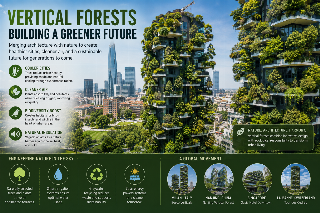
One of the most exciting innovations in Bio-Architectural Urbanism is the development of Living Skins. Unlike traditional green walls that mainly serve decorative purposes, Living Skins are advanced biological systems integrated directly into building exteriors. These systems combine engineered moss, climbing vegetation, photosynthetic glass, algae panels, and mycelium-based insulation to create buildings that actively interact with their environment.
Photosynthetic Building Materials
Modern architects are experimenting with translucent photosynthetic glass capable of supporting microscopic algae and plant-based systems. These materials help absorb carbon dioxide, filter sunlight, and improve building energy efficiency while producing a visually stunning architectural appearance.
Mycelium-Based Insulation
Mycelium, the root structure of fungi, is emerging as a sustainable building material due to its natural insulating properties. It provides excellent thermal performance, biodegradability, and lower environmental impact compared to many conventional insulation materials.
Passive Thermal Regulation
Natural Cooling Systems
Living walls and green facades serve as natural thermal barriers that reduce heat absorption by building surfaces. Vegetation shades exterior walls while evaporation from plants naturally cools surrounding air, helping lower indoor temperatures.
Reduced Energy Consumption
By improving insulation and reducing solar heat gain, living infrastructure can significantly decrease dependence on air conditioning. This lowers electricity consumption, reduces greenhouse gas emissions, and decreases long-term operating costs for buildings.
Urban Biodiversity Nodes
Creating Habitats in Cities
Dense urban development often destroys natural habitats for birds, butterflies, bees, and other pollinators. Bio-Architectural Urbanism helps restore biodiversity by incorporating vegetation directly into buildings.
Supporting Pollinators
Vertical gardens, flowering plants, and green facades provide food and shelter for insects and birds, creating ecological corridors that connect fragmented urban habitats. These biodiversity nodes contribute to healthier ecosystems while improving the visual appeal of city environments.
Atmospheric Scrubbing and Cleaner Air
Nature as an Air Filter
Advanced moss systems and living facades can help capture airborne particles while absorbing pollutants such as carbon dioxide and nitrogen dioxide. Although research is still developing, these biological systems show promising potential for improving localized air quality.
Carbon Sequestration
Plants naturally absorb carbon dioxide during photosynthesis. When integrated into large-scale building facades, living vegetation contributes to carbon capture while simultaneously producing oxygen and cooling surrounding environments.
Smart Water Management
Closed-Loop Graywater Recycling
Modern green buildings increasingly utilize closed-loop graywater systems that recycle water from sinks, showers, and other non-potable sources for irrigation. This reduces freshwater consumption while maintaining healthy vegetation throughout the building.
Automated Irrigation Systems
Smart sensors continuously monitor soil moisture, rainfall, and weather conditions to provide plants with precisely the amount of water they need. Automated irrigation minimizes waste while reducing maintenance requirements.
The Scalable Future of Green Cities
From Innovation to Standard Practice
Green architecture was once considered expensive and difficult to maintain. However, advances in technology, automation, and sustainable construction are making Bio-Architectural Urbanism increasingly practical for large-scale development projects.
Economic Benefits
Although living buildings may require higher initial investment, they often generate long-term financial benefits through lower energy costs, reduced maintenance expenses, improved property values, and healthier indoor environments.
Smarter urban environment
Governments and city planners are beginning to incorporate green infrastructure into building regulations, encouraging developers to integrate sustainable technologies into future urban projects.
Challenges Facing Bio-Architectural Urbanism
Maintenance and Monitoring
Living buildings require ongoing monitoring to ensure healthy vegetation, proper irrigation, and effective biological performance. Fortunately, artificial intelligence and smart sensors are simplifying these maintenance tasks.
Climate Adaptation
Different regions require different plant species and design strategies. Selecting vegetation that thrives in local climates is essential for long-term success.
Public Awareness
Successful implementation also depends on educating communities, developers, and policymakers about the environmental and economic benefits of living architecture.
The Future of Sustainable Cities
The future of urban development lies in creating cities that function as living ecosystems rather than collections of isolated buildings. Emerging technologies such as bioengineered plants, carbon-absorbing materials, AI-powered environmental monitoring, and renewable energy integration will continue transforming urban landscapes.
Future cities may feature buildings that generate their own energy, recycle water automatically, regulate local temperatures, improve biodiversity, and actively clean the surrounding air—all while providing healthier spaces for people to live and work.
Conclusion
Bio-Architectural Urbanism represents one of the most exciting developments in sustainable architecture. Instead of viewing buildings as passive structures, this innovative approach transforms them into living systems capable of cooling cities, improving air quality, supporting biodiversity, and reducing environmental impact.
Through living facades, photosynthetic materials, mycelium insulation, smart irrigation, and closed-loop water recycling, modern buildings are becoming active participants in restoring urban ecosystems. As these technologies continue to advance, green architecture is shifting from an optional design feature to a fundamental component of future city planning.
The cities of tomorrow will not simply coexist with nature—they will become part of it. By embracing Bio-Architectural Urbanism, communities can create healthier, cooler, and more sustainable urban environments where both people and nature thrive together.