





Smoke, Tariffs and a World Cup Final: Trump Blames Canada as His Own Ambassador Calls It a Shared Crisis
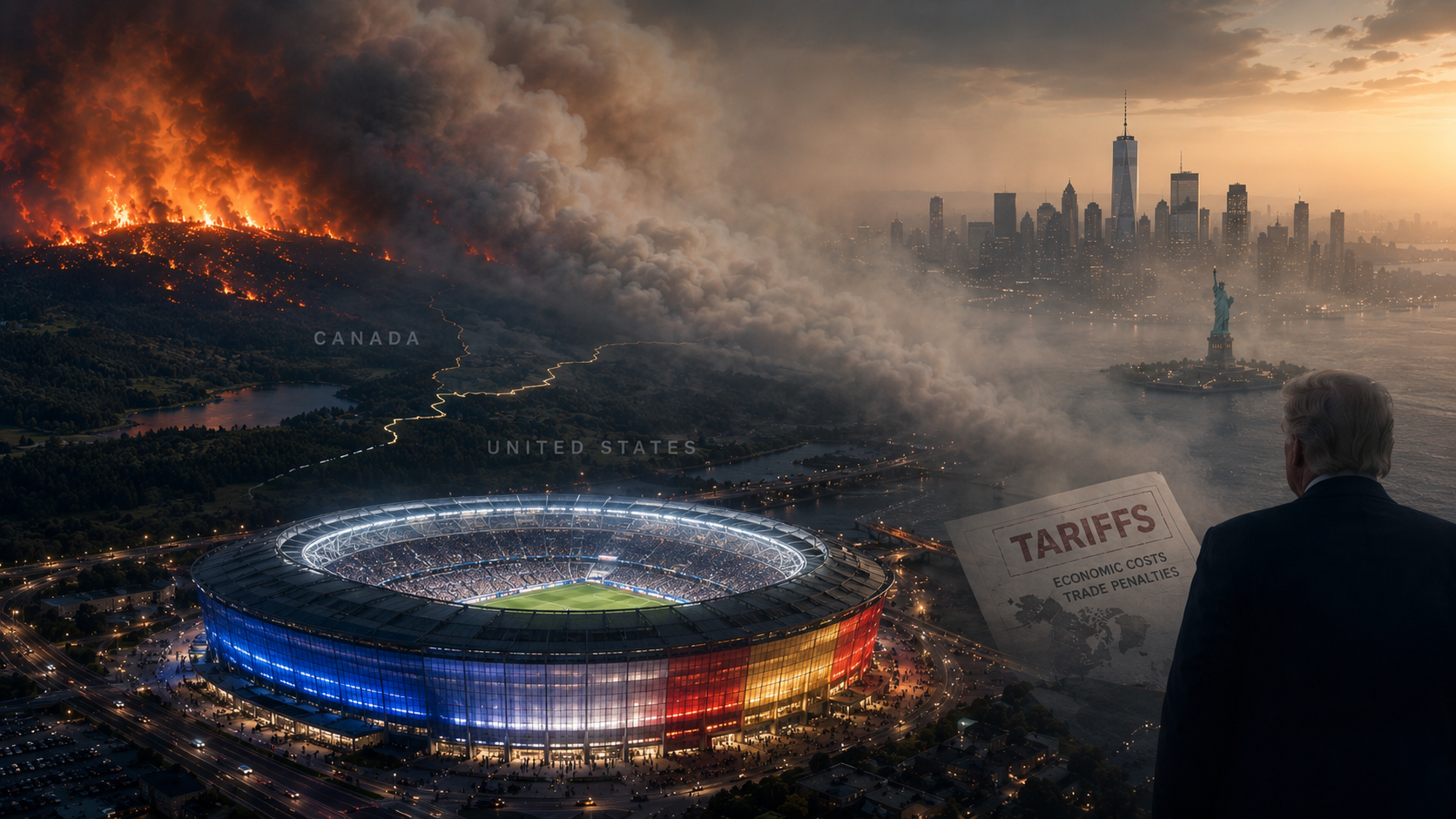
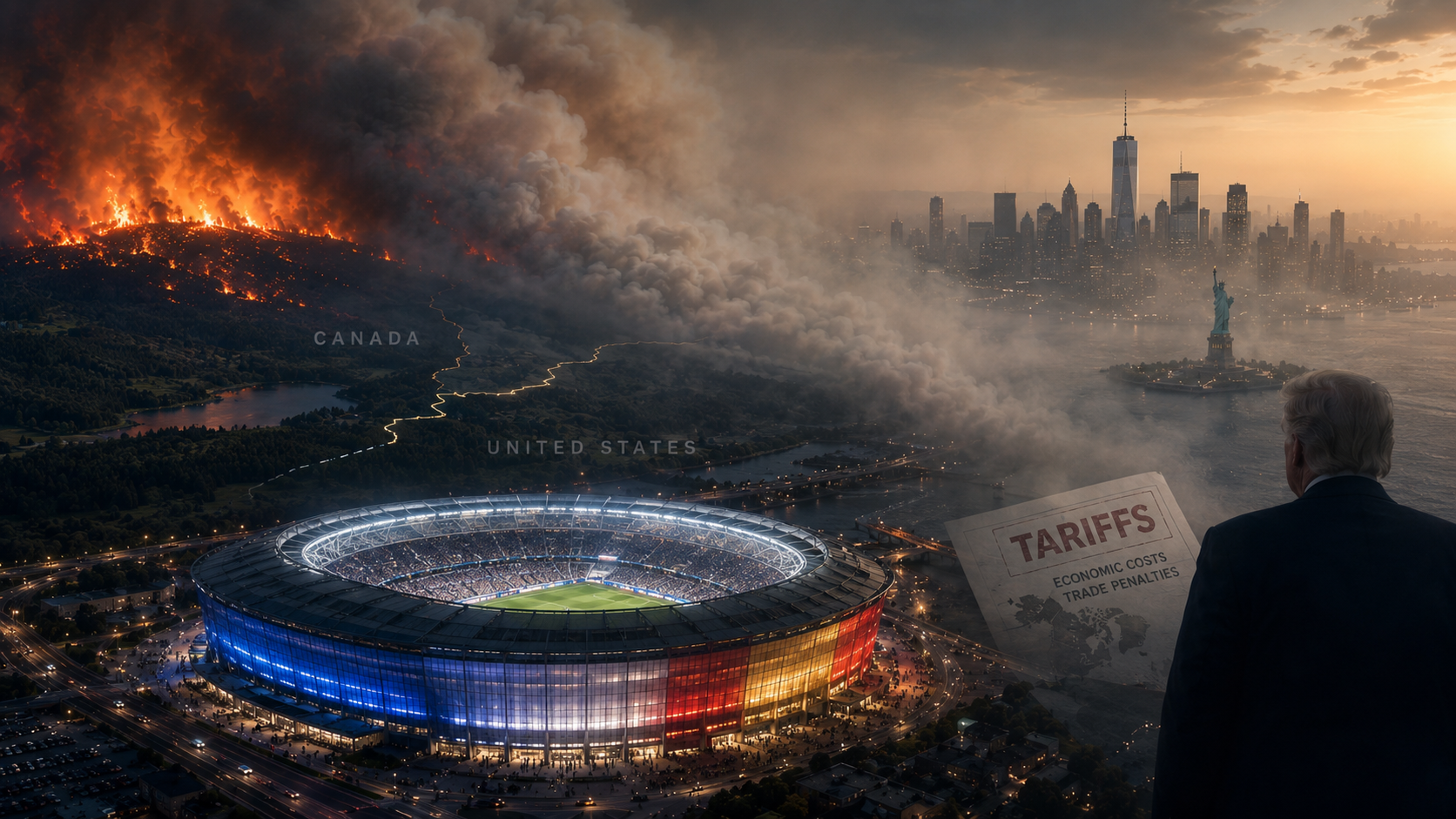
Smoke from hundreds of Canadian wildfires has crossed into the United States, damaged air quality across major cities and created an environmental threat before the 2026 FIFA World Cup final between Argentina and Spain.
The crisis has also exposed a sharp contradiction inside the United States government. President Donald Trump has blamed Canada for the smoke and threatened to increase tariff costs. However, just two days before Trump’s attack, U.S. Ambassador to Canada Pete Hoekstra publicly praised cooperation between the two countries and described the wildfires as a shared emergency that does not respect national borders.
At the same time, medical, atmospheric and wildfire specialists have rejected attempts to treat the smoke as a minor inconvenience. Their warnings are direct: hazardous wildfire pollution is dangerous even for healthy athletes, changing weather could bring another smoke plume toward New Jersey, and the scale of the Canadian fires cannot honestly be explained by one country simply failing to clean its forests.
More Than 800 Fires Were Burning Across Canada
In his July 15 statement, Ambassador Hoekstra said more than 800 wildfires were burning across Canada. He noted that the largest individual fire was comparable in size to Washington, D.C., while smoke was affecting communities on both sides of the border.
Canadian residents closest to the fires have suffered far more than smoky skies. Communities have faced evacuations, destroyed homes, closed roads and hazardous air. Emergency centres in Ontario have received residents forced to leave northern and Indigenous communities threatened by advancing flames.
Canada also had more active fires than at the same stage of either of the previous two years, while the total area burned had already exceeded the country’s ten-year average.
Many major fires are burning in remote boreal forests that cannot be reached by road. Firefighters must prioritize communities and infrastructure because attempting to extinguish every fire across Canada’s enormous forest territory is physically impossible.
The U.S. Ambassador Called It a Shared Challenge
Pete Hoekstra’s statement presented a completely different message from the language Trump used later.
“This is a shared challenge, and it demands a shared response,” the ambassador said.
Hoekstra commended what he called outstanding cooperation between the United States and Canada. He said both governments were sharing information and monitoring the fires in real time. He also thanked firefighters, law-enforcement officers and public-safety teams working around the clock.
The ambassador acknowledged the suffering of people who had lost loved ones, been displaced or ordered to evacuate. He concluded that the emergency knows no borders and said the United States would continue coordinating with Canada, as both countries have done during more than four decades of shared wildfire emergencies.
This statement matters because Hoekstra is not a Canadian official defending Canada. He is Trump’s own ambassador. His description of active cooperation directly challenges the impression that Canadian authorities have simply abandoned the fires and allowed smoke to enter the United States without a response.
Trump Accuses Canada of “Willful Negligence”
On July 17, Trump took a more confrontational position. He accused Canada of failing to maintain its forests and described the smoke entering the United States as filthy, polluted and unhealthy air.
Trump called the situation “willful negligence” and claimed it was costing the United States billions of dollars. He said the supposedly incalculable cost of the pollution should be added to tariffs already imposed on Canadian goods.
However, Trump did not publicly explain how the financial cost would be calculated, which Canadian products would be targeted, what tariff rate would apply or what legal process would connect wildfire smoke with import duties.
As of the reporting available on July 18, Trump had issued a tariff threat. A separate wildfire-specific tariff had not been announced as an enacted policy with a published rate or implementation date.
The Language About Canada “Paying” Tariffs Is Misleading
Trump frequently describes tariffs as money paid by foreign countries. That is not how import tariffs are collected.
A tariff is charged when goods enter the importing country. In this case, the duty is normally paid to the United States government by the American importer, not directly by the Canadian government. Businesses may absorb part of the cost, demand lower prices from suppliers or pass the expense to American customers through higher prices.
That does not mean tariffs have no effect on Canadian exporters. They can reduce demand, damage industries and force companies to lower prices. But presenting tariffs as a bill that Canada alone will pay hides the potential cost to U.S. businesses and consumers.
More importantly, an import tax does not extinguish a wildfire, change the wind direction or remove fine particles already travelling through the atmosphere.
Canada Rejects the Claim That It Has Done Nothing
Canadian Emergency Management Minister Eleanor Olszewski said Canada had invested approximately C$12 billion in forest sustainability, wildfire prevention and emergency preparedness since 2020.
She also pointed to the long history of Canadian and American cooperation during fires in both countries. Her immediate priority, she said, was protecting Canadian communities.
Ontario Premier Doug Ford announced plans to purchase 11 additional aircraft for wildfire operations. He also rejected criticism suggesting that Canada was refusing to fight the fires.
Canada’s response should not be presented as perfect. The country faces serious questions about firefighting capacity, evacuation planning, forest-management funding, protection of Indigenous communities and whether provincial and federal governments prepared adequately for increasingly severe fire seasons.
But those legitimate failures are different from claiming that smoke crossing the border proves deliberate or effortless negligence.
Wildfire Specialists Point to a Hotter and Drier Climate
Mike Flannigan, a professor of wildland fire at Thompson Rivers University, said the area burned annually in Canada has almost quadrupled since the 1970s. He attributed the increase to warmer temperatures, longer fire seasons and greater lightning activity.
Flannigan’s warning was blunt: as the climate warms, extreme weather and major fires will become more common.
Andrew Dessler, a climate scientist and professor of atmospheric sciences at Texas A&M University, said many Canadian fires were burning in largely unmanaged and sparsely populated forests. He identified climate change as the major factor that has altered the severity and cross-border consequences of these fires.
Higher temperatures remove moisture from trees, soil and vegetation. Once forests become dry, fires ignite more easily, spread faster and burn with greater intensity. Strong fires can push smoke high into the atmosphere, allowing winds to transport pollution hundreds or thousands of kilometres.
Forest management can reduce risk around populated areas, but specialists do not support the idea that clearing or managing every remote Canadian forest would eliminate large wildfire seasons.
The United States Is Also Experiencing an Above-Average Fire Year
The political blame directed exclusively at Canada also ignores fire conditions inside the United States.
According to the U.S. National Interagency Fire Center figures reported by Reuters, approximately 3.7 million acres had burned in the United States during 2026, compared with a ten-year average of approximately 2.7 million acres for the same period.
This does not remove Canada’s responsibility for protecting its forests and communities. It demonstrates that extreme wildfire conditions are affecting both countries and cannot honestly be reduced to a simple story of one responsible nation being attacked by one careless neighbour.
Spain Trained Outside in Hazardous Conditions
The smoke reached northern New Jersey as Spain prepared for the World Cup final. Spain held an outdoor training session in East Hanover while local air quality ranged from unhealthy to hazardous.
Particle pollution in the area was reported at more than seven times the World Health Organization guideline level during part of the day.
Officials were advising members of the public to stay indoors or use protective masks, yet elite players were still expected to train while breathing far more heavily than an average person standing outside.
Argentina remained in the Atlanta area, which was far enough south to avoid the worst smoke. That gave Argentina cleaner preparation conditions while Spain trained inside the affected region.
Medical Specialists Say Spain Should Have Trained Indoors
Dr. Courtney Howard, an emergency physician and official with the Global Climate and Health Alliance, said elite athletes should not be training outdoors when wildfire pollution reaches hazardous levels.
She explained that footballers move large volumes of air through their lungs during exercise, increasing the amount of pollution they inhale. Her recommended response was not another outdoor session with minor adjustments. She said the training should have been moved to an indoor, air-conditioned clean-air facility.
Mary Johnson, an environmental-health research scientist at the Harvard T.H. Chan School of Public Health, also warned that exercising in wildfire smoke increases exposure because athletes breathe faster and more deeply.
Johnson said being young, fit and healthy does not make players immune. Healthy people can still experience harmful effects when pollution exposure becomes severe enough.
Colorado State University environmental toxicologist Luke Montrose said researchers have identified at least 1,000 toxic substances in wildfire smoke. These can include formaldehyde and volatile organic compounds associated with diesel exhaust and cigarette smoke.
The smoke is therefore not harmless fog. It is a mixture of fine particles, gases and chemicals that can affect the lungs, cardiovascular system and inflammatory response.
Even “Moderate” Air Quality May Affect Performance
Chantal Darquenne, a professor of medicine at the University of California, San Diego, warned that players could still be affected even if air quality improves to the moderate category before the final.
She described the impact as dose-dependent. Moderate pollution may produce a smaller effect than hazardous pollution, but the exposure does not disappear, particularly when athletes are performing vigorous exercise for an extended period.
Possible effects include throat and eye irritation, coughing, breathing discomfort, inflammation and reduced ability to sustain intense physical effort.
For supporters with asthma, heart disease or other existing health conditions, the risk may be more serious. Approximately 80,000 spectators are expected inside the open-air stadium, in addition to security personnel, performers, media workers and stadium employees.
Specialists Say Sunday’s Forecast Is Still Uncertain
Rain before the final may remove some smoke particles and improve air quality. However, atmospheric specialists have warned that the rain does not guarantee clean conditions.
Mark Parrington, a senior scientist at the Copernicus Atmosphere Monitoring Service, said another smoky air mass could follow behind the weather system. Whether it reaches New York and New Jersey will depend partly on fire intensity and wind movement.
Jonathan Belles, a senior meteorologist with The Weather Channel and weather.com, said forecast models ranged from little or no smoke at ground level to concentrations that could become concerning for players and supporters.
The honest position is therefore uncertainty. Conditions may improve substantially, but organizers cannot guarantee that smoke will be irrelevant until reliable readings are available closer to kickoff.
FIFA Has Not Publicly Explained Its Air-Quality Threshold
Associated Press reporters asked FIFA and the Spanish Football Association whether moving Spain’s training indoors had been considered. At the time of publication, those questions had not received a response.
FIFA also had not publicly explained a clear air-quality threshold that would trigger a delayed kickoff, additional breaks, medical intervention or postponement.
That silence deserves scrutiny. Football authorities cannot demand that players compete in extreme heat, polluted air or other unsafe conditions simply because a global television schedule and commercial commitments have already been arranged.
A World Cup final is important, but it is not more important than the health of players, supporters and stadium workers.
A Political Attack Cannot Replace an Emergency Response
Canada must answer legitimate questions about prevention, emergency capacity and the protection of vulnerable northern communities. Canadian authorities should not be protected from criticism when communities are destroyed or firefighting resources prove inadequate.
Trump’s response, however, turns a complex environmental and public-health emergency into another tariff confrontation. His own ambassador described active cooperation between the two countries, while specialists identified climate, extreme heat, forest dryness, lightning and the enormous scale of Canada’s boreal territory as central factors.
Threatening import taxes may create political headlines. It does not provide firefighters, evacuation aircraft, clean-air shelters or medical protection.
Final Verdict
The Canadian wildfire crisis is real, severe and badly damaging communities on both sides of the border. Canada has responsibilities that should be examined without political protection or diplomatic language designed to hide failures.
But the evidence does not support presenting the disaster as a simple act of Canadian aggression or deliberate pollution. Trump’s own ambassador called it a shared challenge and praised bilateral cooperation. Wildfire scientists point to a hotter and drier climate. Medical specialists say Spain should not have trained outside during hazardous conditions. Forecasters admit that Sunday’s air quality remains uncertain.
The Argentina–Spain final may proceed without major disruption, but that outcome would depend on rain, wind and fire behaviour rather than political promises.
Smoke has already crossed the border. It has reached major American cities, entered World Cup preparations and exposed how quickly environmental emergencies become political weapons. Tariffs may punish businesses and consumers, but they cannot control the atmosphere.