




Related reading: The UK Just Got a Prime Minister Almost No One Outside Manchester Had Heard Of
Britain Is Getting a New Prime Minister Without an Election. Here’s Why That Is Completely Legal
Britain is preparing to change its head of government without holding a general election, asking the public to cast a ballot or dissolving Parliament.
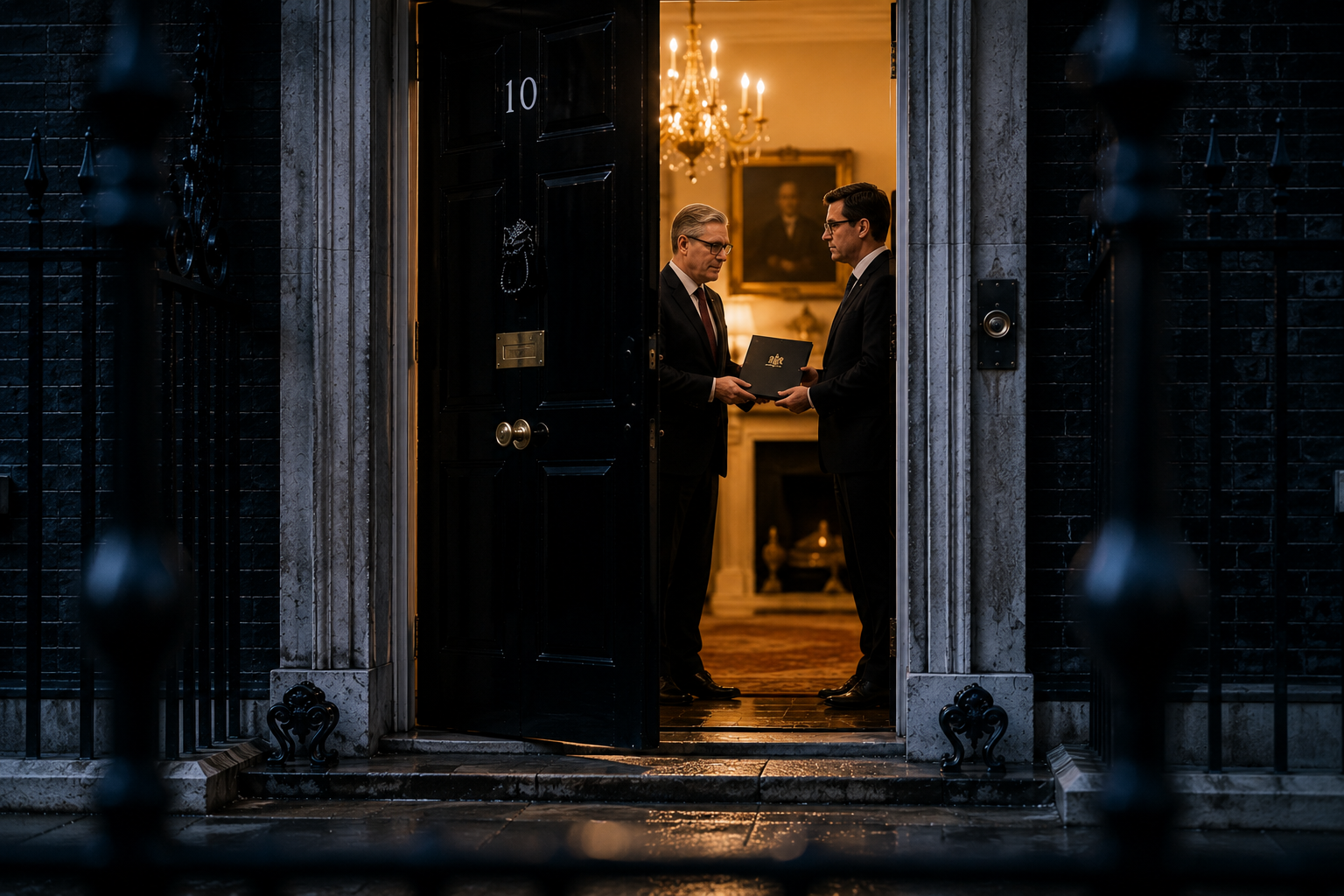
On July 17, 2026, Andy Burnham was confirmed as the new leader of the governing Labour Party. Keir Starmer is expected to formally resign as prime minister on Monday, July 20, after which King Charles III can invite Burnham to form a government.
For people accustomed to presidential systems, the process can look like a political party has privately selected a new national leader and installed him above the public. That description is not entirely wrong, but it misses the most important fact about British democracy.
British voters do not directly elect a prime minister.
The Public Elected a Parliament, Not Keir Starmer Personally
At the 2024 general election, voters across the United Kingdom selected individual Members of Parliament to represent their constituencies in the House of Commons.
Labour won enough seats to form a majority government. Because Starmer led Labour at the time, he was invited by the monarch to become prime minister.
His name influenced how millions of people voted, and Labour presented him publicly as its candidate to lead the country. Politically, therefore, Starmer clearly had an electoral mandate.
Constitutionally, however, voters did not elect him to a separate presidential office. They elected a Labour-controlled House of Commons. The government remains in power as long as it can command the confidence of that House.
When Labour changed its leader, it did not automatically lose the parliamentary majority won in 2024. The MPs remained in office, the government continued to command the Commons and no general election was legally required.
What Actually Makes Someone Prime Minister?
The British prime minister is formally appointed by the monarch, but the King cannot simply select whichever politician he prefers.
The position normally goes to the person most capable of commanding the confidence of the House of Commons. When one party has a clear majority, that person is almost always the leader of that party.
Burnham has now become Labour leader. Labour still controls the Commons. Unless Labour MPs withdraw their support or the government loses the confidence of Parliament, Burnham is positioned to replace Starmer without asking the entire country to vote again.
This is not an emergency loophole, a constitutional accident or a suspension of democracy. It is how a parliamentary government is designed to operate.
Labour’s Internal Process Effectively Decided the Premiership
The unusual part is not that Burnham can become prime minister without a general election. The more politically significant question is how narrowly the decision was made.
Burnham became the only candidate able to secure the required backing inside Labour. The party’s official announcement said he received support from 379 Labour MPs and 23 affiliated organisations.
Because there was no remaining rival, ordinary voters did not choose between competing candidates for prime minister. Labour members also did not participate in a nationwide public election capable of removing the government.
Burnham was elected as the MP for Makerfield in a June by-election, meaning voters in that constituency did directly approve his return to Parliament. But a single constituency did not vote on whether he should govern the entire United Kingdom.
The decisive support came from Labour’s parliamentary organisation, not from a new national ballot.
Imagine the Same Process in the United States
In the United States, the governing party cannot remove a president simply because its members believe another politician would perform better.
A president can leave office through resignation, death, constitutional incapacity or removal following impeachment. The vice president then succeeds under rules established before the crisis.
The president’s political party cannot privately choose a replacement and send that person to the White House while keeping the same administration in power.
Britain separates those roles differently. The monarch is head of state, while the prime minister is the head of government who depends on parliamentary support. Changing the governing party’s leader can therefore change the prime minister without changing the party in power.
In Washington, such a party-led replacement would resemble a constitutional crisis. In Westminster, it is a recognised transfer of power.
Britain Has Done This Repeatedly
Burnham’s expected appointment is not an unprecedented event.
Theresa May replaced David Cameron in 2016 without an immediate general election. Boris Johnson replaced May in 2019 through a Conservative leadership contest. Rishi Sunak replaced Liz Truss in 2022 after becoming Conservative leader.
None initially required the entire British electorate to vote on the incoming prime minister.
Burnham is set to become the seventh person to serve as UK prime minister since the 2016 Brexit referendum, following Cameron, May, Johnson, Truss, Sunak and Starmer.
That level of turnover raises legitimate concerns about political stability, but it does not make any of those appointments constitutionally invalid.
Australia Shows How Far the System Can Go
Britain is not alone. Similar parliamentary systems operate in countries including Australia, Canada, India and Japan.
Australia became an extreme example of internal leadership changes between 2010 and 2018. Kevin Rudd was replaced by Julia Gillard in 2010. Rudd then returned and displaced Gillard in 2013. Tony Abbott became prime minister after that year’s election but was replaced by Malcolm Turnbull in 2015. Turnbull was then removed and succeeded by Scott Morrison in 2018.
Several of those changes were produced by internal party decisions rather than general elections.
The public still elected Parliament, but the identity of the person leading the government changed repeatedly between national votes.
Does Burnham Have a Democratic Mandate?
Legally and constitutionally, Burnham does not need a fresh general election to take office.
Politically, the answer is more complicated.
Labour won its majority under Starmer, using a manifesto, campaign strategy and public image built around his leadership. Burnham may now change government priorities, cabinet appointments and the political direction of the country despite never having led Labour into a national election.
Opponents can reasonably argue that any major departure from the 2024 Labour manifesto would weaken his democratic legitimacy. Burnham can reasonably respond that Labour still holds a majority and that governments are elected collectively rather than as personal presidential administrations.
Both positions can exist at the same time. Something can be constitutionally legitimate while remaining politically controversial.
Parliament Can Still Remove Him
Burnham will not gain unlimited authority merely because Labour selected him.
He must maintain the support of his MPs and the confidence of the House of Commons. A successful vote of no confidence, a rebellion large enough to destroy Labour’s majority or another internal leadership challenge could threaten his government.
The public will also eventually receive an opportunity to judge his leadership at a general election. The current Parliament cannot continue indefinitely, and the next election is required by 2029 unless one is called earlier.
Until then, Burnham can govern using the parliamentary majority Labour already possesses.
The System Is Democratic, but Indirect
Calling Burnham an “unelected prime minister” is both understandable and incomplete.
He has been elected as an MP. The Labour MPs supporting him were elected by voters. The government he will lead holds a majority produced by a general election.
What he has not received is a direct national vote authorising him personally to become prime minister.
But neither did Starmer in a strictly constitutional sense. The UK does not place a separate prime-ministerial choice on the ballot. Voters elect representatives, and the composition of Parliament determines who governs.
The system is democratic, but the democratic authority travels indirectly through Parliament rather than directly from voters to the head of government.
Final Verdict
Britain is not cancelling an election, ignoring a presidential result or using an emergency provision to install Andy Burnham.
Labour won a parliamentary majority in 2024. It has now changed its leader while retaining that majority. Under the British system, the new party leader can be appointed prime minister because the government still commands the House of Commons.
That does not mean the public must be comfortable with it. Burnham is about to gain enormous national authority through a process controlled mainly by politicians and party organisations rather than the wider electorate.
The transfer is legal. It is constitutionally normal. It is also a reminder that in a parliamentary democracy, voters choose the legislature that creates the government, not necessarily the individual who will lead it for the entire term.
The person appearing on campaign posters and the person eventually governing the country can be different people. Britain’s constitution does not treat that as a malfunction. It treats it as the system working exactly as designed.