






Escalation in the Middle East: Rising Tensions Around the Strait of Hormuz and the Risk of Wider Conflict
Introduction
The Middle East remains one of the world's most strategically significant and politically complex regions. Decades of geopolitical rivalries, security concerns, and competing national interests have made it a focal point of international attention. Any major escalation involving regional powers has the potential to affect not only neighboring countries but also global trade, energy markets, and international diplomacy.
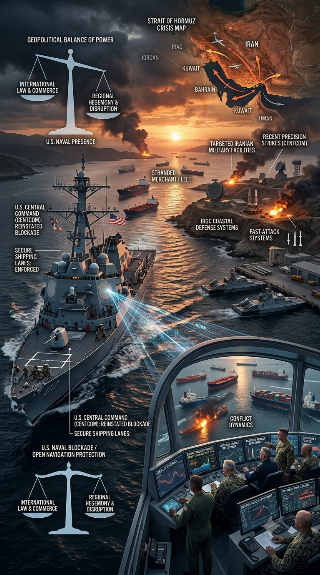
Recent military developments have once again raised concerns about the possibility of a broader regional conflict. Following a period of heightened tensions surrounding the Strait of Hormuz—one of the world's most critical maritime trade routes—the United States launched coordinated air strikes against multiple military targets inside Iran. The strikes came after a series of escalating security incidents that significantly increased fears of direct confrontation between the two countries.
The military operation marks a serious escalation in an already fragile security environment. While both nations have experienced periods of confrontation over the past several decades, direct military action of this scale carries the risk of triggering wider regional instability and increasing international efforts to prevent further escalation.
A Region Under Increasing Pressure
The Middle East has long been shaped by overlapping political, military, and economic interests. Regional rivalries, strategic alliances, and ongoing conflicts have created an environment in which isolated incidents can rapidly evolve into broader crises.
Among the most strategically important locations in the region is the Strait of Hormuz, a narrow waterway connecting the Persian Gulf to the Gulf of Oman and the Arabian Sea. A substantial portion of the world's seaborne oil and liquefied natural gas exports passes through this corridor, making it one of the most vital shipping routes in global commerce.
Because of its importance, any disruption to maritime traffic in the Strait immediately attracts international attention. Governments, energy markets, and shipping companies closely monitor developments in the area, recognizing that instability can have consequences far beyond the Middle East.
Escalating Maritime Security Concerns
In the weeks leading up to the military operation, tensions steadily increased following a series of incidents affecting commercial and military activity near the Strait of Hormuz.
According to official statements, repeated attacks and security threats against maritime assets prompted growing concern among regional governments and international partners responsible for protecting shipping lanes. As the situation deteriorated, diplomatic efforts struggled to reduce tensions, while military forces in the region increased their operational readiness.
The strategic importance of maintaining freedom of navigation through the Strait has long been a priority for many nations due to its role in supporting international trade and global energy supplies.
The U.S. Military Response
Following the escalation of maritime attacks, the United States conducted coordinated air strikes targeting multiple military facilities in several major Iranian cities.
According to U.S. officials, the operation focused on military infrastructure believed to be connected to activities viewed as threatening regional security and international shipping. The stated objective was to reduce the operational capabilities of targeted military assets while signaling a willingness to respond to further attacks.
Military officials described the strikes as carefully planned operations intended to target strategic military objectives rather than civilian infrastructure.
As with any major military action, assessments regarding operational impact, damage, and longer-term consequences continue to emerge as additional information becomes available.
Iran's Response
Iran strongly condemned the strikes, characterizing them as a violation of its sovereignty and warning that it reserved the right to respond.
Government officials called the attacks an unacceptable escalation and indicated that appropriate measures would be taken to defend national security and deter future military operations against Iranian territory.
Such responses are consistent with longstanding positions adopted during previous periods of confrontation between the two countries, highlighting the depth of political and strategic disagreements that continue to define their relationship.
International Reaction
The international community responded with a mixture of concern, calls for restraint, and renewed diplomatic engagement.
Several governments urged both sides to avoid additional military escalation, emphasizing the importance of dialogue and de-escalation in preventing a wider regional conflict.
International organizations likewise stressed the need to protect civilian populations, maintain regional stability, and preserve the security of global maritime trade routes.
Many analysts noted that further military exchanges could increase uncertainty throughout the region, affecting neighboring countries and potentially drawing additional international actors into diplomatic or security discussions.
Why the Strait of Hormuz Matters
The Strait of Hormuz occupies an exceptionally important position within the global economy.
Every day, significant volumes of crude oil and natural gas transit through this narrow maritime corridor, linking energy producers in the Persian Gulf with markets around the world.
Its strategic importance stems from several factors:
- It serves as one of the world's busiest energy shipping routes.
- Numerous regional economies depend on uninterrupted maritime trade.
- Global energy prices are highly sensitive to disruptions affecting the Strait.
- International naval forces regularly operate in the region to support maritime security.
Because of these factors, even limited military incidents can have consequences extending well beyond the immediate conflict zone.
Economic Implications
Military escalation in the Middle East frequently influences international financial markets.
Periods of uncertainty may affect:
- Global energy prices.
- Shipping insurance costs.
- International supply chains.
- Commodity markets.
- Investor confidence.
Businesses dependent on stable energy supplies closely monitor developments, as prolonged disruptions could influence transportation costs, manufacturing, and broader economic activity.
Financial markets often respond rapidly to geopolitical uncertainty, reflecting concerns about potential interruptions to international trade.
Diplomatic Challenges
Resolving military confrontations of this scale presents significant diplomatic challenges.
Both governments face domestic political considerations while simultaneously managing international relationships and regional security concerns.
Diplomatic efforts typically involve multiple stakeholders, including regional governments, international organizations, and allied nations seeking to reduce tensions before additional military actions occur.
Maintaining communication channels remains essential, particularly during periods of heightened military activity, as dialogue can help reduce misunderstandings and lower the risk of unintended escalation.
Regional Security Concerns
The Middle East contains numerous interconnected security dynamics, meaning that tensions between two countries can influence broader regional stability.
Neighboring states closely monitor developments because any prolonged confrontation could affect:
- Border security.
- Maritime transportation.
- Regional trade.
- Humanitarian conditions.
- Existing diplomatic initiatives.
Security analysts often emphasize that preventing further escalation requires balancing military deterrence with sustained diplomatic engagement.
Looking Ahead
The situation remains highly fluid, and future developments will depend on political decisions, military calculations, and ongoing diplomatic efforts.
International observers continue to watch for signs of further military action, renewed negotiations, or confidence-building measures that could reduce tensions.
While immediate security concerns dominate current discussions, long-term regional stability will likely require continued diplomatic engagement, dialogue among regional stakeholders, and efforts to address the underlying sources of conflict that have contributed to recurring periods of instability.
Conclusion
The reported U.S. air strikes against military targets in Iran following escalating tensions in the Strait of Hormuz represent a significant moment in an already volatile regional landscape. The events underscore the strategic importance of the Middle East and the potential global consequences of military confrontation involving major regional and international powers.
Beyond the immediate military developments, the situation highlights the interconnected nature of regional security, international trade, and global diplomacy. As governments assess the evolving circumstances, the international community continues to emphasize the importance of restraint, open communication, and diplomatic solutions aimed at preventing a broader conflict.
Whether the coming weeks bring further escalation or renewed dialogue, developments in the region will remain closely watched due to their implications for international security, economic stability, and the future balance of power in the Middle East.