






The Drone Navy Unleashed: How Unmanned Naval Systems Are Reshaping Modern Maritime Warfare
Introduction
The character of modern warfare is evolving at an unprecedented pace. Over the past decade, rapid advances in autonomous systems, artificial intelligence, satellite communications, and precision navigation have transformed the battlefield across land, air, sea, and cyberspace. Among these developments, unmanned systems have emerged as one of the defining military technologies of the 21st century, offering nations new ways to project force while reducing risks to personnel.
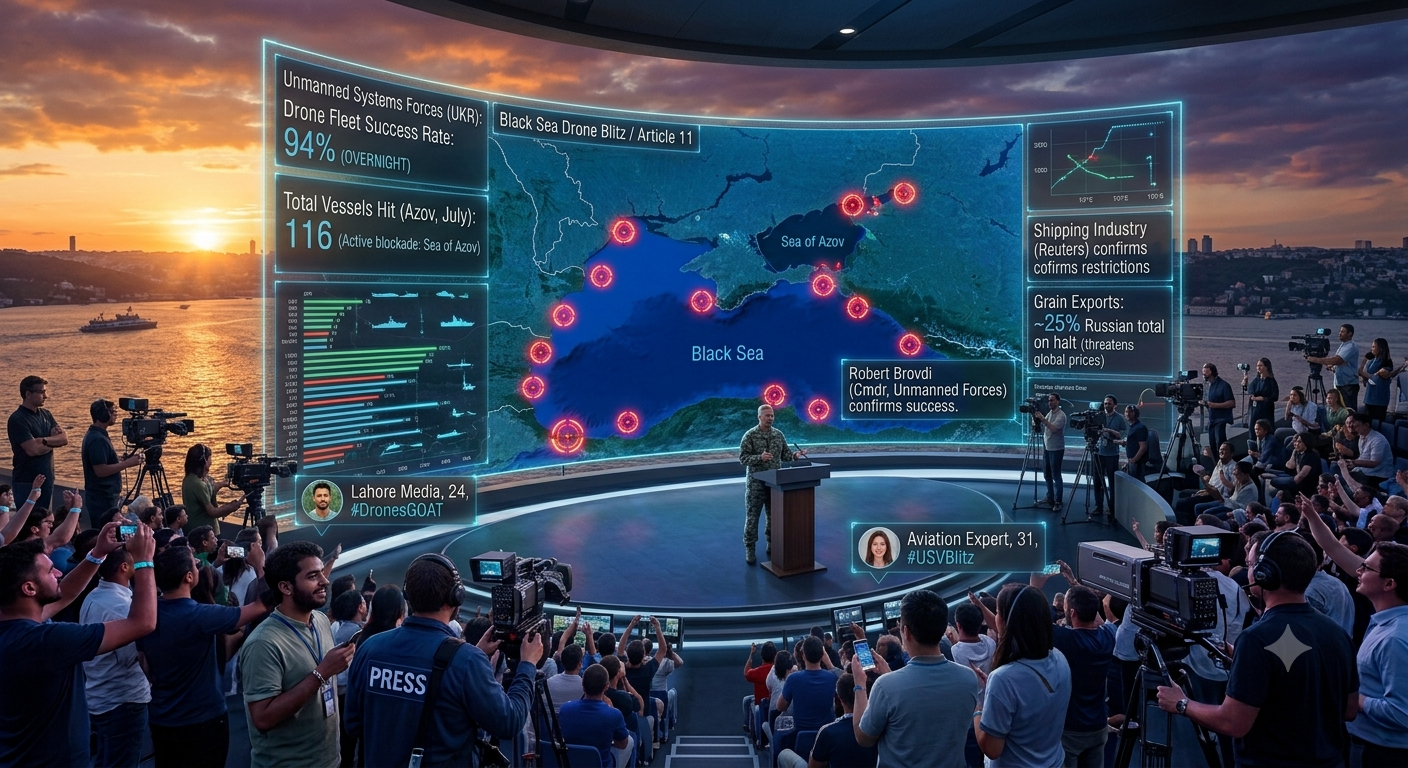
The latest developments in the Black Sea illustrate just how dramatically naval warfare is changing. During a coordinated overnight operation on July 14, 2026, Ukraine's Unmanned Systems Forces reported carrying out one of its largest maritime drone attacks to date, targeting 20 Russian vessels in the Black Sea. According to Ukrainian officials, the operation followed earlier attacks in the Sea of Azov and was intended to disrupt Russia's maritime logistics and so-called "shadow fleet." Reuters reported that the claims came from Ukraine's military, while noting that it could not independently verify all battlefield reports.
The operation has attracted international attention not only because of its scale but also because it highlights the growing influence of unmanned surface vehicles (USVs) in naval operations. Military planners around the world are closely studying these developments as evidence that relatively inexpensive autonomous systems can challenge far more expensive conventional naval assets.
The Rise of Ukraine's Unmanned Systems Forces
Since the beginning of the conflict, Ukraine has invested heavily in developing unmanned technologies across multiple domains.
Its Unmanned Systems Forces were established to coordinate operations involving aerial drones, maritime drones, electronic warfare systems, and other autonomous platforms. Rather than relying solely on traditional military hardware, Ukraine has increasingly emphasized the use of low-cost, rapidly produced unmanned systems capable of operating in contested environments.
This approach reflects a broader trend in modern military doctrine: using distributed networks of autonomous systems to complicate an opponent's defenses while reducing operational costs.
The Overnight Maritime Operation
According to statements released by the commander of Ukraine's Unmanned Systems Forces, the overnight operation targeted 20 vessels in the Black Sea, following previous strikes in the Sea of Azov. Ukrainian officials stated that the broader campaign had struck more than one hundred vessels over several days, though independent verification of battlefield claims remains difficult during an active conflict.
The reported targets included various types of commercial and support vessels that Ukraine says are linked to Russian maritime logistics. Reuters also reported Ukrainian claims that operations were continuing and that shipping activity in the region had been disrupted.
As with many wartime reports, information released by the parties involved may evolve as additional evidence becomes available.
Why the Black Sea Matters
The Black Sea occupies an exceptionally important strategic position.
It serves as a major transportation corridor connecting Eastern Europe, the Caucasus, and global maritime trade routes.
Its importance includes:
- Commercial shipping.
- Energy transportation.
- Agricultural exports.
- Naval operations.
- Regional security.
Control over shipping lanes in this region influences not only military operations but also international commerce.
The Sea of Azov and Grain Exports
One of the most significant economic consequences of the recent attacks involves the Sea of Azov, which plays an important role in Russian agricultural exports.
According to Reuters, roughly one-quarter of Russia's grain exports typically move through this maritime corridor. Shipping industry sources told Reuters that commercial traffic was being restricted because of security concerns following the attacks.
When maritime traffic slows or is rerouted, the effects may include:
- Longer shipping times.
- Increased transportation costs.
- Greater insurance premiums.
- Additional logistical challenges for exporters.
Such disruptions illustrate how military operations can influence global supply chains beyond the immediate conflict zone.
Unmanned Surface Vehicles: A New Naval Tool
Unmanned Surface Vehicles, often referred to as USVs, are remotely operated or autonomous boats designed to perform missions without a crew onboard.
Depending on their design, they may be used for:
- Maritime surveillance.
- Reconnaissance.
- Intelligence gathering.
- Electronic warfare.
- Mine countermeasures.
- Logistics support.
- Precision strike missions.
Because they are smaller and generally less expensive than conventional warships, they can be deployed in larger numbers and may present challenging targets for traditional naval defenses.
Their growing use reflects a broader shift toward integrating autonomous systems into maritime operations.
Challenging Traditional Naval Doctrine
For much of modern history, naval power has been measured by the size and sophistication of a country's fleet.
Aircraft carriers, destroyers, cruisers, and submarines have traditionally represented the backbone of maritime military strength.
The growing use of unmanned systems introduces a different strategic consideration.
Rather than relying solely on large, heavily armed platforms, military planners are increasingly exploring the advantages of numerous smaller autonomous systems capable of operating together.
Potential advantages include:
- Lower production costs.
- Reduced risk to personnel.
- Operational flexibility.
- Ability to overwhelm defensive systems through coordinated attacks.
These developments are prompting many naval forces to reconsider future fleet structures and defensive strategies.
Economic Consequences
Military activity affecting major shipping routes can extend well beyond the battlefield.
When maritime security deteriorates, international markets often respond quickly.
Potential economic impacts include:
- Higher shipping insurance costs.
- Delays in cargo transportation.
- Increased freight rates.
- Market uncertainty for agricultural commodities.
- Pressure on regional export logistics.
The Black Sea's role in global grain trade makes developments in the region particularly important for international food markets.
The Importance of Maritime Logistics
Modern conflicts increasingly recognize that logistics are as important as frontline operations.
Fuel, food, equipment, and industrial supplies depend upon secure transportation networks.
Disrupting maritime logistics can:
- Slow military resupply.
- Increase transportation costs.
- Force longer shipping routes.
- Reduce operational flexibility.
Consequently, attacks against logistical infrastructure often aim to influence an adversary's broader operational capabilities rather than focusing solely on frontline combat.
The Evolution of Drone Warfare
The conflict has become one of the world's most closely observed examples of large-scale drone employment.
Initially associated primarily with aerial reconnaissance, unmanned systems now operate across multiple environments:
- Air.
- Land.
- Sea.
- Electronic warfare.
- Intelligence collection.
Advances in communications, navigation, and automation have expanded their military applications considerably.
Many defense analysts view these developments as an indication that future conflicts will involve increasing coordination between conventional forces and autonomous platforms.
International Military Interest
Navies around the world are closely monitoring developments in the Black Sea.
Military planners are studying how unmanned maritime systems perform against established naval defenses, as these experiences may influence future procurement, doctrine, and training.
At the same time, analysts caution that lessons drawn from one conflict may not apply universally, as geography, technology, and operational conditions vary significantly between regions.
Looking Ahead
The continuing evolution of autonomous military systems is likely to influence naval operations for years to come.
Future developments may include improvements in:
- Autonomous navigation.
- Artificial intelligence.
- Sensor integration.
- Electronic resilience.
- Coordination between unmanned and crewed platforms.
As these technologies mature, they are expected to become increasingly integrated into maritime security and defense planning worldwide.
Conclusion
The reported large-scale Ukrainian maritime drone operation in the Black Sea marks another significant example of how unmanned systems are influencing modern conflict. According to Ukrainian officials, the strikes targeted numerous vessels and contributed to disruptions in shipping through strategically important waterways, although many battlefield claims remain difficult to independently verify during ongoing hostilities.
Beyond the immediate military effects, the events underscore a broader transformation in naval warfare. Autonomous maritime platforms are becoming increasingly capable and are prompting militaries around the world to reassess traditional concepts of sea power, fleet protection, and maritime logistics. As technology continues to evolve, the integration of unmanned systems is likely to remain one of the defining trends shaping the future of naval operations and international maritime security.