



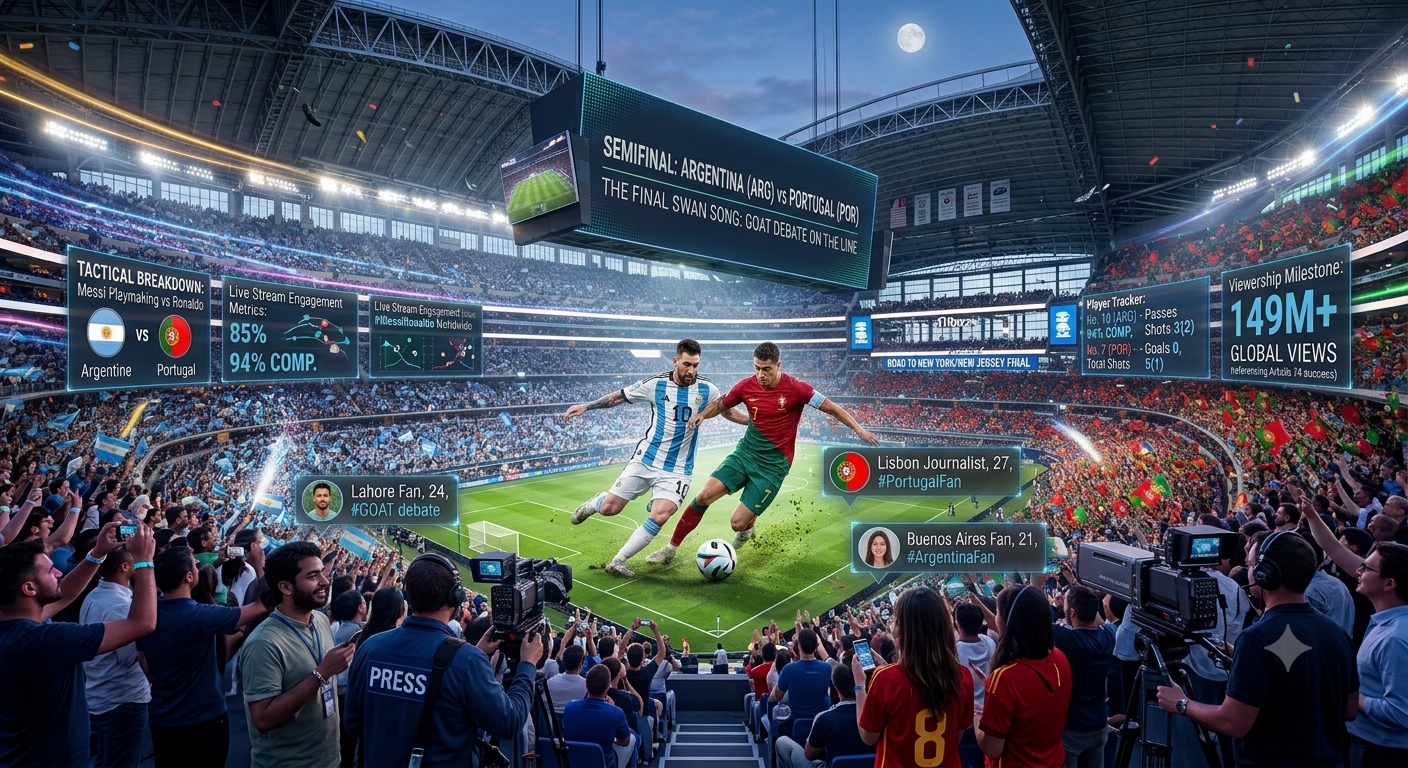
The Final Dance of the Icons: Messi, Ronaldo, and the End of Football’s Greatest Rivalry
For nearly twenty years, football has revolved around two names. Whether supporters leaned toward Lionel Messi’s artistry or Cristiano Ronaldo’s relentless pursuit of excellence, one thing became undeniable: an entire generation experienced the sport through the lens of their rivalry. As the 2026 FIFA World Cup approaches the closing stages, the conversation has shifted from comparison to appreciation. The debate over who is the greatest may never truly end, but the era in which both men defined world football simultaneously is drawing to a close.
A Rivalry That Defined an Era
Few rivalries in sports history have matched the longevity, consistency, and global influence of Messi versus Ronaldo. From the late 2000s onward, the pair dominated individual awards, shattered scoring records, and transformed expectations of what elite footballers could achieve.
Messi emerged as the genius playmaker capable of bending matches to his will through vision, dribbling, and creativity. Ronaldo evolved from a dazzling winger into one of the most prolific goal scorers the sport has ever seen. Their contrasting styles only intensified the debate.
Supporters often framed the argument in simple terms:
Messi: the natural football artist.
Ronaldo: the ultimate competitor and finisher.
Yet reducing their careers to those labels overlooks the remarkable adaptability both players demonstrated across different teams, managers, leagues, and tactical systems.
The Significance of the 2026 World Cup
The 2026 FIFA World Cup carries historic weight beyond the participation of two legends. It is the first tournament featuring 48 nations and spans multiple host countries across North America. The expanded format represents a new chapter for international football, and for many fans it also symbolizes the closing chapter of the Messi-Ronaldo era.
Whether viewed as a final opportunity for glory or simply another milestone in extraordinary careers, the tournament has become deeply intertwined with their legacies.
What makes the moment unique is not merely their presence at an advanced stage of their careers. It is the possibility that the world is witnessing the last major international tournament featuring both players at the highest level of global attention.
Longevity Beyond Expectation
One of the most astonishing aspects of their careers is longevity.
Modern football places enormous physical demands on elite players. High-intensity pressing, packed club calendars, international travel, and year-round competition make sustained excellence increasingly difficult.
Yet Messi and Ronaldo continued competing at the top level long after many contemporaries had retired or moved into reduced roles.
A rare level of longevity
2006
World Cup debut
Both players first appeared on the global stage20+
Years at the top
Competing at elite level across multiple erasMaintaining world-class standards across two decades is exceptionally rare in modern football.
Their ability to maintain elite conditioning became a defining part of their stories:
Strict training regimens
Careful recovery management
Adaptation of playing styles
Exceptional professionalism
Mental resilience through changing football eras
For younger players, their careers have become case studies in how talent must eventually be matched by discipline.
World Cup Legacy: More Than Goals
Comparing World Cup legacies is far more complex than comparing statistics.
Cristiano Ronaldo’s Impact
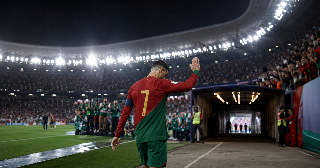
Ronaldo’s World Cup story reflects his broader career: relentless ambition, decisive finishing, and the ability to produce moments of individual brilliance.
His achievements include:
Scoring across multiple World Cup tournaments.
Leading Portugal through several deep international campaigns.
Setting benchmarks for longevity at the highest level.
Delivering iconic performances under immense pressure.
Ronaldo’s influence on Portugal extended beyond goals. He helped transform the national team’s mentality from talented challenger to genuine contender.
Lionel Messi’s Impact
Messi’s World Cup legacy is often associated with orchestration rather than simply finishing.
His greatest international performances have showcased:
Creative playmaking.
Progressive ball carrying.
Chance creation.
Control of match tempo.
Leadership through technical influence.
Argentina’s tactical structure has frequently revolved around Messi’s ability to connect midfield and attack, allowing teammates to thrive around him.
The Evolution of Their Playing Styles
Perhaps the most overlooked aspect of the rivalry is how dramatically both players evolved.
Ronaldo’s Transformation
Early in his career, Ronaldo was known for step-overs, explosive dribbling, and wing play. As he matured, he reinvented himself into a devastating penalty-box striker.
This evolution allowed him to remain effective even as raw pace gradually declined.
Messi’s Transformation
Messi began as a wide attacker capable of eliminating defenders one-on-one. Over time, he became a deeper creator, influencing matches through positioning, passing, and game management.
Rather than relying solely on acceleration, he increasingly controlled matches through intelligence and timing.
Both players demonstrated that longevity in football often depends on adaptation as much as athleticism.
The Intangible Influence
Statistics can measure goals, assists, and appearances. They cannot fully measure influence.
Ronaldo inspired a generation through visible dedication. His preparation, physical conditioning, and competitive intensity became models for aspiring athletes.
Messi inspired a different way. His creativity, balance, and understanding of space convinced countless young players that intelligence and technique could dominate the modern game.
Their influence extended into coaching philosophies, youth development programs, and tactical discussions around the world.
How They Changed International Football
Before Ronaldo’s rise, Portugal often carried the label of a talented but inconsistent tournament team. During his era, expectations changed dramatically.
Similarly, Argentina’s identity evolved around maximizing Messi’s unique abilities. Coaches adjusted systems to provide him freedom between the lines while building supporting structures around his creativity.
In both cases, the national team became partly defined by the strengths of its iconic player.
The GOAT Debate: Why It May Never End
The argument over the greatest footballer of all time persists because each player offers a compelling but different case.
The two strongest cases
The case for Messi
Exceptional playmaking ability
Unmatched dribbling and balance
Control of game rhythm
Creative influence across entire matches
Ability to make teammates better
The case for Ronaldo
Extraordinary goal-scoring consistency
Success across multiple leagues
Aerial dominance and finishing
Longevity at elite level
Competitive mentality in decisive moments
The challenge is that they excelled in different dimensions of the sport. Comparing them directly is often less about objective measurement and more about what an individual values most in football.
A Rivalry That Elevated Both Players
One reason their achievements became so extraordinary is that they pushed each other.
When one produced a remarkable season, the other responded. Records that once seemed untouchable became targets. Standards that once appeared impossible became expectations.
The rivalry created an environment in which both players continuously sought improvement.
Football benefited enormously from this competition. Fans witnessed:
Historic scoring seasons.
Repeated Champions League triumphs.
Ballon d’Or battles.
Iconic international performances.
Memorable club clashes.
It is difficult to imagine either career reaching quite the same heights without the presence of the other.
The Emotional Weight of the Final Chapter
For many supporters, the closing stages of this era feel deeply personal.
Children who first watched Messi and Ronaldo in the 2000s are now adults. Entire football memories—school debates, late-night matches, tournament celebrations, and club rivalries—have been built around these two players.
As their careers approach their conclusion, the conversation naturally shifts from rivalry to gratitude.
Even fans firmly committed to one side increasingly recognize the uniqueness of having witnessed both careers simultaneously.
Will We See Another Rivalry Like This?
Football will always produce new stars. Emerging talents will win trophies, break records, and capture global attention.
What may prove difficult to replicate is the combination of factors that made Messi and Ronaldo’s rivalry exceptional:
Two all-time great players.
Competing in the same era.
Maintaining elite performance for nearly two decades.
Representing contrasting football philosophies.
Sharing the sport’s biggest stages repeatedly.
Remaining relevant across multiple generations of players.
Such alignment of talent, longevity, competition, and global influence is extraordinarily rare.
The Legacy Beyond Records
When future generations study football history, they will find remarkable statistics attached to both names.
But numbers alone will not explain why the rivalry became a cultural phenomenon.
Its true legacy lies in how it made millions of people care more deeply about football. Fans stayed awake for matches, traveled across continents, argued passionately with friends, and followed every milestone because they felt they were witnessing history unfold in real time.
Messi and Ronaldo did more than accumulate records. They expanded the global reach of the sport and helped define an entire football generation.
Conclusion
As the 2026 World Cup era reaches its conclusion, the focus is no longer solely on determining a winner in the endless GOAT debate. Whether one prefers Messi’s artistry or Ronaldo’s relentless efficiency, both players have already secured places among the greatest athletes in sporting history.
Their careers followed different paths, showcased different strengths, and inspired different emotions. Yet together they created something larger than individual achievement: a rivalry that elevated football itself.
There may never be unanimous agreement on who stands above the other. What is far more certain is that future generations will look back on this period as one of the most extraordinary chapters the sport has ever produced.
For those who witnessed it live, the greatest privilege was not choosing a side. It was watching two legends spend nearly twenty years redefining the limits of football greatness.