




Introduction
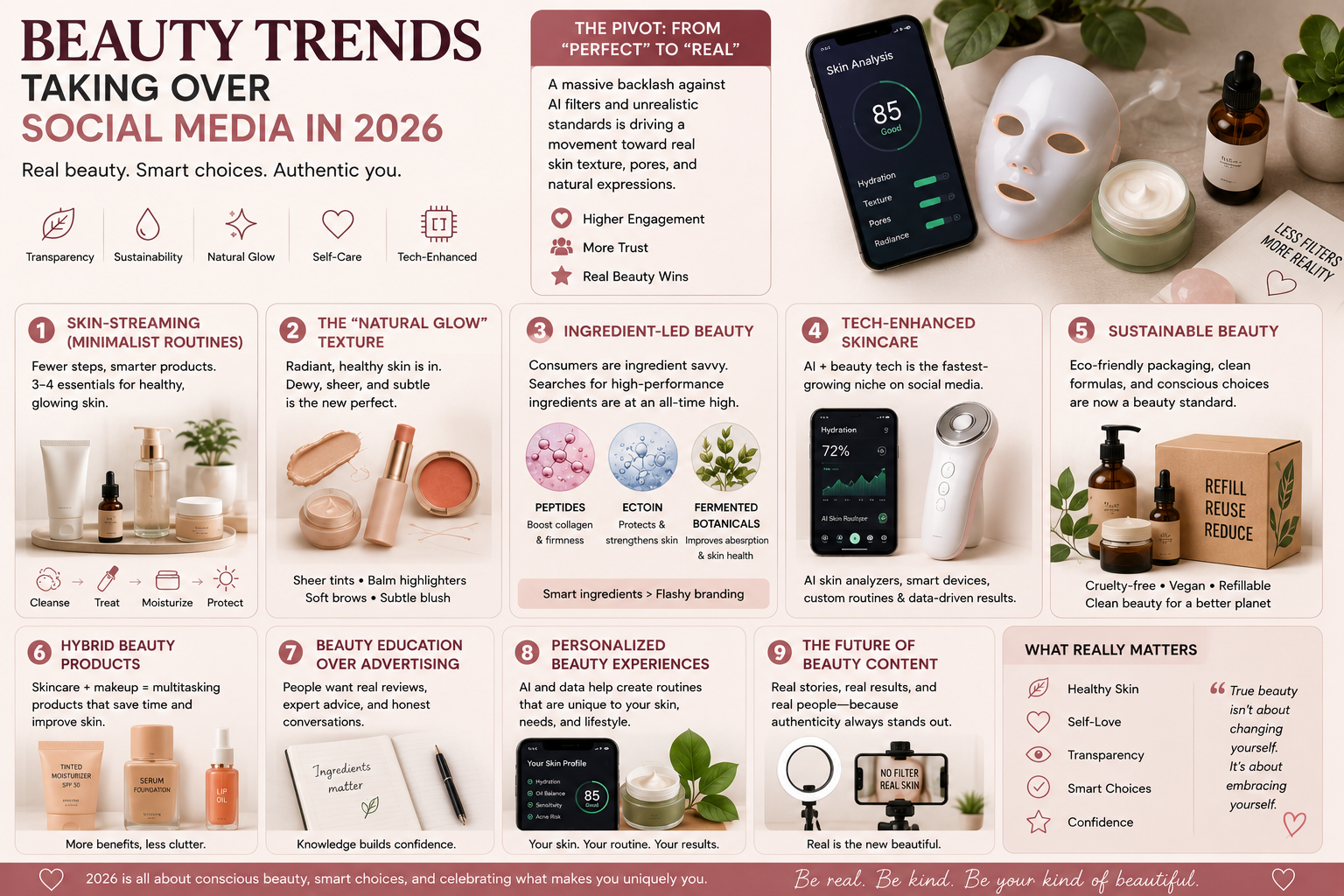
The beauty industry has undergone a remarkable transformation over the past few years. Social media platforms have changed the way people discover products, learn skincare routines, and define beauty. In 2026, beauty is no longer centered on covering imperfections or chasing unrealistic ideals. Instead, the focus has shifted toward healthy skin, self-care, transparency, sustainability, and enhancing natural features.
Consumers today are more informed than ever before. Instead of buying products simply because of celebrity endorsements or attractive packaging, people carefully research ingredients, compare reviews, and look for scientifically backed skincare solutions. Social media has become an educational platform where dermatologists, skincare specialists, makeup artists, and beauty influencers share valuable knowledge alongside product recommendations.
Artificial intelligence is also reshaping the beauty industry. Smart skincare devices, AI-powered skin analysis, personalized beauty recommendations, and virtual makeup testing are making beauty routines more customized and efficient. At the same time, there has been a growing movement against unrealistic beauty filters and excessive photo editing. More creators are embracing authenticity by showing real skin texture, natural makeup, and unfiltered beauty.
Another important trend is sustainability. Consumers increasingly prefer environmentally friendly packaging, cruelty-free products, refillable containers, and brands that prioritize ethical sourcing. Beauty is becoming less about perfection and more about confidence, skin health, and responsible choices.
Whether you’re a skincare enthusiast, makeup lover, beauty creator, or someone simply looking to improve your daily routine, understanding the latest beauty trends can help you make smarter decisions while embracing your natural appearance.
In this article, we explore the biggest beauty trends dominating social media in 2026 and why they are shaping the future of the beauty industry.
1. The Rise of Skin-Streaming: Simpler Skincare, Better Results
One of the biggest beauty trends in 2026 is skin-streaming.
Instead of using complicated skincare routines with ten or twelve products, consumers are simplifying their routines by focusing only on products that provide proven benefits.
The philosophy behind skin-streaming is simple.
More products do not always produce better skin.
In many cases, excessive layering causes irritation, damaged skin barriers, unnecessary spending, and inconsistent results.
Modern skincare routines typically include only a few essential steps.
A gentle cleanser removes dirt and excess oil without disrupting the skin barrier.
A treatment serum addresses specific concerns such as hydration, acne, pigmentation, or aging.
A moisturizer maintains skin hydration while strengthening the protective barrier.
Finally, sunscreen protects against harmful UV damage throughout the day.
This minimalist approach saves time, reduces product waste, and allows active ingredients to perform more effectively.
Consumers increasingly prioritize quality over quantity, choosing fewer products with higher performance rather than overcrowding bathroom shelves.
Skin-streaming also supports sustainability because fewer purchases result in less packaging waste and more mindful consumption.
2. The Natural Glow Has Replaced Matte Perfection
For many years, perfectly matte skin dominated makeup trends.
Heavy foundations, full-coverage concealers, strong contouring, and powder-heavy finishes defined beauty standards.
In 2026, that aesthetic has changed dramatically.
The focus has shifted toward healthy, radiant, naturally glowing skin.
Instead of hiding every pore or texture, modern beauty celebrates realistic skin that reflects health and proper skincare.
Lightweight skin tints have become increasingly popular because they even skin tone while allowing natural texture to remain visible.
Cream blushes provide a fresh appearance without looking artificial.
Balm-based highlighters create subtle luminosity rather than dramatic sparkle.
Tinted lip balms replace heavy matte lipsticks for comfortable everyday wear.
Brows are styled softly using clear or lightly tinted gels instead of highly sculpted shapes.
The overall objective is enhancing natural beauty rather than transforming facial features.
This trend reflects growing confidence in authenticity and healthier skin rather than excessive cosmetic coverage.
3. Ingredient-Led Beauty Is Driving Consumer Decisions
Modern beauty consumers have become highly educated.
Instead of purchasing products based solely on advertising, they carefully examine ingredient lists before making decisions.
Social media has played an important role in this transformation.
Dermatologists, cosmetic chemists, skincare educators, and licensed estheticians regularly explain how different ingredients work and which combinations produce the best results.
Peptides remain among the most discussed anti-aging ingredients because they support collagen production and improve skin elasticity.
Ectoin has gained popularity for protecting skin against environmental stress while strengthening the skin barrier.
Fermented botanical extracts continue attracting attention due to their ability to improve ingredient absorption and promote healthy skin balance.
Niacinamide remains widely used for reducing redness, minimizing pores, regulating oil production, and improving uneven skin tone.
Ceramides help restore damaged skin barriers while maintaining hydration.
Hyaluronic acid continues serving as one of the most effective moisturizing ingredients available.
Consumers increasingly understand ingredient concentrations, compatibility, formulation quality, and scientific evidence.
Brands emphasizing research, transparency, and clinical testing generally earn greater consumer trust than those relying primarily on marketing claims.
4. Technology Is Transforming Skincare
Artificial intelligence has expanded far beyond smartphones and computers.
Beauty technology has become one of the industry’s fastest-growing sectors.
AI-powered skin analysis applications now evaluate hydration levels, pigmentation, acne severity, wrinkles, redness, and overall skin condition using smartphone cameras.
Instead of receiving generic recommendations, users receive personalized skincare routines tailored to their unique skin characteristics.
Smart beauty devices further enhance home skincare.
LED light therapy masks adjust treatment settings based on individual skin concerns.
Advanced cleansing devices monitor skin sensitivity.
Intelligent facial tools optimize massage techniques and treatment intensity.
Some systems even monitor long-term improvements by comparing monthly skin scans.
Virtual makeup technology has also improved dramatically.
Consumers can test foundations, lipsticks, eyeshadows, blushes, and hairstyles digitally before purchasing products online.
Retailers reduce product returns while shoppers gain greater confidence in buying decisions.
Technology is making beauty routines more personalized, data-driven, and efficient than ever before.
5. The Return of Authentic Beauty
Perhaps the most important beauty movement of 2026 is authenticity.
For years, heavily filtered photographs, unrealistic editing, and AI-generated beauty standards dominated social media.
This created impossible expectations regarding flawless skin, facial symmetry, body proportions, and overall appearance.
Today, audiences increasingly reject unrealistic perfection.
Creators openly discuss photo editing, cosmetic procedures, lighting techniques, and makeup transformations.
Many influencers intentionally post unedited photographs showing real skin texture, pores, acne scars, freckles, fine lines, and natural facial expressions.
This transparency builds stronger trust between creators and audiences.
Consumers appreciate honesty because it reflects realistic human experiences rather than unattainable ideals.
Brands also embrace authenticity by featuring diverse models representing different ages, ethnicities, skin tones, and body types.
Beauty is becoming more inclusive while celebrating individuality rather than perfection.
6. Sustainability Has Become a Beauty Standard
Environmental responsibility has become one of the strongest influences shaping purchasing decisions.
Consumers increasingly support companies demonstrating genuine commitment to sustainability.
Refillable packaging significantly reduces plastic waste.
Glass containers replace disposable plastics.
Biodegradable materials minimize environmental impact.
Cruelty-free certifications remain highly important.
Many consumers also prefer vegan formulations free from animal-derived ingredients.
Responsible sourcing of botanical extracts has become another major consideration.
Brands increasingly publish sustainability reports explaining manufacturing practices, carbon reduction initiatives, recycling programs, and ethical ingredient sourcing.
Minimalist skincare routines also contribute to sustainability by encouraging fewer purchases and reducing unnecessary product consumption.
Consumers now recognize that responsible beauty benefits both personal wellness and environmental health.
7. Hybrid Beauty Products Are Becoming More Popular
Consumers increasingly prefer products serving multiple purposes.
Hybrid beauty products combine skincare and makeup into one formula.
Tinted moisturizers provide hydration while evening skin tone.
SPF foundations protect against sun damage while delivering natural coverage.
Lip oils nourish lips while adding subtle color.
Serum foundations include active skincare ingredients supporting long-term skin improvement.
Color-correcting creams replace multiple complexion products.
This multifunctional approach simplifies routines while saving money, reducing clutter, and improving convenience.
Busy lifestyles make hybrid products especially attractive because they reduce preparation time without compromising results.
The future of beauty focuses on effectiveness rather than unnecessary complexity.
8. Beauty Education Is Replacing Beauty Advertising
Social media users increasingly seek educational content instead of traditional advertising.
Dermatologists explain skin conditions.
Cosmetic chemists analyze ingredient formulations.
Professional makeup artists demonstrate practical application techniques.
Consumers appreciate evidence-based recommendations supported by scientific understanding rather than exaggerated promotional claims.
Short educational videos explaining sunscreen, acne treatment, skin barriers, retinol usage, exfoliation, hydration, and ingredient compatibility consistently receive strong engagement.
Brands collaborating with qualified experts often build stronger credibility than those relying solely on celebrity endorsements.
Knowledge has become one of the most valuable beauty products.
9. Personalized Beauty Experiences
No two individuals have identical skin.
Personalization therefore represents one of the industry’s most significant developments.
Artificial intelligence analyzes skin type, climate, lifestyle, age, genetics, sleep patterns, stress levels, and environmental exposure before recommending customized products.
Some companies formulate personalized skincare specifically for individual customers.
Subscription services adjust recommendations according to seasonal changes and evolving skin conditions.
Consumers increasingly expect beauty experiences designed specifically for their unique needs rather than generic solutions.
Personalization improves customer satisfaction while reducing unnecessary experimentation.
10. The Future of Beauty Content on Social Media
Beauty content itself has evolved considerably.
Highly edited tutorials have given way to honest product reviews, realistic skincare journeys, ingredient education, dermatologist interviews, and before-and-after progress documentation.
Audiences value creators who explain why products work instead of simply promoting sponsorships.
Long-term product testing receives greater credibility than first impressions.
Educational storytelling consistently outperforms overly polished advertising.
Communities increasingly discuss confidence, self-care, wellness, mental health, and realistic expectations alongside beauty products.
Beauty content now focuses on empowering audiences rather than encouraging insecurity.
Why These Trends Matter
The beauty industry influences far more than makeup purchases.
It affects confidence, self-image, mental health, environmental sustainability, scientific innovation, and consumer behavior.
The trends emerging in 2026 reflect broader cultural shifts toward authenticity, transparency, education, and responsible consumption.
Consumers increasingly reward companies demonstrating honesty, scientific credibility, environmental responsibility, and genuine concern for customer well-being.
Brands adapting to these expectations build stronger customer loyalty while maintaining long-term relevance.
Likewise, individuals adopting healthier beauty habits often experience greater confidence because they focus on caring for their skin rather than hiding it.
Final Thoughts
The beauty landscape of 2026 represents a refreshing departure from the unrealistic standards that once dominated social media.
Today’s consumers value healthy skin over heavy makeup, knowledge over marketing, authenticity over perfection, and sustainability over unnecessary consumption.
Minimalist skincare routines, naturally radiant makeup, ingredient-focused products, AI-powered personalization, hybrid cosmetics, ethical manufacturing, and transparent beauty education define the modern beauty experience.
Technology continues making beauty routines smarter and more personalized, while growing awareness encourages consumers to embrace their natural features with confidence.
The future of beauty is not about becoming someone else.
It is about becoming the healthiest, most confident, and most authentic version of yourself.
As these trends continue evolving, one principle remains clear: true beauty is no longer measured by perfection—it is defined by healthy skin, informed choices, individuality, and genuine self-confidence.