





Introduction
Healthy, glowing skin has become one of the biggest beauty goals in 2026. Every day, millions of people scroll through social media looking for skincare advice, trending products, and miracle routines that promise flawless skin. While some of this information is genuinely helpful, much of it is based on viral trends rather than scientific evidence. As a result, many people unknowingly damage their skin by following routines that are too complicated, using too many active ingredients, or expecting overnight results.
Dermatologists agree that good skincare is not about owning dozens of expensive products. Instead, it is about understanding your skin type, choosing products with proven ingredients, and maintaining a consistent routine. Healthy skin is built through patience, proper hydration, sun protection, and a strong skin barrier—not by constantly trying the latest trend.
Modern skincare also recognizes that beauty begins from within. Factors such as nutrition, hydration, sleep, stress levels, hormones, and overall health all influence the appearance of your skin. Even the most expensive skincare products cannot fully compensate for poor lifestyle habits.
Another major shift in 2026 is the growing awareness of skin barrier health. Instead of aggressively treating every skin concern, experts now focus on protecting the skin’s natural defense system. A healthy skin barrier keeps moisture in, irritants out, and allows skincare products to work more effectively.
Whether your goal is reducing acne, preventing premature aging, improving hydration, or achieving a natural glow, avoiding common skincare mistakes can make a significant difference.
In this article, we’ll explore ten of the most common skincare mistakes people make and explain simple, dermatologist-inspired solutions that can help you build healthier, stronger, and more radiant skin.
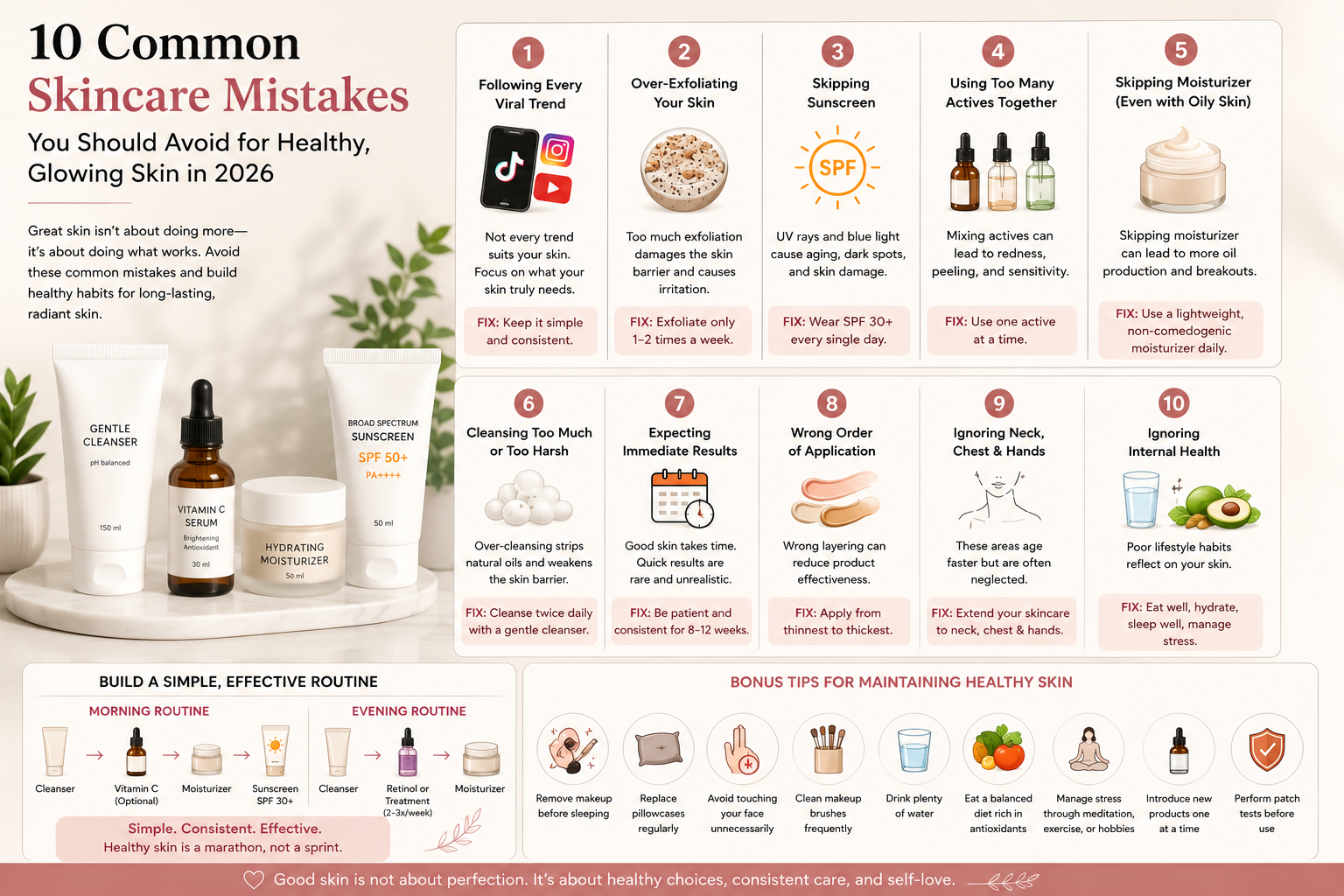
1. Following Every Viral Skincare Trend
Social media has completely transformed the beauty industry.
Platforms like Instagram, TikTok, and YouTube introduce new skincare trends almost every week.
Glass skin.
Slugging.
Skin cycling.
Ice facials.
DIY masks.
Although some trends are supported by scientific research, many become popular simply because they create visually appealing content.
One person’s skincare routine should never become everyone else’s routine.
Each person’s skin differs in oil production, sensitivity, hydration, age, climate, genetics, hormones, and medical history.
Using products that work for someone else may cause irritation, breakouts, allergic reactions, or damaged skin barriers.
Instead of copying influencers, focus on understanding your own skin.
A simple routine consisting of a gentle cleanser, moisturizer, sunscreen, and one treatment product usually delivers better long-term results than constantly changing products.
Consistency always outperforms trendy experimentation.
2. Over-Exfoliating Your Skin
Exfoliation removes dead skin cells, improves skin texture, and promotes brighter skin.
However, excessive exfoliation remains one of the biggest skincare mistakes.
Many people use physical scrubs daily while also applying chemical exfoliants containing AHAs or BHAs.
This damages the skin barrier by removing protective lipids and natural moisturizing factors.
Signs of over-exfoliation include redness, burning, excessive dryness, peeling, increased sensitivity, and unexpected acne breakouts.
Healthy skin requires balance.
Most people only need chemical exfoliation once or twice each week depending on skin sensitivity.
Those with sensitive skin may benefit from even less frequent exfoliation.
Always allow your skin time to recover between treatments.
After exfoliating, prioritize hydration by applying a nourishing moisturizer containing ceramides, hyaluronic acid, or glycerin.
Gentle care produces healthier skin than aggressive treatment.
3. Skipping Sunscreen Every Day
One of the most damaging skincare habits is neglecting sunscreen.
Many people believe sunscreen is only necessary during sunny vacations or outdoor activities.
In reality, ultraviolet rays penetrate clouds, windows, and even reach indoor environments.
Daily exposure gradually contributes to premature aging, pigmentation, wrinkles, uneven skin tone, and increased skin cancer risk.
Blue light emitted from digital devices has also become a growing concern, particularly regarding pigmentation in certain skin types.
Broad-spectrum sunscreen with SPF 30 or higher should become the final step in every morning skincare routine.
Reapplication remains important during prolonged outdoor exposure.
Sunscreen protects every skincare investment you make.
Without sun protection, active ingredients such as vitamin C, retinol, and peptides cannot deliver their maximum long-term benefits.
Consistent sunscreen use remains the most effective anti-aging product available.
4. Using Too Many Active Ingredients Together
Modern skincare offers countless powerful ingredients.
Retinol.
Vitamin C.
Niacinamide.
AHAs.
BHAs.
Azelaic acid.
Peptides.
While each ingredient offers unique benefits, combining too many simultaneously often creates irritation rather than improvement.
Many people mistakenly believe that more active ingredients produce faster results.
Instead, skin becomes overwhelmed.
Common symptoms include redness, dryness, burning, flaking, sensitivity, and weakened skin barriers.
The safest approach involves introducing only one active ingredient at a time.
Allow approximately four to six weeks before evaluating results.
Once your skin adapts comfortably, additional products may be introduced gradually if necessary.
Careful layering protects skin health while maximizing ingredient effectiveness.
Patience consistently delivers better outcomes than aggressive product combinations.
5. Skipping Moisturizer Because of Oily Skin
Many individuals with oily skin avoid moisturizers entirely.
They assume adding moisture increases oil production.
The opposite is often true.
When skin becomes dehydrated, it compensates by producing even more oil.
This excess oil may clog pores and contribute to acne breakouts.
Hydration and oil production are not identical.
Oily skin still requires water.
The solution is selecting lightweight, oil-free, gel-based, or non-comedogenic moisturizers specifically formulated for acne-prone or oily skin.
Proper hydration strengthens the skin barrier, reduces irritation, improves texture, and supports healthier oil balance.
Even individuals with combination or acne-prone skin benefit significantly from daily moisturizing.
Healthy skin requires both hydration and protection.
6. Cleansing Too Frequently or Using Harsh Cleansers
Clean skin is important.
Over-cleaning is not.
Many people wash their faces multiple times daily using harsh soaps designed for the body rather than the delicate facial skin.
High-pH cleansers strip away natural oils essential for maintaining healthy skin.
Excessive cleansing weakens the protective barrier, causing dryness, irritation, inflammation, and increased oil production.
Dermatologists generally recommend cleansing twice daily.
Morning cleansing removes overnight oil and sweat.
Evening cleansing removes sunscreen, makeup, pollution, and daily impurities.
Choose gentle sulfate-free cleansers with balanced pH levels that effectively cleanse without disrupting natural moisture.
Soft, healthy skin begins with gentle cleansing rather than aggressive washing.
7. Expecting Immediate Results
Modern culture often encourages instant gratification.
Unfortunately, skincare does not work that way.
Many people purchase new products expecting visible improvement within only a few days.
When immediate changes fail to appear, they abandon perfectly effective products.
Healthy skin renews itself gradually.
Most skincare ingredients require consistent use over several weeks before visible improvements develop.
Retinol often requires several months.
Pigmentation treatments may require eight to twelve weeks.
Acne treatments similarly need time to regulate oil production and inflammation.
Changing products too frequently prevents the skin from adapting properly.
Photographing progress every month provides more realistic comparisons than daily mirror observations.
Successful skincare depends upon patience, consistency, and realistic expectations.
8. Applying Products in the Wrong Order
The order of product application significantly affects performance.
Many people unknowingly reduce ingredient effectiveness by layering products incorrectly.
The general rule remains simple.
Apply products from the thinnest consistency to the thickest.
Begin with cleanser.
Follow with toner if used.
Next apply treatment serums.
Then moisturizer.
Finish with sunscreen during daytime routines.
Thin water-based formulas penetrate more effectively when applied before heavier creams.
Applying thick products first creates barriers that prevent active ingredients from reaching the skin.
Even excellent skincare products perform poorly when used incorrectly.
Proper layering maximizes absorption while improving overall routine effectiveness.
9. Forgetting the Neck, Chest, and Hands
Most skincare routines focus exclusively on the face.
However, the neck, chest, and hands experience similar environmental exposure.
These areas often reveal aging even earlier because the skin remains thinner and receives less attention.
Sun damage commonly appears on the neck and hands.
Fine lines develop gradually.
Pigmentation becomes increasingly visible.
The simplest solution involves extending facial skincare products downward.
Apply serums, moisturizers, and sunscreen to your neck and upper chest.
Massage remaining product onto your hands.
This habit requires almost no additional effort while significantly improving long-term skin appearance.
Healthy skincare should extend beyond the face.
10. Ignoring Internal Health
Beautiful skin begins beneath the surface.
External skincare products support healthy skin, but internal health strongly influences visible results.
Poor nutrition.
Dehydration.
Chronic stress.
Sleep deprivation.
Hormonal imbalance.
Smoking.
Excessive alcohol.
All negatively affect skin appearance.
Adequate hydration supports healthy skin function.
Vitamin C contributes to collagen production.
Omega-3 fatty acids strengthen skin barriers.
Zinc supports wound healing and acne management.
Antioxidants protect against environmental damage.
Quality sleep allows the body to repair skin overnight.
Stress management reduces inflammatory skin conditions including acne and eczema.
Regular exercise improves circulation while delivering nutrients throughout the skin.
Healthy skin reflects healthy living.
True beauty combines effective skincare with balanced lifestyle habits.
Bonus Tips for Maintaining Healthy Skin
Small daily habits often produce greater results than expensive products.
Always remove makeup before sleeping.
Replace pillowcases regularly to reduce bacteria buildup.
Avoid touching your face unnecessarily.
Clean makeup brushes frequently.
Drink sufficient water throughout the day.
Eat colorful fruits and vegetables rich in antioxidants.
Avoid smoking whenever possible.
Manage stress through meditation, exercise, or hobbies.
Introduce new skincare products one at a time.
Perform patch tests before applying unfamiliar products across your face.
Simple preventive habits often prevent major skincare problems before they develop.
Building the Perfect Beginner Skincare Routine
If you feel overwhelmed by countless skincare recommendations, remember that simplicity works best.
A beginner-friendly morning routine includes:
- Gentle cleanser
- Vitamin C serum (optional)
- Lightweight moisturizer
- Broad-spectrum SPF 30 or higher
An evening routine includes:
- Gentle cleanser
- Retinol or another treatment product (only a few nights per week initially)
- Moisturizer
This basic routine supports hydration, protection, and gradual skin improvement without unnecessary complexity.
As your skin adapts, additional products may be introduced according to individual concerns.
Final Thoughts
Healthy skin is not created through expensive products or complicated routines.
It develops through consistency, patience, education, and understanding your skin’s unique needs.
Avoiding common mistakes such as following viral trends blindly, over-exfoliating, skipping sunscreen, using too many active ingredients, neglecting moisturizer, over-cleansing, expecting instant results, layering products incorrectly, forgetting the neck and hands, and ignoring overall health can dramatically improve your skin over time.
The skincare philosophy of 2026 emphasizes simplicity, barrier protection, evidence-based ingredients, sustainability, and long-term wellness.
Rather than chasing perfection, focus on building healthy skin that feels comfortable, resilient, and naturally radiant.
Remember, skincare is not about doing more.
It is about doing the right things consistently.
With patience, proper care, and realistic expectations, healthy, glowing skin becomes an achievable goal for everyone.