



Spider-Man: Brand New Day Turns No Way Home’s Ending Into Peter Parker’s Cruelest Punishment
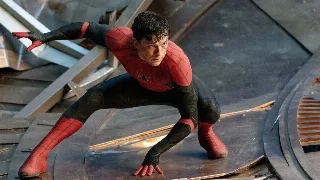
Spider-Man: Brand New Day arrives in cinemas on July 31, 2026, carrying the familiar machinery of a major Marvel release: returning heroes, dangerous mutations, established villains and a mysterious enemy whose identity remains concealed.
However, the film’s most disturbing threat may not be the person Spider-Man eventually fights.
Its real foundation is the decision Peter Parker made at the end of Spider-Man: No Way Home. To prevent the multiverse from collapsing, Peter allowed Doctor Strange to erase him from the memories of everyone in the world.
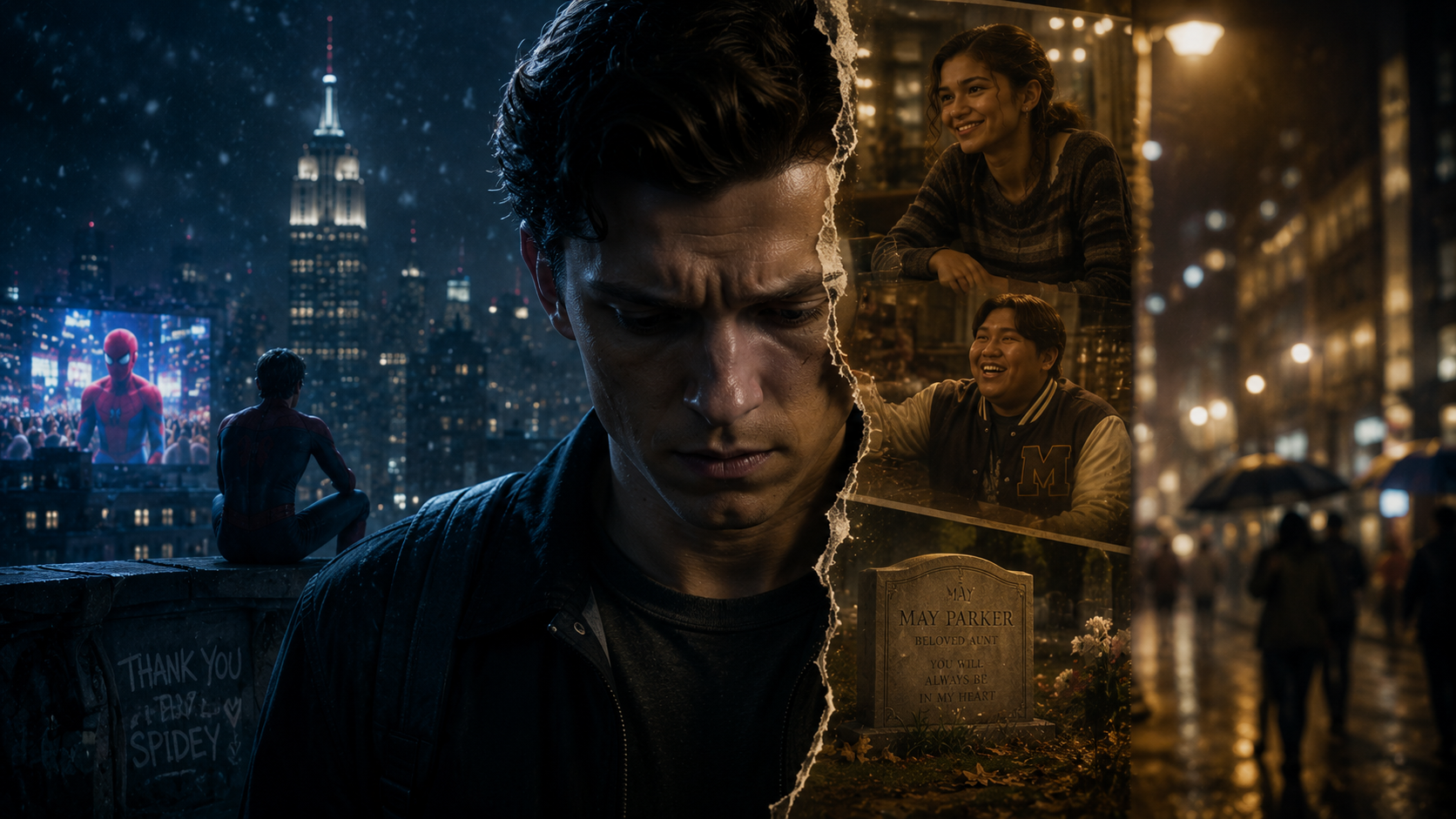
MJ forgot the person she loved. Ned forgot his closest friend. Happy Hogan forgot his connection to Peter. Every relationship built across three films disappeared instantly, while Peter remained the only person forced to remember all of it.
Brand New Day does not appear interested in reversing that sacrifice quickly. Instead, it begins four years later and asks what living with that decision would actually do to someone.
The World Remembers Spider-Man but Not Peter Parker
Sony’s official synopsis describes Peter as fighting crime full-time in a world that does not remember him. Marvel’s version goes further, explaining that he is now an adult living entirely alone after voluntarily removing himself from the lives and memories of those he loves.
That distinction creates the film’s central cruelty.
New York still knows Spider-Man. Criminals fear him, citizens depend on him and strangers can celebrate him. What the city has lost is Peter Parker, the person underneath the mask.
Peter can still save people, but he can no longer return home to anyone who understands what those rescues cost. He has transformed Spider-Man from one part of his identity into the only identity the world will allow him to possess.
For the public, Spider-Man remains visible everywhere. Peter Parker has effectively ceased to exist.
Four Years Makes the Ending Far More Brutal
The four-year time jump matters because it removes the possibility that Peter’s isolation is only a temporary stage between films.
He has not spent a few difficult weeks trying to rebuild his life. He has apparently spent years watching the people closest to him mature without him.
MJ and Ned no longer experience the loss because they do not know anything was taken from them. Peter carries the complete emotional weight alone.
He remembers the school trips, the battles, the danger, the jokes and the promises. He remembers asking MJ and Ned to find him after the spell. He also remembers choosing not to reveal himself when he saw that they finally had an opportunity to live safely.
That choice may have protected them physically, but it trapped Peter inside a life where reconnecting would mean dragging them back toward the danger he deliberately removed.
His sacrifice did not end with Strange’s spell. Peter must make the same decision every time he sees someone he loves and chooses to remain a stranger.
Aunt May’s Death Was Not Part of the Time Jump
Trailer footage reportedly includes Peter visiting Aunt May’s grave, but May did not die during the four years separating the films.
She was killed by the Green Goblin during No Way Home, before Peter requested the final memory spell.
This makes the grave scene painful for a different reason. May was already gone when the world forgot Peter, meaning there was no surviving family member left to remember him afterward.
Peter cannot return to May for advice, tell her what the sacrifice has cost or hear her reassure him that he made the right decision. Her belief that helping people was a responsibility now survives only through Peter’s memory.
The world has not merely forgotten his identity. It has removed every person who could confirm that the life Peter remembers was real.
The Physical Transformation Reflects the Emotional Damage
Sony and Marvel have confirmed that increasing pressure causes Peter to experience a surprising physical evolution that threatens his existence.
The trailers show him losing control, behaving more aggressively and seeking help from Bruce Banner, a character whose entire history revolves around containing a dangerous transformation created by emotional pressure.
That makes Banner more than the traditional guest hero included to expand the cast. He represents a possible future for Peter: a man whose suppressed anger and pain eventually emerge as something physically destructive.
Peter has spent four years burying grief beneath constant crime-fighting. He has no family, no close friends and apparently no meaningful division between his private life and his responsibility as Spider-Man.
His mutation therefore appears connected to the film’s emotional argument. The internal pressure Peter refuses to confront is becoming impossible to keep inside.
The Official Story Is Dark Without Inventing Additional Tragedies
The premise does not need fabricated deaths, secret universes or unsupported character returns to make it disturbing.
The confirmed material is already severe.
Peter is alone. His former friends have moved on. The world has forgotten his name. His powers are changing in ways that could destroy him. His only response has been to devote more of himself to the identity that consumed everything else.
Sony summarizes the film with one sentence that captures the imbalance perfectly: the world may have forgotten Peter Parker, but Peter has not forgotten them.
That is not merely a description of the plot. It defines the punishment.
Scorpion Is an Unfinished MCU Story, Not a Multiverse Import
Michael Mando returns as Mac Gargan, also known as Scorpion, but the character was not introduced in Andrew Garfield’s The Amazing Spider-Man 2.
Mando first played Gargan in 2017’s Spider-Man: Homecoming. He appeared as a criminal involved in Adrian Toomes’ weapons operation before confronting Toomes in prison during the film’s mid-credits scene.
His return therefore signals the continuation of an unresolved MCU storyline rather than the importation of another character from Sony’s previous Spider-Man universe.
That correction actually strengthens the film’s apparent direction.
After the multiverse-heavy spectacle of No Way Home, bringing back an abandoned street-level enemy from Peter’s earliest MCU adventure helps reconnect the story with New York’s criminal world.
Scorpion, Punisher and the film’s unusual crime pattern suggest that Peter will be pulled into a more grounded conflict even while his physical transformation introduces a larger supernatural or biological mystery.
The Main Villain Is Still Deliberately Hidden
Sony’s synopsis describes the central threat as a powerful villain no one can even see.
The wording may refer to literal invisibility, concealment, psychological manipulation or an enemy operating through other criminals. Until the film is released, claims identifying that villain remain speculation.
What is confirmed is that Peter’s transformation may be the only power capable of stopping the threat.
That creates a familiar but effective tragedy: the thing Peter needs to save the city may also be the thing destroying him.
The external villain can pressure Peter, manipulate him or force him into confrontation. But the emotional damage existed long before that enemy arrived.
The Writer Claim Needs More Caution
Some coverage has connected screenwriter Justin Kuritzkes to the film and argued that his work on Challengers signals a more psychologically intense direction.
However, Sony’s official movie page currently lists Chris McKenna and Erik Sommers as the credited writers. The Motion Picture Association’s editorial publication has described Kuritzkes as an additional newcomer involved in the writing, but Sony notes that its credits are not yet final.
Kuritzkes may have contributed to rewrites, but it would be inaccurate to present him as the film’s confirmed sole screenwriter or treat his involvement as proof of the final movie’s tone.
The darker direction is better supported by the official synopsis, the four-year isolation and the transformation shown in the trailers than by assumptions based on one reported contributor.
The Spidey Tracker Turns Peter’s Erasure Into Marketing
Sony has launched an official promotional website called the Spidey Tracker, accompanied by videos presenting Ned Leeds as its founder and chief executive.
The campaign allows fans to follow sightings, villains and promotional updates as though the tracker exists inside the movie’s New York.
This becomes meaningful because Ned no longer remembers that Peter is Spider-Man. He can study the hero, build technology around him and attempt to understand him without realizing that Spider-Man was once his closest friend.
The audience knows what Ned does not: he has built a system for searching for someone who used to sit beside him every day.
It is clever transmedia marketing, but it also reinforces the film’s central tragedy. Peter remains visible enough to become an online obsession while his real identity remains invisible to the person who once knew him best.
This Is Not Simply Another Story About a Secret Identity
Previous Spider-Man films have explored the difficulty of hiding Peter’s identity. Brand New Day begins after the secret has been protected in the most extreme way possible.
There is no longer a secret Peter is struggling to keep from his friends. There are no friends left who know there is a secret.
The traditional tension asks whether the people close to Peter will discover that he is Spider-Man. This film asks whether Peter can remain emotionally human after removing everyone who knew him before the mask.
That is a significantly darker conflict.
His isolation is not something a villain imposed on him. It was the price Peter knowingly accepted to protect others. He cannot defeat it by winning a fight because undoing it could place MJ and Ned in danger again.
Why Brand New Day Could Be Tom Holland’s Most Important Spider-Man Film
Tom Holland’s earlier films followed Peter through adolescence, mentorship and the excitement of joining a much larger heroic world.
By the end of No Way Home, those advantages had disappeared. He lost Tony Stark, Aunt May, his friends, his technology and the public identity around which his life had collapsed.
Brand New Day begins with an adult Peter who no longer has an Avenger supervising him, a best friend supporting him or a family member waiting at home.
The film therefore has an opportunity to show what remains when every external part of Holland’s version of Spider-Man has been removed.
If the story works, the answer will not be a new costume, mutation or crossover character. It will be Peter’s decision about whether being Spider-Man still means anything when Peter Parker has nobody left to live for.
Final Verdict
Spider-Man: Brand New Day will undoubtedly contain villains, transformations and large-scale action. But the official premise suggests that those elements are built around a more personal conflict.
Peter Parker saved reality by allowing reality to erase him.
Four years later, Spider-Man remains famous while Peter lives alone. MJ and Ned have continued without him. Aunt May is dead. The city benefits from his sacrifice without understanding that any sacrifice occurred.
The mysterious villain may create the film’s immediate danger, but Peter’s deepest enemy is the life left behind by the spell: a world where everyone he loves is safe, happy and completely unaware that he ever mattered to them.
That is what makes Brand New Day more than another release date on Marvel’s calendar. It is the first opportunity to discover whether Peter can survive receiving exactly what he asked for.