






Introduction
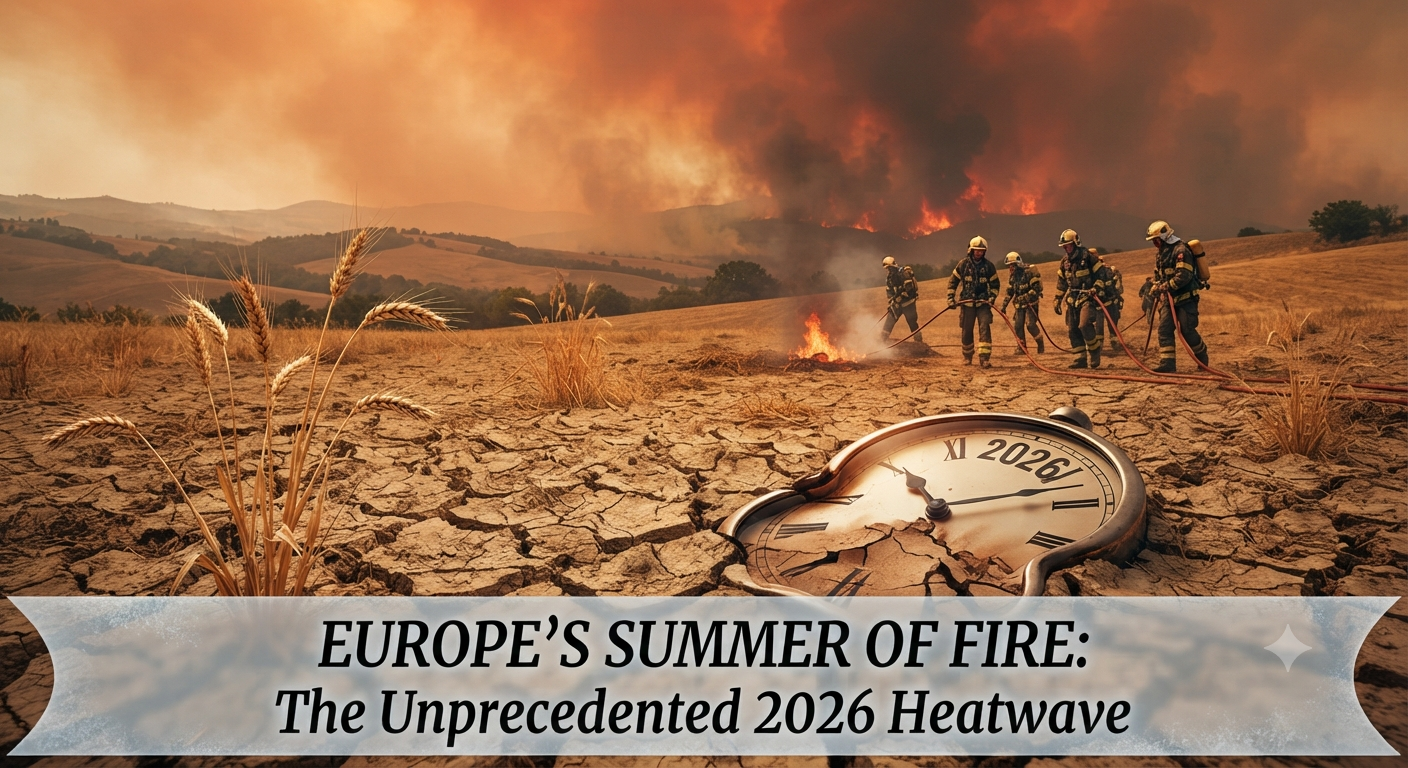
The summer of 2026 has become a defining moment for Europe’s climate resilience. Since late May, the continent has endured a series of relentless heatwaves, with June 2026 officially recorded as the hottest June ever experienced in Western Europe. The unprecedented temperatures have highlighted the growing impact of climate change and the urgent need for stronger adaptation strategies.
A Record-Breaking Heatwave Across Europe
The extraordinary heat has been driven by powerful heat domes—slow-moving high-pressure systems that trap hot air, reduce cloud cover, and intensify solar heating. As a result, numerous countries across Europe experienced record-breaking temperatures.
Some of the most notable temperature records include:
- Spain: Temperatures climbed to 45.1°C (113.2°F) in late June.
- Germany: Recorded an all-time high of 41.7°C.
- France: Several regions experienced temperatures reaching 43°C.
- United Kingdom: Endured its longest-ever streak of days with temperatures exceeding 34°C, setting a new national record.
Austria, Italy, and several other European nations also reported unprecedented heat, making this one of the most widespread and intense heat events in modern European history.
The Human and Environmental Impact
The extreme temperatures have come with devastating consequences for both people and the environment.
Health experts estimate that the June heatwave alone may have contributed to more than 20,000 deaths, with thousands of excess fatalities recorded across Europe. Elderly people, outdoor workers, and those with pre-existing health conditions have been among the most vulnerable.
At the same time, prolonged drought and declining soil moisture have significantly increased the risk of wildfires. Large fires have spread across France and Spain, burning tens of thousands of hectares of land, destroying ecosystems, and threatening communities.
In response, the European Commission deployed record numbers of firefighters, emergency aircraft, and disaster response teams to contain the rapidly spreading fires.
Europe’s New Climate Reality
Climate scientists warn that these extreme heatwaves are no longer rare events but part of a long-term warming trend. Europe is currently warming at approximately twice the global average, making it one of the fastest-heating regions in the world.
Research indicates that the June 2026 heatwave would have been virtually impossible without human-driven climate change caused primarily by greenhouse gas emissions from fossil fuels.
As Europe moves through the remainder of the summer, governments are increasingly focusing on coordinated heat-health action plans, improved early warning systems, and climate adaptation measures to reduce future impacts on public health, infrastructure, agriculture, and the economy.
Conclusion
The summer of 2026 serves as a powerful reminder that climate change is no longer a distant threat but a present-day reality. Record-breaking temperatures, rising death tolls, devastating wildfires, and growing economic losses demonstrate the urgent need for stronger climate action. As extreme weather becomes more frequent, investing in resilience, sustainable energy, and effective emergency response will be essential to protecting lives and communities across Europe.