





For many years, climate change discussions centered primarily on individual responsibility. People were encouraged to recycle, reduce plastic waste, use reusable shopping bags, conserve electricity, and limit personal travel as ways to reduce their environmental impact. While these actions remain valuable, scientists and policymakers now agree that they alone are insufficient to address the scale of today's climate crisis.
As global temperatures continue to reach record highs and extreme weather events become more frequent, the conversation has shifted toward systemic transformation. Achieving meaningful reductions in greenhouse gas emissions requires changes far beyond individual lifestyles. The greatest opportunities for climate action lie within the industries, corporations, and institutions that control energy production, manufacturing, transportation, and global supply chains.
Rather than asking only how individuals can reduce their personal carbon footprint, the focus is increasingly on how entire economic systems can become cleaner, more efficient, and more sustainable.
From Individual Responsibility to Systemic Change
Modern economies are built upon interconnected networks of power generation, industrial production, logistics, and international trade. These systems account for a significant share of global carbon emissions, making structural reform essential for achieving long-term climate goals.
Governments are introducing stricter environmental regulations, investors are demanding greater sustainability performance, and consumers are becoming more conscious of how products are sourced and manufactured. Together, these forces are encouraging businesses to rethink how they design products, generate energy, manage waste, and operate supply chains.
Instead of treating sustainability as an optional initiative, organizations are increasingly integrating environmental responsibility into their long-term business strategies. The shift reflects a growing understanding that meaningful climate progress depends on transforming the systems that produce emissions rather than relying solely on individual behavior.
The Corporate Shift: Economics Over Altruism
Corporate sustainability has evolved significantly over the past decade. What was once viewed primarily as Corporate Social Responsibility (CSR) is now becoming a fundamental business requirement driven by economic, regulatory, and competitive pressures.
Supply Chain Expectations
Large corporations increasingly expect their suppliers to meet environmental and sustainability standards. Business-to-business (B2B) procurement decisions now frequently include carbon reporting, emissions reduction targets, and responsible sourcing requirements. For many small and medium-sized enterprises (SMEs), adopting sustainable practices is no longer simply a way to enhance their reputation—it has become essential for maintaining business relationships and remaining eligible for future contracts.
Cost Competitiveness Through Renewable Energy
The economics of clean energy have changed dramatically. In many parts of the world, renewable energy sources such as solar and wind power now represent the most affordable options for building new electricity generation capacity. Businesses investing in renewable energy benefit not only from reduced carbon emissions but also from greater protection against volatile fossil fuel prices and long-term energy cost uncertainty. Sustainability is increasingly viewed as a practical strategy for improving operational efficiency and strengthening financial resilience.
The Rise of the Circular Economy
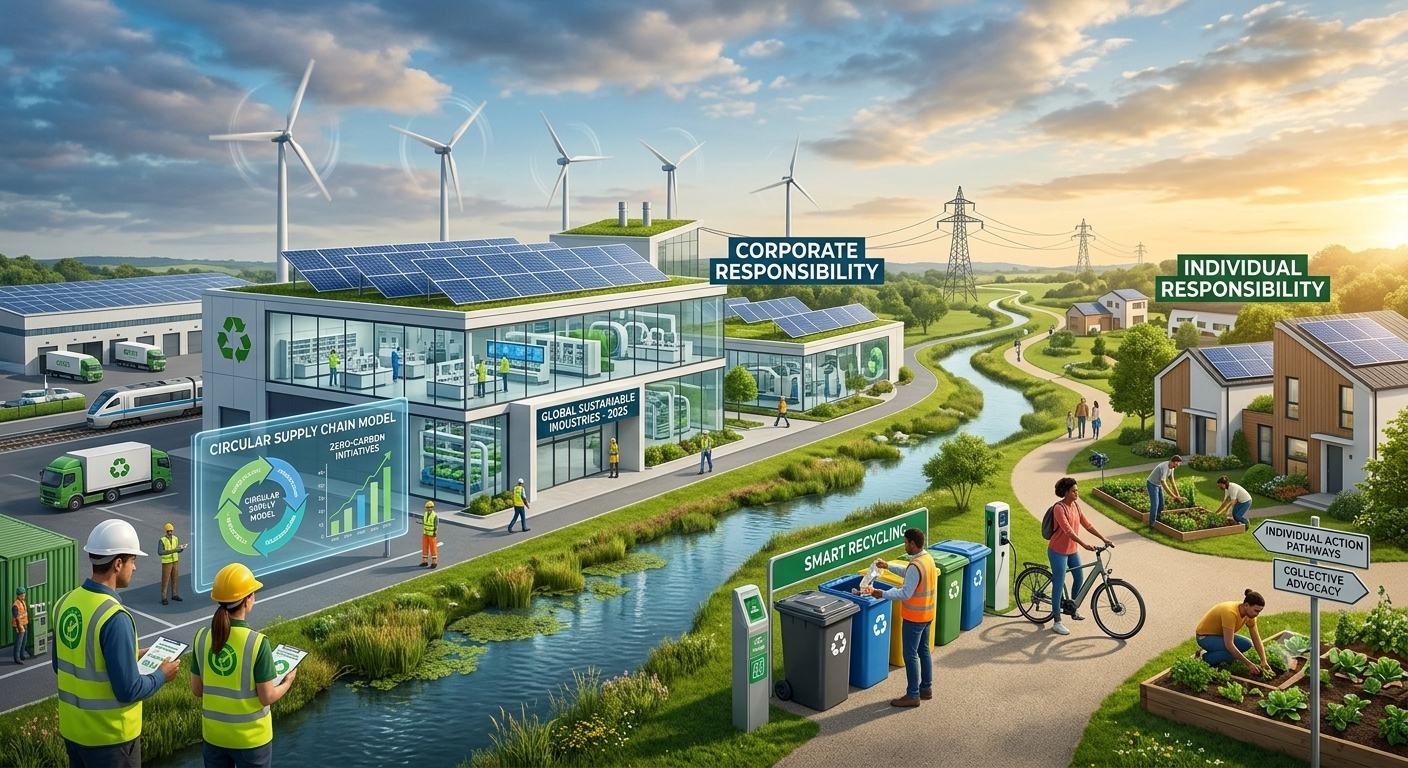
Traditional production models typically follow a linear path of extracting raw materials, manufacturing products, and disposing of them after use. The circular economy offers a more sustainable alternative by emphasizing product durability, repair, reuse, remanufacturing, and recycling.
Companies implementing circular business models can reduce waste, recover valuable materials, and lessen their dependence on unpredictable global supply chains. Product take-back programs, recycled materials, and resource-efficient manufacturing not only reduce environmental impacts but also improve long-term business resilience and profitability.
The Evolving Role of Consumers
Although the emphasis has shifted toward systemic change, consumers continue to play an essential role in accelerating sustainability. Their influence extends far beyond reducing personal consumption or conserving household energy.
Modern consumers increasingly shape corporate behavior through their purchasing decisions, investment choices, and expectations of transparency. Businesses are responding by providing greater visibility into their environmental performance, carbon emissions, sourcing practices, and sustainability commitments.
At the same time, governments and regulatory bodies are introducing stricter rules to prevent misleading environmental claims. New anti-greenwashing regulations require companies to support sustainability claims with credible, measurable, and independently verifiable evidence. These measures empower consumers to distinguish genuine environmental leadership from marketing claims that lack meaningful action.
Building a Shared Systemic Framework
Climate action should not be viewed as a choice between individual responsibility and corporate accountability. Instead, both are essential components of the same solution.
Consumers encourage change by supporting environmentally responsible businesses, demanding transparency, and holding organizations accountable for their environmental commitments. Businesses, in turn, possess the resources and operational influence needed to redesign products, modernize supply chains, transition to renewable energy, and significantly reduce industrial emissions. Governments provide the regulatory frameworks that guide these efforts and create incentives for long-term sustainable development.
Looking Ahead
The future of sustainability depends on collaboration across every level of society. Individual actions remain meaningful, but they achieve far greater impact when supported by responsible corporate leadership, effective public policy, and transparent environmental reporting.
Organizations that embed sustainability into their core business strategy—rather than treating it as a compliance exercise or marketing initiative—will be better positioned to manage risk, strengthen customer trust, attract investment, and remain competitive in an increasingly climate-conscious global economy.
Ultimately, the most successful businesses of the future will be those that recognize environmental responsibility not as a cost, but as a driver of innovation, resilience, and long-term growth.