





Introduction
Harassment against girls—whether it occurs in public spaces, educational institutions, workplaces, or online—remains a serious challenge that affects safety, confidence, and equal opportunities. Creating a culture of respect, accountability, and support is essential to ensuring that every girl can live, study, work, and participate in society without fear. Governments, communities, families, schools, and individuals all have a role to play in preventing harassment and promoting safe environments.
Understanding Harassment
Harassment can take many forms, including verbal abuse, catcalling, unwanted comments, cyberbullying, intimidation, stalking, inappropriate messages, and unwanted physical contact. These behaviors should never be dismissed as jokes or harmless actions. Recognizing harassment for what it is helps create greater awareness and encourages timely intervention and support for those affected.
The Importance of Speaking Up
Creating safer communities begins with refusing to normalize harassment. Encouraging respectful behavior, challenging harmful attitudes, and supporting those who experience harassment can help reduce stigma and promote a culture where inappropriate behavior is not tolerated. Open conversations about respect, consent, and personal boundaries are important steps toward lasting change.
How Bystanders Can Help Safely
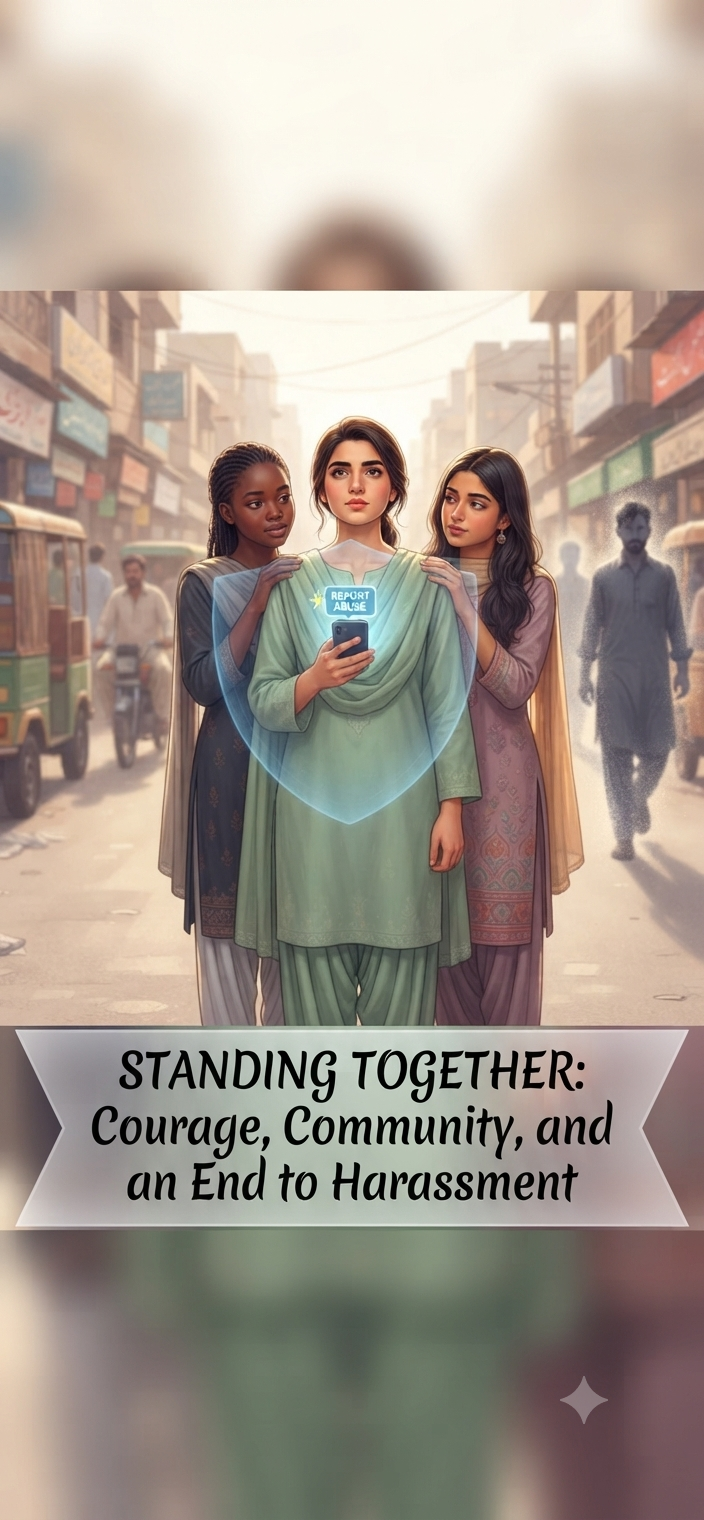
People who witness harassment can often play an important role in supporting someone who may be feeling unsafe. If it is safe to do so, they can check in with the person being targeted, create a distraction to interrupt the situation, remain nearby as a supportive presence, or seek assistance from responsible authorities or security personnel. If harassment occurs online, harmful or abusive content should be reported through the platform’s reporting tools.
Reporting Harassment in Pakistan
Individuals experiencing harassment or human rights concerns in Pakistan can seek assistance through official support services.
- Ministry of Human Rights Helpline (1099): Provides legal guidance, information, counseling, and support for human rights concerns.
- Pakistan Citizens’ Portal: Allows citizens to submit complaints and grievances to relevant government departments.
- Madadgar Helpline (1098): Offers assistance, counseling, and support services for people facing difficult situations.
- Edhi Helpline (115): Provides emergency assistance, rescue services, and humanitarian support across Pakistan.
If someone is in immediate danger, contacting local emergency services or the nearest law enforcement authorities should be the first priority.
Promoting Respect and Equality
Preventing harassment requires addressing the attitudes and behaviors that contribute to it. Families, schools, workplaces, and communities can encourage respectful communication, empathy, gender equality, and healthy relationships. Teaching children and young people about personal boundaries, mutual respect, and responsible behavior helps build safer communities for future generations.
Supporting Those Affected
People who experience harassment deserve to be treated with dignity, compassion, and respect. Listening without judgment, respecting their choices, and helping them access appropriate support services can make a meaningful difference. Creating environments where individuals feel safe reporting concerns is essential to preventing further harm.
Building a Safer Future
Ending harassment is a shared responsibility that requires cooperation from individuals, communities, educational institutions, employers, technology companies, and governments. Through education, awareness, effective reporting systems, and a commitment to equality and respect, society can create environments where everyone feels safe and valued.
Conclusion
A society free from harassment is one where girls and women can pursue education, careers, friendships, and everyday activities without fear or discrimination. By promoting respect, supporting those affected, encouraging responsible bystander action, and strengthening community awareness, we can work toward a future where safety, dignity, and equality are a reality for everyone.