





Introduction
The pace of technological innovation has never been faster. Every year brings breakthroughs that redefine industries, improve daily life, and create opportunities that once seemed impossible. As we move toward 2030, the world is entering an era where artificial intelligence, biotechnology, robotics, clean energy, and quantum computing will become deeply integrated into society. These technologies are not simply improving existing systems—they are fundamentally transforming how people live, work, communicate, travel, and receive healthcare.
Governments and businesses around the world are investing billions of dollars into research and development to accelerate innovation. Companies are competing to create smarter AI systems, safer medical treatments, more sustainable energy solutions, and faster computing technologies. At the same time, consumers are demanding solutions that are more personalized, efficient, environmentally friendly, and intelligent.
While predicting the future is never perfect, several technologies have already demonstrated enormous potential and are expected to dominate the next decade. Understanding these innovations today can help individuals, businesses, students, and professionals prepare for the future economy.
Here are the five technologies expected to have the greatest impact on the world by 2030.
1. The Integration of Autonomous AI Agents
Artificial intelligence is evolving rapidly. Today’s AI assistants primarily answer questions, generate content, and help with research. By 2030, AI will move far beyond simple chatbots into fully autonomous digital agents capable of completing entire workflows without constant human supervision.
Instead of manually performing every task, people will assign objectives to their AI assistants, which will then independently plan, execute, and optimize the work. These intelligent agents will interact with websites, software applications, databases, and even other AI systems to complete complex activities.
Imagine telling your AI assistant:
“Plan my five-day vacation to Japan within my budget, book flights, reserve hotels near major attractions, arrange transportation, create a sightseeing schedule, and notify my employer about my leave.”
The AI could complete every step automatically while keeping the user informed.
Businesses will also rely heavily on autonomous agents. Companies will use them to manage customer service, generate reports, monitor inventory, analyze financial data, negotiate supplier contracts, schedule meetings, and automate repetitive administrative work.
Healthcare providers could use AI agents to monitor patient records, schedule appointments, remind patients to take medication, and detect health risks before they become emergencies.
Education will also change dramatically. Students may have AI tutors capable of creating personalized study plans, identifying weaknesses, generating quizzes, and adapting lessons based on learning speed.
Despite these advantages, autonomous AI will require strong governance. Privacy protection, cybersecurity, ethical decision-making, and transparency will become increasingly important as AI gains greater decision-making authority.
By 2030, autonomous AI agents are expected to become digital coworkers rather than simple software tools.
2. Biotechnology and Personalized Medicine
Healthcare is entering one of the most exciting periods in history. Advances in biotechnology, genetics, and artificial intelligence are making medicine increasingly personalized, shifting away from one-size-fits-all treatments.
Rather than treating diseases after symptoms appear, future healthcare will focus on predicting, preventing, and precisely targeting illnesses before they become serious.
One of the biggest breakthroughs is gene editing through technologies such as CRISPR. Scientists can already modify certain genetic sequences, and by 2030 these techniques are expected to become more refined for treating inherited diseases, rare disorders, and some forms of cancer.
Another revolutionary concept is the creation of digital twins.
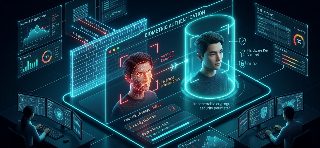
A digital twin is a virtual representation of a person’s body created using medical history, genetics, imaging scans, wearable devices, and laboratory results. Doctors could simulate different treatments on this digital model before prescribing medication.
Instead of guessing which treatment works best, physicians could identify the safest and most effective option for each individual.
Artificial intelligence will also transform medical diagnostics.
AI systems will analyze X-rays, MRI scans, CT scans, blood tests, and pathology images with extraordinary accuracy, helping doctors detect diseases earlier than ever before.
Wearable technology will continuously monitor heart rate, oxygen levels, blood sugar, sleep quality, stress, and physical activity. Combined with AI, these devices may identify early warning signs of illness days or even weeks before symptoms become noticeable.
Personalized nutrition will also become mainstream. Genetic analysis could recommend diets specifically designed for an individual’s metabolism, reducing risks of diabetes, obesity, cardiovascular disease, and nutritional deficiencies.
Although ethical concerns regarding privacy, genetic data security, and equitable access remain important, biotechnology has the potential to significantly increase life expectancy and improve quality of life worldwide.
3. The Clean Energy Revolution
Climate change and growing global energy demand are accelerating the transition toward cleaner, more sustainable power sources.
By 2030, the energy industry is expected to undergo one of its biggest transformations since the Industrial Revolution.
One major innovation is next-generation battery technology.
Current lithium-ion batteries have powered the electric vehicle revolution, but researchers are developing solid-state batteries that offer greater energy density, faster charging, improved safety, and longer lifespans.
Future electric vehicles may recharge in just a few minutes instead of requiring lengthy charging sessions.
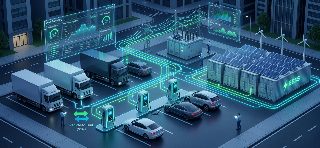
Grid-scale battery storage will also become increasingly important. Renewable energy sources like solar and wind are intermittent, producing electricity only when the sun shines or the wind blows. Advanced storage systems will allow excess electricity to be stored and used whenever demand increases.
Hydrogen energy is another promising technology.
Green hydrogen, produced using renewable electricity, could power industries that are difficult to electrify, including steel manufacturing, shipping, aviation, and heavy transportation.
Meanwhile, Small Modular Reactors (SMRs) represent the next generation of nuclear energy.
Unlike traditional nuclear plants, SMRs are smaller, safer, more efficient, and faster to build. They can provide reliable carbon-free electricity for cities, factories, hospitals, and remote communities.
Artificial intelligence will further optimize energy systems by predicting electricity demand, balancing renewable resources, reducing waste, and improving overall efficiency.
Smart homes equipped with solar panels, battery storage, and AI-powered energy management systems will automatically optimize electricity consumption to reduce both costs and emissions.
The clean energy revolution will play a critical role in achieving global sustainability goals while supporting economic growth.
4. The Physical-Digital Convergence: The Spatial Web
By 2030, digital information will no longer be confined to smartphone screens.
Instead, technology will merge seamlessly with the physical world through Augmented Reality (AR), Spatial Computing, smart glasses, and advanced robotics.
AR glasses are expected to replace smartphones for many everyday tasks.
Instead of looking down at a phone, users will see navigation, notifications, translations, directions, weather updates, work instructions, and digital content directly within their field of vision.
Students may interact with three-dimensional educational models floating in front of them.
Engineers could visualize machine components before assembly.
Doctors might view patient data while performing medical procedures.
Retail shopping will also evolve. Customers may virtually try on clothes, preview furniture inside their homes, or compare products instantly using AR overlays.
Robotics will experience equally dramatic progress.
Humanoid robots will begin working in environments where labor shortages exist, including elder care, logistics, manufacturing, agriculture, construction, and disaster response.
These robots will perform repetitive, dangerous, or physically demanding tasks while humans focus on creativity, problem-solving, and decision-making.
Warehouses will become increasingly automated through fleets of intelligent robots capable of organizing inventory, packing orders, and coordinating deliveries with minimal human intervention.
Factories will integrate AI-powered robots that continuously learn, improving productivity while reducing operational costs.
As physical and digital environments merge, collaboration between humans and intelligent machines will become a normal part of everyday life.
5. The Quantum-Classical Hybrid Computing Era
Quantum computing remains one of the most exciting frontiers in technology.
Although fully universal quantum computers are still under development, the years leading up to 2030 will likely mark the rise of quantum-classical hybrid computing.
Rather than replacing traditional computers, quantum processors will work alongside classical systems to solve extremely complex problems.
Quantum computers process information using quantum bits, or qubits, which allow them to perform certain calculations exponentially faster than conventional computers.
This capability opens possibilities across numerous industries.
Pharmaceutical companies may use quantum simulations to discover new medicines and better understand molecular interactions.
Material scientists could design stronger, lighter, and more sustainable materials for transportation, construction, and electronics.
Financial institutions may optimize investment portfolios, detect fraud more effectively, and model economic risks with unprecedented accuracy.
Logistics companies could improve delivery routes, supply chains, airline scheduling, and shipping operations using advanced optimization algorithms.
Climate researchers may build more detailed simulations of weather systems and environmental changes, leading to improved forecasting and disaster preparedness.
Cybersecurity will also change dramatically. While quantum computing poses challenges to existing encryption methods, it will also drive the development of quantum-resistant security systems designed to protect sensitive information in the future.
Although quantum computing will remain specialized by 2030, organizations that begin integrating hybrid quantum solutions early will gain significant competitive advantages.
Final Thoughts
The technologies shaping the future are no longer science fiction—they are already transforming industries around the world. Autonomous AI agents will automate complex workflows, biotechnology will deliver personalized healthcare, clean energy innovations will accelerate sustainability, spatial computing and robotics will redefine how humans interact with technology, and quantum-classical computing will solve problems beyond the reach of today’s computers.
Together, these innovations will create new careers, reshape existing industries, improve quality of life, and drive economic growth throughout the next decade. While challenges such as privacy, cybersecurity, ethics, and regulation must be addressed, the opportunities far outweigh the risks when these technologies are developed responsibly.
For students, professionals, entrepreneurs, and businesses, understanding these emerging trends today is the best way to prepare for tomorrow. Those who embrace continuous learning and adapt to these technological shifts will be well positioned to thrive in the rapidly evolving world of 2030.