





Argentina’s Physical Start Sparks Referee Debate in World Cup Final
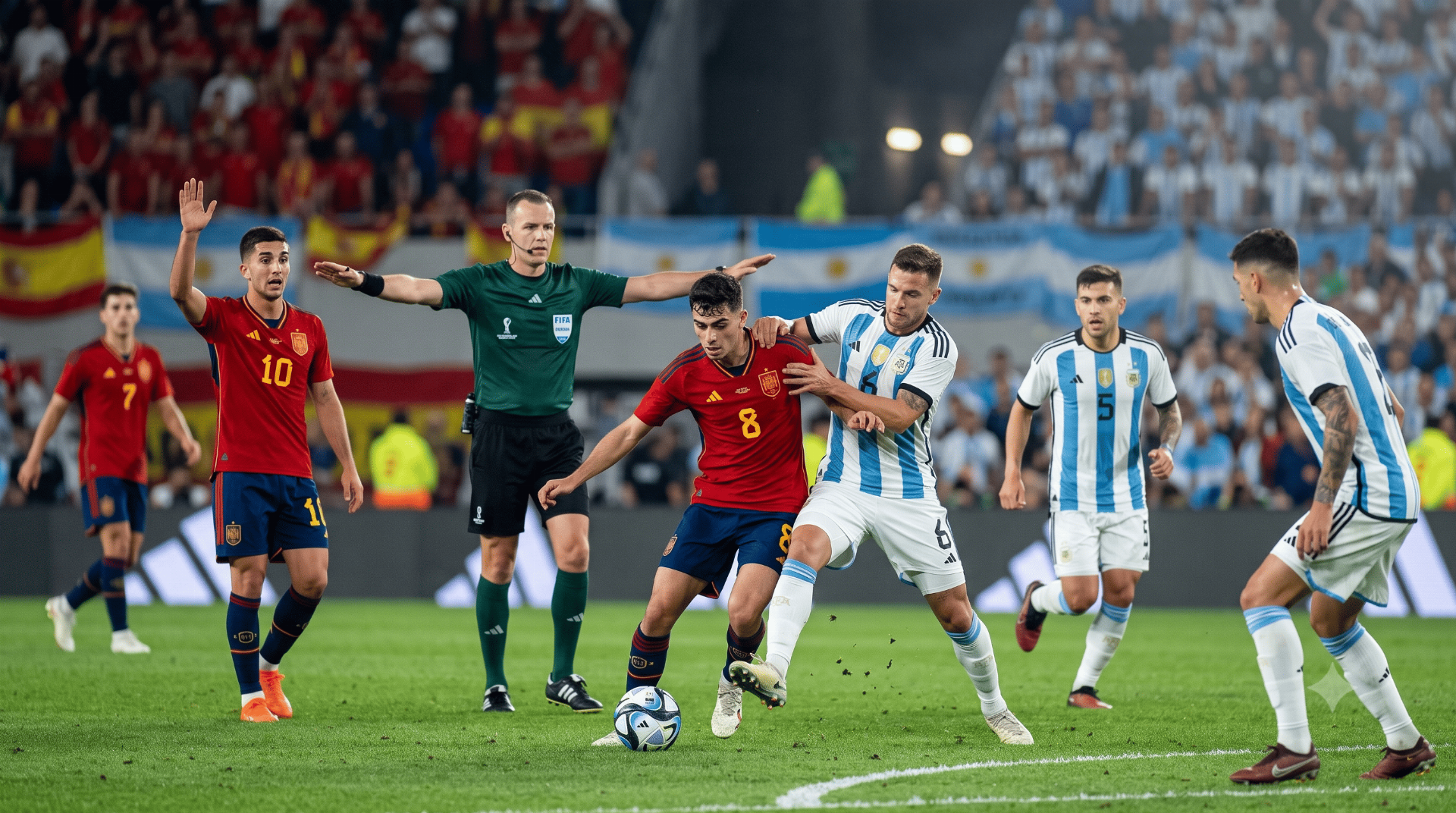
The 2026 FIFA World Cup final opened with exactly the contrast many expected. Spain attempted to establish control through possession, short passing and movement between the lines, while Argentina immediately tried to disrupt that rhythm with pressure, physical challenges and direct competition for every loose ball.
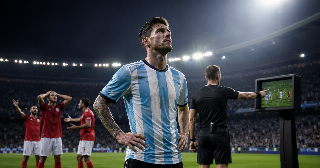
It did not take long for the referee to become part of the story. Several early contacts involving Argentine players led Spanish supporters and neutral viewers to question why more fouls were not called and why the disciplinary threshold appeared so high.
The debate quickly moved beyond individual challenges. The larger question became whether referee Slavko Vinčić’s decision to let the game flow was giving Argentina a tactical advantage against a Spain side that depends on rhythm, technical combinations and freedom in midfield.
Argentina Set the Physical Tone From the Opening Minutes
Argentina began the final with visible aggression in their pressing. Their midfielders closed passing lanes quickly, challenged Spain immediately after every reception and attempted to prevent Rodri and his teammates from settling into their usual passing structure.
That approach was not unexpected. Argentina’s route through the tournament had repeatedly demonstrated their willingness to turn knockout matches into emotional, physical and unpredictable contests.
Spain prefer controlled football. Argentina are often more comfortable when a match becomes fragmented. Early contact, interruptions and midfield duels can prevent Spain from building the smooth passing sequences that make them so dangerous.
The defending champions therefore had a clear tactical reason to test how much contact the referee would permit before awarding fouls or showing cards.
Why Were Some Challenges Not Given as Fouls?
The simplest explanation is that the referee appeared to establish a high threshold for physical contact. A high threshold means the official allows shoulder challenges, minor pushes and some body contact to continue unless the action clearly becomes careless, reckless or unfair.
Not every collision is automatically a foul under football’s laws. Referees consider whether a player challenges fairly for the ball, uses excessive force, pushes an opponent with the arms or makes contact that prevents the opponent from playing normally.
From the referee’s position, some incidents that looked forceful on television may have appeared to be normal physical contests. Slow-motion replays can also make contact appear more dramatic than it seemed at full speed.
However, consistency is essential. Once a referee permits a certain level of physicality, players quickly adjust. Argentina could then continue challenging aggressively because they understood that ordinary contact was unlikely to stop play.
Was Argentina Receiving Favourable Treatment?
It is too early and too strong to claim that Argentina were deliberately favoured. A referee allowing physical play is not the same as proof of bias.
The more defensible criticism is that the refereeing style may have suited Argentina better than Spain. That is an important distinction.
Argentina benefit when the match becomes intense, broken and full of individual duels. Spain benefit when the ball moves continuously and their technical players are protected from repeated late or tactical challenges.
If the official applies a lenient standard equally to both teams, the decisions may still affect them differently because their styles are different. Equal enforcement does not always create an equal tactical effect.
That is why Spanish supporters can reasonably believe that Argentina gained an advantage without concluding that the referee intentionally helped them.
Spain Had Warned About Argentina’s Aggression Before Kickoff
The controversy was already developing before the final began. Spain defender Aymeric Laporte publicly called for the referee to control Argentina’s physical approach, saying that aggression was acceptable only when it remained within the laws and the official performed his role properly. :contentReference[oaicite:0]{index=0}
Laporte’s comments followed Argentina’s heated semifinal against England. That match produced 19 first-half fouls, with Argentina responsible for 12. Reports also noted that Argentina’s first booking did not arrive until late in the half despite several early challenges. :contentReference[oaicite:1]{index=1}
Those numbers shaped expectations before the final. Spain knew Argentina were likely to press aggressively, contest every second ball and test the referee’s tolerance from the start.
How a Lenient Referee Can Benefit Argentina
A referee who avoids frequent whistles can benefit Argentina in several tactical ways.
Argentina Can Interrupt Spain’s Passing Rhythm
Spain build control through repeated short passes. Their players constantly move into spaces where they can receive, turn and release the next pass.
Physical pressure prevents those movements from developing naturally. Even when contact is not strong enough to produce a foul, it can force a poor touch, delay a pass or push a player away from the position Spain intended to use.
Argentina Can Press Without Constantly Conceding Free Kicks
Aggressive pressing carries risk. If every late challenge produces a whistle, the defending team gives away possession and allows the opponent to restart from a controlled position.
When the referee permits more contact, Argentina can press closer to the limit. Their midfielders can make stronger challenges without immediately surrendering dangerous free kicks.
Spain’s Technical Players Can Become Frustrated
Repeated contact can affect concentration even when no serious foul occurs. A player who feels unprotected may begin releasing the ball earlier, avoiding certain spaces or arguing with the official.
That frustration can become part of Argentina’s strategy. Spain are most dangerous when they remain patient. Argentina want to replace patience with irritation.
Argentina Can Turn the Final Into a Duel
Spain would prefer the final to be decided by structure and possession. Argentina are comfortable when it becomes a contest of reactions, tackles, second balls and emotional moments.
A permissive refereeing style moves the game closer to Argentina’s preferred environment.
The Referee Risks Losing Control if the Standard Is Unclear
Allowing physical football is not automatically poor refereeing. Many major finals benefit from officials who avoid stopping play for minor contact.
The danger appears when players cannot understand the boundary. If one challenge is allowed but a similar challenge is later punished, frustration rises and both teams begin surrounding the referee.
More importantly, repeated unpunished contact can encourage players to increase the force of their challenges. What begins as firm pressing can gradually become reckless tackling.
Vinčić therefore faced a difficult balance: preserve the flow of the final without allowing Argentina or Spain to believe that tactical fouling carried no consequences.
Why VAR Cannot Fix Every Missed Foul
Some viewers expect VAR to review every controversial collision, but that is not how the system operates.
VAR normally intervenes only in incidents involving goals, penalties, direct red cards or mistaken identity. It does not correct every missed midfield foul or decide whether every physical challenge deserved a yellow card.
That means the referee’s live interpretation remains decisive during most of the match. Even when television replays suggest that a challenge should have produced a free kick, VAR may have no authority to intervene.
This limitation explains why a series of debatable midfield decisions can shape a final without producing an official video review.
Spain Must Adapt Instead of Waiting for Protection
Spain cannot afford to spend the match appealing for decisions. If the referee has established a high physical threshold, Luis de la Fuente’s players must adjust quickly.
They can protect themselves by moving the ball earlier, creating closer passing options and avoiding isolated receptions with their backs to Argentina’s midfield.
Rodri and Spain’s central players may also need to match Argentina’s intensity in second-ball situations. Technical quality alone may not be enough if Argentina are allowed to contest every possession aggressively.
Spain must also avoid emotional reactions. Complaints, confrontations and unnecessary retaliation would move the final further into Argentina’s preferred territory.
Argentina Must Be Careful Not to Cross the Line
The referee’s early tolerance can also become dangerous for Argentina. Players sometimes mistake a lenient opening for permission to continue increasing their aggression.
One late tackle, reckless follow-through or cynical challenge stopping a promising attack could produce a booking and change the entire match.
Once an Argentine midfielder receives a yellow card, Spain may deliberately attack that player’s zone and force him into difficult defensive decisions.
Argentina therefore need discipline as much as intensity. Their physical strategy works only while it remains controlled.
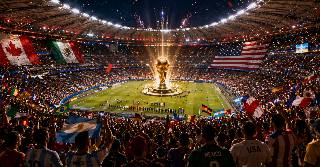
The Opening Ceremony Delayed the Football but Raised the Pressure
The final began after an elaborate closing ceremony and a slight delay while the pitch was cleared. Reports also described long queues and access problems around the stadium before kickoff. :contentReference[oaicite:2]{index=2}
Once the match started, the contrast between the spectacle and the football was immediate. The music and presentation disappeared, replaced by tense midfield battles and two teams trying to impose completely different versions of the game.
Spain entered the final unbeaten in 37 matches, while Argentina arrived seeking to become the first nation since Brazil in 1962 to retain the men’s World Cup. :contentReference[oaicite:3]{index=3}
With that level of pressure, every refereeing decision was always likely to receive intense scrutiny.
Social Media Debate Is Moving Faster Than the Evidence
During major matches, viewers see multiple replays within seconds and often reach immediate conclusions about the referee.
One group may describe a challenge as normal physical football. Another may call the same incident a clear foul or yellow card. Supporters then combine several decisions into a wider claim that one team is being protected.
That does not mean the criticism is meaningless. Repeated leniency can genuinely influence a game. However, claims of corruption or deliberate favouritism require evidence that individual controversial decisions do not provide.
The responsible conclusion from the opening phase is that Vinčić’s refereeing threshold appeared favourable to Argentina’s physical strategy, not that intentional bias had been established.
What the Referee Must Do Next
The referee’s most important task is now consistency. If similar challenges occur, they must receive similar decisions regardless of the shirt involved.
He must also distinguish between legitimate physical contact and tactical actions designed only to stop Spain’s attacks.
Persistent fouling is another issue. A series of individually minor offences can still justify a yellow card when one player or one team repeatedly disrupts the opponent.
An early verbal warning or timely booking may prevent the final from becoming increasingly hostile. Waiting too long could make control much harder to recover.
Final Verdict
Argentina’s aggressive opening gave them a tactical advantage by preventing Spain from immediately settling into their preferred rhythm. The referee’s willingness to permit firm physical contact strengthened that approach and created understandable frustration among Spanish supporters.
However, a refereeing style that benefits Argentina is not automatically evidence that the referee is intentionally favouring them.
The real issue is whether similar incidents are judged consistently and whether repeated Argentine challenges eventually receive the appropriate punishment.
If Vinčić continues allowing heavy contact without addressing tactical or persistent fouling, the controversy will grow and Spain may feel that the final is being played under conditions designed for Argentina.
If he applies the same standard consistently and acts when physicality becomes recklessness, the opening debate may ultimately be remembered as part of an intense final rather than proof of unfair officiating.