





Argentina Finally See Yellow After Repeated Fouls Against Spain
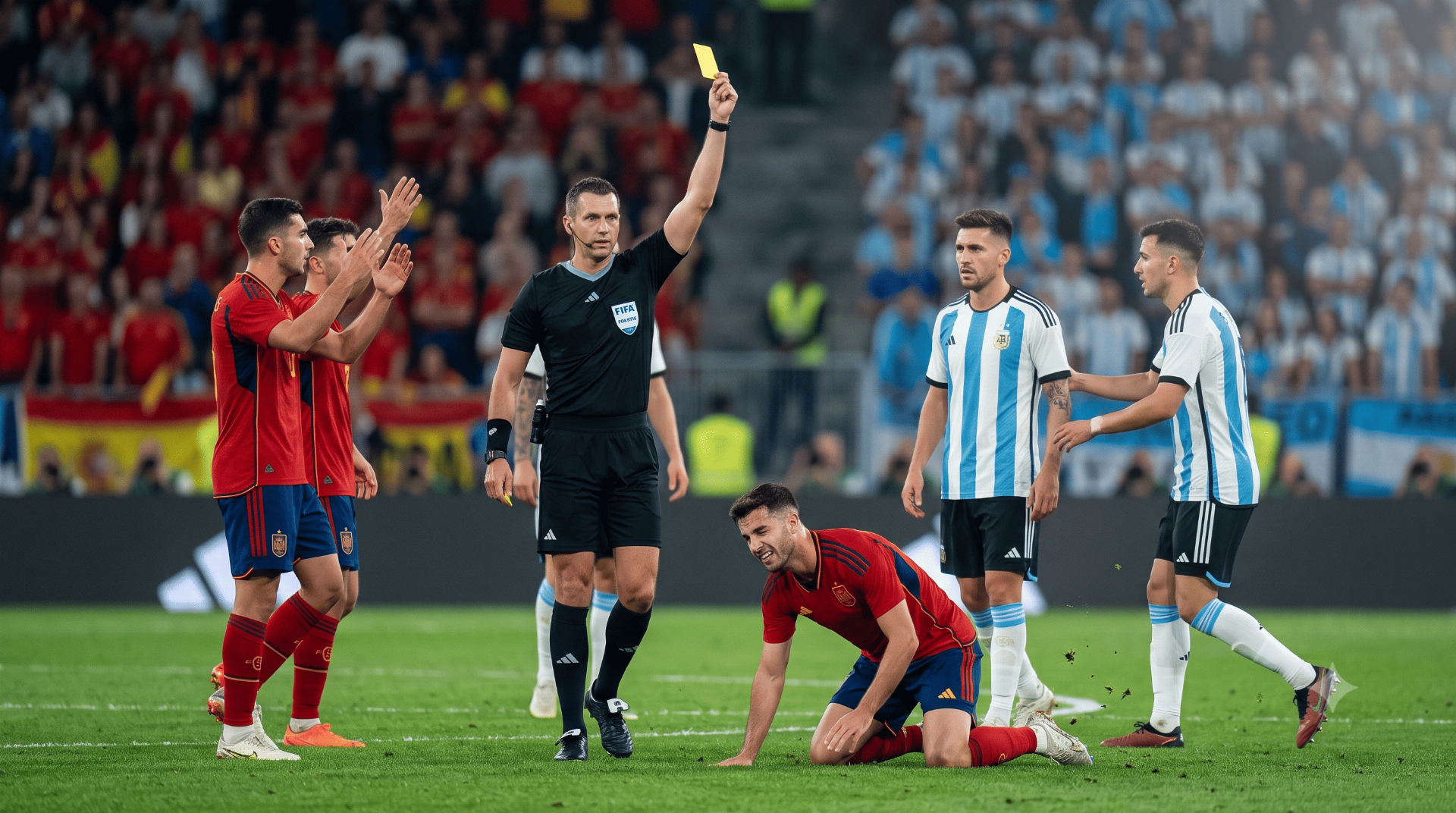
The first yellow card of the 2026 FIFA World Cup final did more than punish one individual challenge. It represented the moment when the referee finally appeared to decide that Argentina’s repeated physical pressure against Spain had crossed the acceptable limit.
Argentina had spent much of the opening period testing referee Slavko Vinčić’s tolerance. Their midfielders closed down Spain aggressively, challenged players as soon as they received possession and repeatedly used contact to prevent La Roja from establishing a smooth passing rhythm.
Several earlier incidents produced free kicks but no disciplinary action. When the yellow card eventually appeared, the reaction from Spanish players and supporters reflected a wider frustration: many believed it should have arrived much earlier.
Argentina Tested the Referee From the Beginning
Argentina entered the final with a clear tactical objective. They did not want Spain’s midfielders receiving the ball comfortably, turning toward goal and controlling the match through long passing sequences.
The defending champions therefore applied immediate pressure whenever Spain attempted to build through central areas. Their players stepped into challenges quickly, used their bodies to disrupt movement and contested almost every second ball.
Physical football is not automatically illegal. Teams are allowed to use strength, compete shoulder-to-shoulder and challenge firmly for possession.
The controversy develops when those challenges become late, careless or part of a repeated pattern designed to interrupt the opponent rather than win the ball cleanly.
Several Fouls Passed Without a Yellow Card
One of the clearest early incidents came when Alexis Mac Allister lunged into a challenge on Dani Olmo near the halfway line. The referee awarded the foul but decided against showing a yellow card, despite visible protests from Spain’s bench.
Live coverage also noted that Argentina were beginning to leave stronger contact on Spanish players as the opening period developed. The challenges were not described as extreme, but they contributed to the growing sense that Argentina were deliberately making the final uncomfortable. :contentReference[oaicite:0]{index=0}
The referee also declined to book Spain captain Rodri after he pulled Lionel Messi back during a promising moment. That decision suggested Vinčić was applying a generally lenient standard rather than punishing only one team lightly.
However, the tactical effect of that standard appeared to benefit Argentina more because their strategy depended heavily on physical disruption.
Why the Yellow Card Took So Long
A referee can show a yellow card for a single reckless tackle, stopping a promising attack, dissent or persistent infringement.
Persistent infringement is especially relevant when a player repeatedly commits smaller fouls. None of the individual challenges may appear serious enough for an immediate booking, but the combined pattern can eventually justify disciplinary action.
The difficulty is that repeated fouls may be spread across several players. Argentina could rotate who applied the pressure, making it harder for the referee to identify one individual as a persistent offender.
That approach allows a team to interrupt an opponent several times before any particular player receives a caution.
The Card Was a Warning to the Entire Argentina Team
Although a yellow card is officially recorded against one player, its tactical message applies to the whole team.
The caution effectively informed Argentina that the earlier level of physical contact would no longer be accepted without consequences. Further late challenges could now result in additional bookings.
That matters because Argentina’s midfield strategy depends on confidence in physical duels. Once players become concerned about receiving a second yellow card or leaving teammates exposed, their pressing may become less aggressive.
Spain can then receive the ball with slightly more time and attack the spaces created by Argentina’s hesitation.
Why Spain Were So Frustrated
Spain’s football depends on rhythm. Their midfielders constantly move into passing lanes, receive under pressure and release the ball before defenders can close them down.
Repeated fouls break that rhythm even when they do not produce dangerous free kicks. The stoppage gives Argentina time to recover their defensive positions, reorganise their midfield and remove the advantage Spain had created through possession.
From Spain’s perspective, a free kick near the halfway line is not always sufficient punishment. If Argentina can stop an attack and reset their defensive shape without receiving a booking, the foul may still have achieved its tactical purpose.
That is why Spanish players repeatedly appealed for stronger action rather than simply accepting the free kicks.
Was the Referee Protecting Argentina?
The delayed yellow card will strengthen accusations among some supporters that Argentina received favourable treatment. However, the available evidence does not prove deliberate bias.
Vinčić appeared to establish a high threshold for disciplinary action and also avoided booking Rodri when the Spanish midfielder pulled Messi back. That indicates a broader attempt to let the final continue without early cards.
The stronger criticism is that the referee waited too long to recognise the cumulative effect of Argentina’s challenges.
A referee does not need to favour a team intentionally for his decisions to benefit its strategy. Argentina wanted a physical and interrupted match, while Spain wanted flow and technical control. A lenient threshold naturally moved the final toward Argentina’s preferred conditions.
Why Referees Often Avoid Early Cards in Finals
Officials sometimes hesitate to show yellow cards during the opening stages of major finals because they do not want one early decision to influence the entire match.
An early booking can force a defender or midfielder to play cautiously for more than an hour. Referees may therefore use verbal warnings before reaching for a card.
The risk is that players interpret patience as permission. Once a team realises that several challenges have passed without punishment, it may continue pushing the boundary until the referee finally responds.
That appears to have been the central disciplinary tension during the opening phase of Spain versus Argentina.
How the Yellow Card Changes Argentina’s Strategy
The booked player must now become more selective. Another reckless or tactical foul could lead to a second yellow card and dismissal.
Spain may deliberately direct more attacks toward that player’s area, forcing him to make repeated defensive decisions while carrying the risk of a red card.
Lamine Yamal, Dani Olmo and Spain’s midfield runners can benefit if they isolate a cautioned Argentine opponent. The defender or midfielder may avoid committing fully to a challenge, creating more space for Spain to progress.
Lionel Scaloni must also consider whether to substitute the booked player before fatigue increases the possibility of a late tackle.
Argentina Cannot Abandon Their Physical Approach Completely
Argentina still need to pressure Spain. Allowing La Roja to circulate possession without resistance would create a different and potentially greater danger.
The challenge is to maintain intensity without committing avoidable fouls. Argentina must close passing lanes, force Spain toward the sidelines and challenge with better timing.
Their players can no longer rely on arriving late and expecting only a verbal warning. The yellow card indicates that the disciplinary threshold has changed.
Spain Must Use the Booking Intelligently
Spain should not allow the card to pull them into arguments or confrontations. Their strongest response is tactical rather than emotional.
They can move the ball quickly around the booked player, use one-touch combinations and force Argentina’s midfield to chase possession.
If the cautioned player becomes hesitant, Spain can exploit the space. If he continues challenging aggressively, he risks another card.
Either scenario can benefit Spain, provided they remain calm and keep the match focused on football.
Why One Yellow Card May Not End the Debate
The first booking does not automatically correct everything that happened before it. Spanish supporters may still argue that Argentina received too much freedom during the opening period.
The referee must now demonstrate consistency. Similar fouls should receive similar punishments regardless of which team commits them.
If Argentina continue making tactical challenges without further cards, the first caution may appear symbolic rather than effective.
If Vinčić begins punishing repeated or reckless contact consistently, the match could become more controlled and the earlier controversy may gradually lose importance.
The Next Foul Could Be More Important Than the First Card
Once the first yellow card has been shown, every subsequent challenge receives greater attention.
Players begin questioning whether the referee has changed his standard. Coaches monitor which opponents are at risk, while supporters expect consistent punishment.
A second booking for another Argentine player could significantly reduce the team’s pressing intensity. A yellow card for Spain could restore the perception that the referee is applying the same threshold to both sides.
The referee’s management of the next few incidents may therefore determine whether the controversy settles or becomes one of the defining stories of the final.
Final Verdict
Argentina’s yellow card appeared to arrive only after the defending champions had committed enough physical challenges to force the referee into stronger action.
The caution was not simply punishment for one foul. It was a response to a developing pattern in which Argentina repeatedly disrupted Spain’s passing rhythm and tested how much contact Vinčić would allow.
Claims of deliberate favouritism remain unproven, especially because the referee also declined to book Rodri for pulling Messi back. However, his lenient opening approach clearly suited Argentina’s strategy more than Spain’s.
The yellow card now changes the tactical balance. Argentina must continue pressing without crossing the line, while Spain can target the booked player and demand consistency from the official.
After allowing the final to remain highly physical, Vinčić has finally drawn a visible boundary. Whether he enforces it consistently may matter more than the first yellow card itself.