





Spain vs Argentina Final: Live Strategy, Key Stats and Win Probability
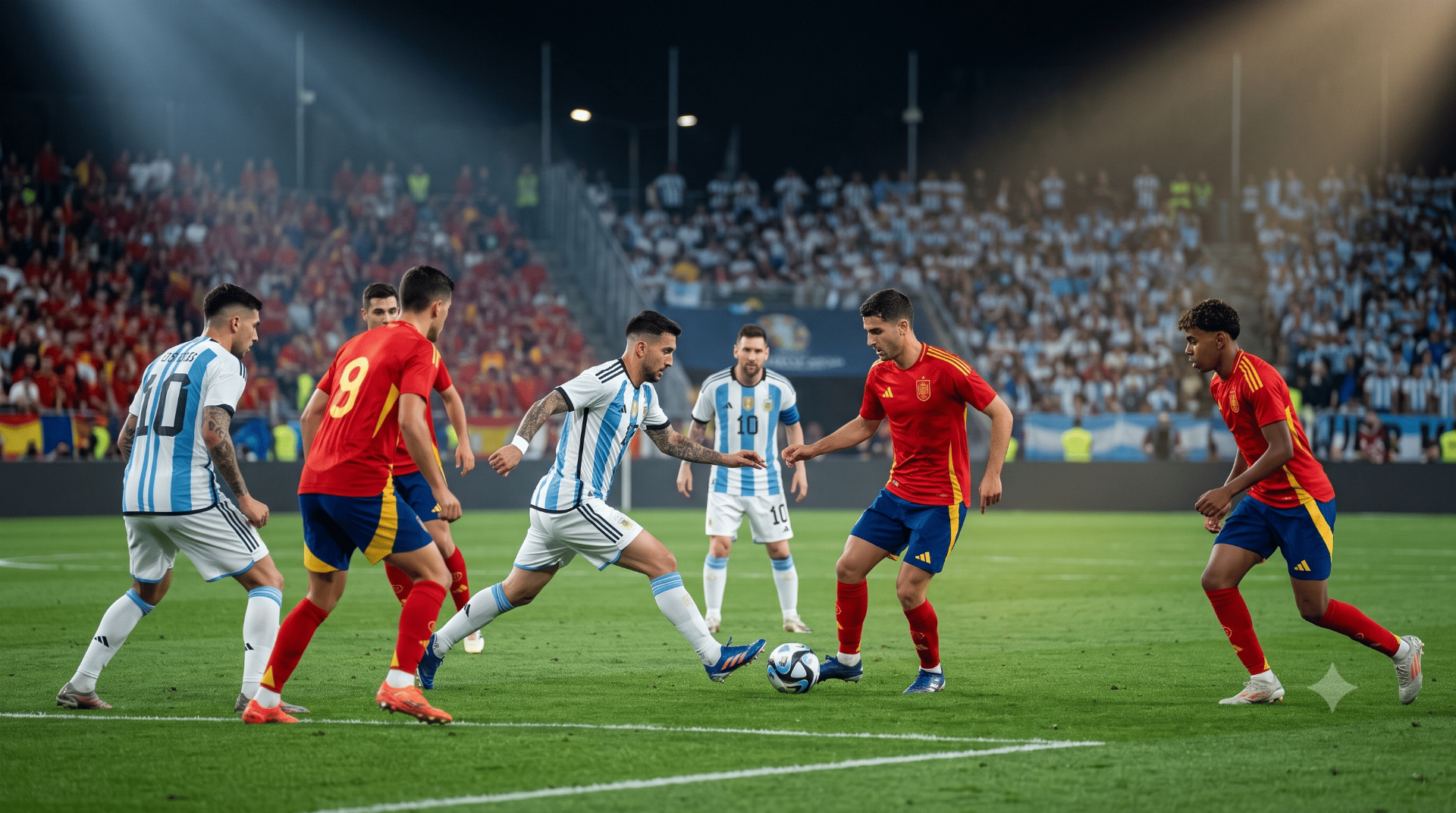
The 2026 FIFA World Cup final is a contest between two powerful teams using very different methods to control the same match. Spain want possession, positional discipline and repeated attacks through structured passing. Argentina want intensity, physical pressure and rapid transitions capable of turning one Spanish mistake into a decisive chance.
The statistics entering the final suggested an almost perfectly balanced contest. Spain arrived with the tournament’s strongest defensive record and one of the longest unbeaten runs in international football. Argentina reached the final as the competition’s highest-scoring team and had repeatedly produced their most dangerous football late in matches.
That contrast creates a final in which possession alone may not determine the winner. Spain can control the ball for long periods, but Argentina may require only a few successful transitions to change the outcome.
Spain vs Argentina: The Most Important Pre-Final Statistics
Spain entered the final unbeaten in 37 international matches, equalling the recognised record for the longest unbeaten sequence in men’s international football. Their run included 27 victories and 10 draws since losing to Colombia in March 2024. FIFA’s pre-final statistical analysis confirmed the scale of Spain’s consistency. :contentReference[oaicite:0]{index=0}
Argentina arrived with a different kind of record. The defending champions had scored at least twice in 13 consecutive World Cup matches, while also finding the net in 16 straight games at the tournament. :contentReference[oaicite:1]{index=1}
Argentina had scored a tournament-leading 19 goals before the final. Twelve of those arrived after the 75th minute, demonstrating that Lionel Scaloni’s side become especially dangerous when opponents begin to tire or lose their defensive structure. Argentina had also won 14 consecutive matches and remained unbeaten across 13 World Cup fixtures. :contentReference[oaicite:2]{index=2}
Spain’s greatest statistical strength was defensive control. They had reached the final after defeating France 2-0 and had conceded only once during the knockout rounds. Argentina’s route was more dramatic, including a 2-1 comeback against England in the semifinal.
Key Statistical Comparison
| Category | Spain | Argentina |
|---|---|---|
| World Cup titles before the final | 1 | 3 |
| Current unbeaten international run | 37 matches | 14 consecutive victories |
| Tournament goals before the final | Strong and balanced output | 19 goals |
| Primary tactical strength | Possession and defensive control | Transitions and late goals |
| Preferred match rhythm | Structured and patient | Physical and unpredictable |
| Main creative threat | Wide attacks and midfield combinations | Messi between the lines |
| Biggest tactical risk | Space behind advanced defenders | Long periods without possession |
Spain’s Strategy: Control the Ball and Control the Final
Spain’s tactical objective is to make the final predictable. They want to circulate possession, move Argentina’s midfield from side to side and create openings without exposing themselves to counterattacks.
Their midfield structure is central to that plan. Rodri provides security in front of the defence, while Spain’s more advanced midfielders attempt to receive between Argentina’s defensive and midfield lines.
When Spain establish their preferred shape, the player in possession normally has several passing options. One teammate moves close to provide a safe pass, another occupies a central space and a winger remains wide to stretch the defence.
This creates passing triangles across the pitch. Argentina may pressure the ball aggressively, but Spain can escape if their positioning and passing speed remain precise.
Why Spain Want Long Possession Sequences
Long passing sequences serve two purposes. They move Argentina away from their defensive positions, and they reduce the amount of time Messi and Argentina’s forwards have possession.
Spain do not need every sequence to produce an immediate shot. They can gradually force Argentina deeper, recover the ball quickly after losing it and begin another attack before the opposition can reorganise.
The danger appears when Spain become too confident. One inaccurate central pass can eliminate several players from the defensive phase and give Argentina open space to attack.
Argentina’s Strategy: Disrupt, Recover and Attack Quickly
Argentina are unlikely to defeat Spain by copying their possession game. Their more effective route is to destroy Spain’s rhythm and attack before La Roja can rebuild their defensive shape.
Scaloni’s midfield can apply close physical pressure whenever Spain receive with their backs to goal. Argentina want to prevent Spain’s playmakers from turning comfortably and facing the defence.
Once possession is recovered, Argentina’s first pass becomes crucial. Rather than keeping the ball safely, they can immediately search for Messi, Julián Álvarez or another forward moving into the spaces behind Spain’s advanced full-backs.
This is why Argentina can remain dangerous even with less possession. Their attacks may be fewer, but they can arrive against a defence that is running toward its own goal rather than standing in an organised block.
Messi’s Role Between the Lines
Messi does not need to remain involved in every possession. He can move away from Spain’s defenders, remain relatively quiet for several minutes and then appear in the space between midfield and defence.
Spain must decide whether a midfielder follows him or whether a centre-back steps forward. Either choice can create another opening.
If the midfielder follows, Argentina may gain space elsewhere in midfield. If the defender steps out, Álvarez or another runner can attack the space behind him.
Spain therefore need collective awareness rather than one permanent man-marker.
The Battle for Central Midfield
The final may be decided in a narrow area around the centre of the pitch. Spain need clean possession through Rodri and their advanced midfielders. Argentina need De Paul, Enzo Fernández and Mac Allister to reduce the time available to those players.
If Spain consistently play through the first line of pressure, Argentina may be forced into a deeper defensive block. That would allow Spain to establish possession close to the penalty area and create repeated attacks.
If Argentina win central duels and second balls, Spain’s defenders could become exposed to fast attacks before the midfield has recovered.
The number of midfield recoveries may therefore be more meaningful than total possession. A team can hold the ball for longer and still lose the most important moments.
Spain’s Wide Threat
Spain use their wingers to stretch the defensive line and create space inside. Lamine Yamal is particularly important because he can remain wide, attack the full-back directly or move onto his left foot to combine centrally.
Argentina must avoid sending too many defenders toward him. A double-team may reduce Yamal’s space, but it can leave an unmarked Spanish midfielder near the penalty area.
On the opposite wing, Spain can attack the space created when Argentina shift their defensive shape toward Yamal. Rapid switches of play may therefore become one of La Roja’s strongest weapons.
Spain’s probability of winning rises significantly if both wingers regularly receive the ball in isolated one-on-one situations.
Argentina’s Transition Threat
Argentina’s most dangerous scenario begins with a Spanish attack. When Spain commit their midfielders and full-backs forward, the spaces behind them become larger.
If Argentina recover possession and find their first forward pass, they can attack with speed before Rodri and the centre-backs are correctly positioned.
Álvarez offers direct running, Messi provides the decisive pass and Argentina’s midfielders can arrive late around the penalty area.
Spain can reduce this threat through rest defence: the positioning of players who remain behind the ball while an attack develops. At least three Spanish players must be prepared to stop the counterattack immediately.
Why the First Goal Matters More to Spain
Spain are extremely difficult to defeat after scoring first because possession allows them to control both the ball and the clock.
With a lead, Spain can force Argentina to press higher. That creates more space for their midfielders and wingers to exploit.
Argentina can recover from falling behind, but they would prefer not to chase Spain. Their late-scoring record shows strong resilience, yet the final becomes tactically more difficult if Spain can protect possession rather than search urgently for a goal.
If Argentina score first, however, the match could shift dramatically. Spain would need to take greater risks, leaving exactly the counterattacking spaces Argentina want.
How the Referee’s Style Changes the Probabilities
A lenient refereeing approach benefits Argentina’s ability to apply physical pressure and interrupt Spain’s combinations. It allows their midfielders to challenge closer to the limit without constantly conceding free kicks.
A stricter approach would favour Spain because repeated whistles and early cards could reduce Argentina’s defensive aggression.
The effect is tactical rather than proof of intentional favouritism. Both teams may be judged under the same standard, but Argentina’s playing style benefits more from a match in which strong contact is allowed.
If Argentina’s midfielders receive early yellow cards, Spain’s probability improves because Yamal, Pedri and the other technical players can attack those booked opponents more aggressively.
The Importance of the Final 20 Minutes
Argentina’s record of 12 goals after the 75th minute makes the closing phase especially significant. :contentReference[oaicite:3]{index=3}
The defending champions maintain belief when matches remain level. Their substitutions can add fresh running, and Messi’s passing becomes more dangerous as defensive concentration declines.
Spain must therefore avoid assuming that control for 70 minutes guarantees victory. They need to maintain their defensive distances and protect the central spaces until the final whistle.
Argentina, meanwhile, may deliberately preserve attacking options for the closing stages. A level score entering the final 20 minutes would not necessarily concern Scaloni.
Estimated Win Probability
Based on tournament form, tactical compatibility, defensive performance and pre-match market expectations, Spain hold a narrow advantage. This is an analytical estimate rather than an official forecast or betting recommendation.
| Outcome | Estimated Probability |
|---|---|
| Spain win in 90 minutes | 39% |
| Draw after 90 minutes | 31% |
| Argentina win in 90 minutes | 30% |
| Spain lift the trophy | 54% |
| Argentina lift the trophy | 46% |
Spain’s 54% overall probability is based mainly on their defensive consistency, unbeaten run and ability to control territory through possession. Argentina’s 46% reflects their greater World Cup final experience, superior late-game scoring record and ability to create goals from transitions.
The gap is deliberately small. One goal, red card, injury or major tactical adjustment could reverse the balance immediately.
How the Probability Changes During the Match
If Spain Score First
Spain’s estimated chance of lifting the trophy would rise to approximately 70%. Their ability to keep possession would force Argentina to take risks and open spaces elsewhere.
If Argentina Score First
Argentina’s estimated chance would rise to around 68%. They could defend more compactly and attack the space created by Spain’s increasing urgency.
If the Match Is Level After 70 Minutes
The balance would move closer to Argentina because of their tournament-leading late-goal record and greater recent experience in tense knockout endings.
If the Final Reaches Penalties
The probability would become close to even. Emiliano Martínez’s history in penalty situations may provide Argentina with a psychological advantage, but penalty shootouts are influenced by a small number of moments and remain highly unpredictable.
Spain’s Clearest Route to Victory
Spain need to circulate the ball quickly, avoid unnecessary central turnovers and force Argentina to defend across the full width of the pitch.
They should attack Argentina’s full-backs through Yamal and the opposite winger while keeping sufficient protection behind the ball.
Most importantly, Spain must remain emotionally calm. Arguments, rushed decisions and retaliation would turn a controlled tactical match into the type of contest Argentina prefer.
Argentina’s Clearest Route to Victory
Argentina need to make Spain uncomfortable without losing their own discipline. Their pressure must be coordinated rather than simply aggressive.
They should target the moment immediately after Spain lose possession, when the Spanish midfield and full-backs are furthest from their defensive positions.
Messi must receive quickly after turnovers, while runners move beyond him before Spain can close the space.
If Argentina can keep the match level into the final stages, their confidence, experience and late-scoring ability may become decisive.
Final Verdict
Spain have the stronger system for controlling the full match. Argentina have the stronger profile for deciding a match in one sudden moment.
The statistics favour Spain’s consistency and defensive organisation, while Argentina’s numbers reveal a team that becomes more dangerous as the pressure rises and the clock runs down.
Spain remain narrow favourites with an estimated 54% chance of lifting the trophy, compared with Argentina’s 46%. That advantage is not large enough to make the final predictable.
If Spain protect possession and prevent transitions, their structure should carry them closer to the title. If Argentina disrupt the midfield, survive Spain’s periods of control and reach the closing stages level, the balance could shift toward the defending champions.
The final is therefore not simply possession against counterattack. It is a contest between Spain’s ability to control almost every minute and Argentina’s ability to decide everything in a few seconds.