




The cryptocurrency market is dominated by two titans: Bitcoin and Ethereum. While both operate on blockchain technology and have reshaped the financial world, they serve fundamentally different purposes. Whether you are a seasoned investor or just crypto-curious, understanding the battle between "digital gold" and the "world computer" is essential.
Bitcoin (BTC): The Store of Value
Launched in 2009 by the pseudonymous Satoshi Nakamoto, Bitcoin was the first decentralized cryptocurrency. Its primary objective is to function as a decentralized, peer-to-peer digital currency and a store of value, much like digital gold.
- Scarcity: There will only ever be 21 million bitcoins, making it deflationary by design.
- Security: Its Proof-of-Work (PoW) consensus mechanism is incredibly secure, albeit energy-intensive.
- Purpose: Bitcoin is designed to be a secure, censorship-resistant asset for transferring and storing wealth.
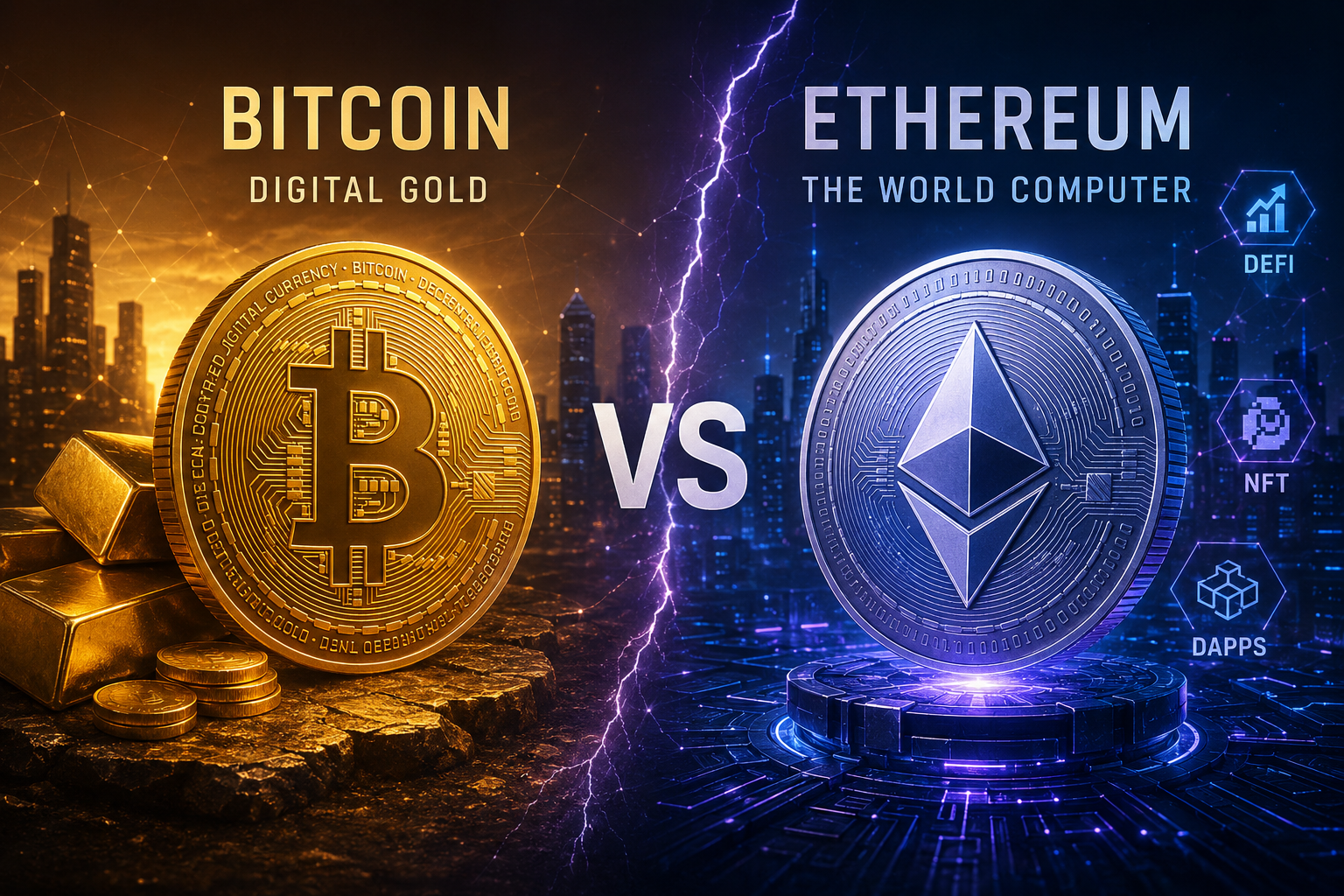
The duel for crypto dominance: BTC vs ETH.
Ethereum (ETH): The Platform for Innovation
Launched in 2015 by Vitalik Buterin and others, Ethereum is more than just a cryptocurrency. It is a decentralized platform that enables developers to build and deploy decentralized applications (dApps) and smart contracts.
- Utility: Ethereum is the fuel that powers the network. You need ETH to pay for transaction fees (gas) on the platform.
- Smart Contracts: These self-executing contracts have unlocked entirely new sectors, including Decentralized Finance (DeFi) and Non-Fungible Tokens (NFTs).
- Evolution: Ethereum recently completed "The Merge," transitioning to a more energy-efficient Proof-of-Stake (PoS) consensus mechanism.
Key Differences at a Glance
| Feature | Bitcoin (BTC) | Ethereum (ETH) |
|---|---|---|
| Primary Goal | Store of Value / Digital Gold | Platform for dApps & Smart Contracts |
| Max Supply | Capped at 21 Million | No Hard Cap (Dynamic Supply) |
| Consensus Mechanism | Proof-of-Work (PoW) | Proof-of-Stake (PoS) |
| Programmability | Limited | Highly Programmable |
The Verdict: Which is "Better"?
There is no simple answer, as they play different roles:
"Bitcoin is often viewed as the more conservative, long-term investment, while Ethereum offers higher potential—and higher risk—due to its central role in the rapidly growing Web3 ecosystem."
Many investors choose to hold both, considering them complementary assets rather than direct competitors. As the crypto landscape continues to mature, both Bitcoin and Ethereum are poised to remain at the forefront of financial innovation.