





The passing of a nation’s highest leader often marks more than the end of an individual life—it signals the closing of an entire political era. In this scenario, the funeral procession of Ayatollah Ali Khamenei represents one of the most significant moments in modern Middle Eastern history. After serving for more than three decades as Iran’s Supreme Leader, his death leaves behind a country standing at a crossroads, facing uncertainty over its future leadership, regional influence, and internal stability. Millions gathered to pay their final respects, while governments across the world closely monitored every development, recognizing that the consequences of this transition would extend far beyond Iran’s borders.
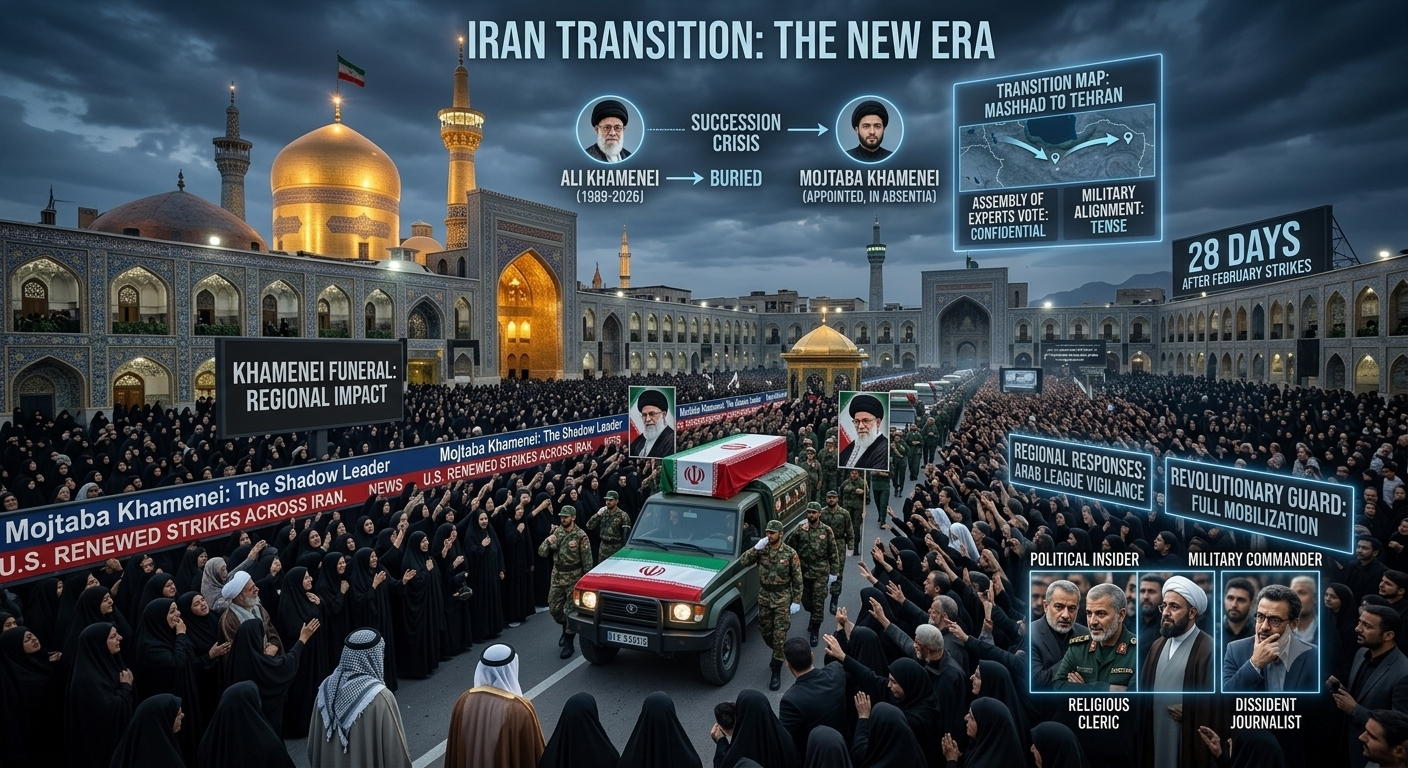
Following days of mourning, Khamenei’s flag-draped coffin was carried through the holy city of Mashhad before being laid to rest inside the revered shrine of Imam Reza, one of the holiest sites in Shia Islam. The funeral became one of the largest public gatherings in recent Iranian history, drawing religious scholars, political leaders, military officials, and pilgrims from across the country. Streets were filled with mourners carrying portraits, waving black flags, and participating in prayers that reflected both religious devotion and the symbolic importance of the moment. For many supporters of the Islamic Republic, the ceremony represented the conclusion of a leadership period that had shaped the country’s political identity for nearly four decades.
The lengthy delay between Khamenei’s reported death and his public burial added another layer of complexity to the situation. Ongoing regional instability, heightened security concerns, and fears of additional military escalation forced authorities to postpone the official funeral for several months. During this period, speculation spread rapidly throughout international media regarding the future of Iran’s leadership, while ordinary citizens waited for official confirmation and carefully watched every statement issued by senior government officials. The uncertainty surrounding the transition reflected the fragile security environment in which the country found itself.
Throughout his years in power, Ayatollah Ali Khamenei exercised enormous influence over nearly every aspect of Iranian governance. As Supreme Leader, he stood above the elected government and held ultimate authority over national security, foreign policy, the armed forces, and the country’s overall ideological direction. His leadership coincided with decades of sanctions, diplomatic confrontations, nuclear negotiations, and regional conflicts that significantly shaped Iran’s position on the global stage. Supporters viewed him as the guardian of the Islamic Revolution, while critics argued that his administration maintained strict political controls and limited domestic freedoms.
Internationally, Khamenei’s leadership was closely associated with Iran’s expanding regional influence. Through long-standing relationships with allied political movements and armed groups across West Asia, Tehran sought to strengthen its strategic position while counterbalancing the influence of rival regional powers and Western governments. This network became a defining element of Iran’s foreign policy, extending its reach far beyond its national borders and making the country a central player in many of the Middle East’s most complex geopolitical crises. His policies fundamentally reshaped regional power dynamics and influenced security calculations for decades.
Yet despite the massive state-organized funeral ceremonies, public reactions across Iran remained deeply divided. While millions participated in official mourning events, reports from various communities suggested that emotions differed significantly depending on political beliefs, economic circumstances, and regional perspectives. Some citizens expressed genuine grief for a leader they believed had defended the nation’s sovereignty during difficult times. Others quietly viewed the transition as a potential opportunity for political reform and economic recovery. This contrast illustrated the diverse opinions that have increasingly characterized Iranian society in recent years.
With the funeral concluded, attention immediately shifted toward the question of succession. Leadership transitions within the Islamic Republic have always carried immense political significance because the Supreme Leader occupies the highest constitutional authority in the country. Every decision made during this process has implications not only for domestic governance but also for international diplomacy, regional security, and economic stability. Governments, intelligence agencies, and financial markets around the world closely followed every development, recognizing that Iran’s next leadership chapter could reshape geopolitical relationships across the Middle East.
In this scenario, the appointment of Mojtaba Khamenei as successor generated intense international discussion. Questions quickly emerged regarding continuity, legitimacy, and the long-term direction of the Iranian political system. Unlike previous leadership transitions that unfolded over extended periods, this succession occurred during an exceptionally volatile regional environment marked by ongoing military confrontations and heightened diplomatic tensions. The lack of immediate public appearances from the newly appointed leader only fueled further speculation regarding the internal dynamics of the country’s ruling establishment.
Reports suggesting that Mojtaba Khamenei had suffered injuries during the same military strikes that claimed his father’s life further intensified uncertainty. While official statements attempted to reassure the public that state institutions remained fully operational, observers questioned whether the absence of visible leadership might weaken public confidence or encourage political rivals to challenge the existing system. Throughout history, moments of leadership transition have often tested the resilience of governments, particularly when combined with external security threats and internal economic pressures.
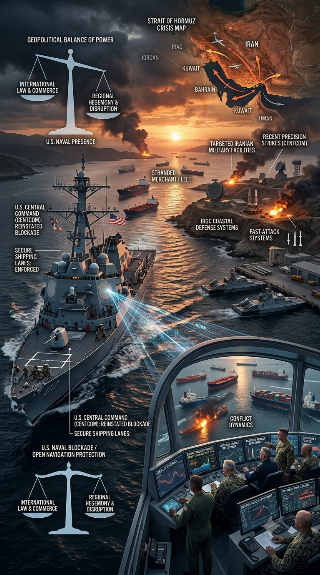
At the same time, the broader regional security situation continued to deteriorate. Military exchanges between Iran and the United States intensified alongside rising tensions involving several neighboring countries. Airstrikes, missile launches, and naval operations kept the region on high alert, increasing concerns about wider escalation involving additional international actors. Commercial shipping routes, energy markets, and diplomatic negotiations all experienced renewed instability as uncertainty surrounding Iran’s political future combined with an increasingly fragile security environment.
Energy markets reacted immediately to the growing uncertainty. Investors feared that prolonged instability could disrupt vital oil and natural gas transportation routes, particularly those connected to the Persian Gulf. Even modest interruptions to energy exports have historically produced significant price fluctuations in global markets, affecting inflation, manufacturing costs, transportation expenses, and economic growth worldwide. Financial institutions therefore monitored political developments in Tehran as closely as military movements across the region.
The leadership transition also presented important domestic challenges extending far beyond national security. Iran continues to face significant economic pressures, including inflation, unemployment, currency instability, and the long-term effects of international sanctions. Public expectations regarding economic improvement remain high, placing additional pressure on any incoming administration to balance ideological commitments with practical reforms capable of improving living standards. Successfully managing these domestic priorities will be just as important as navigating regional geopolitical tensions.
The international community also faces a period of strategic recalibration. Countries maintaining diplomatic relations with Iran must determine how to engage with new leadership while balancing broader concerns involving nuclear negotiations, regional security, sanctions policy, and humanitarian issues. Every diplomatic decision made during this transitional period carries the potential to influence future stability across one of the world’s most strategically important regions.
Ultimately, the conclusion of Khamenei’s funeral symbolizes far more than the burial of a single political figure. It represents the closing chapter of an era that profoundly shaped Iran’s domestic institutions, regional alliances, and global relationships. Whether the next phase brings continuity, gradual reform, or deeper uncertainty will depend on the decisions made by Iran’s leadership in the months and years ahead. As history has repeatedly shown, leadership transitions in the Middle East rarely affect only one nation—they often reshape the political landscape of an entire region.