






Beyond "Leaving No Trace"
For decades, sustainable tourism has been regarded as the gold standard of responsible travel. Travelers were encouraged to reduce plastic waste, conserve water, respect local customs, avoid disturbing wildlife, and leave destinations exactly as they found them. These principles helped millions of people become more environmentally conscious and significantly improved awareness about the impact tourism has on fragile ecosystems. However, as global travel has expanded at an unprecedented pace, it has become increasingly clear that simply minimizing harm is no longer enough.
Today, many of the world's most iconic destinations are struggling under the pressure of overtourism. Historic city centers are becoming overcrowded, natural landscapes are experiencing severe environmental degradation, housing prices in tourist hotspots have risen dramatically, and local cultures are gradually being replaced by commercialized experiences designed solely for visitors. Climate change has added another layer of urgency, threatening beaches, coral reefs, forests, glaciers, and wildlife habitats that millions of tourists travel across the world to experience.
In response to these growing challenges, the tourism industry is embracing a new philosophy known as regenerative tourism. Unlike sustainable tourism, which focuses on reducing negative impacts, regenerative tourism aims to create positive change. Every trip is viewed as an opportunity to restore ecosystems, strengthen local economies, preserve cultural heritage, and improve the quality of life for the communities that welcome visitors. Instead of asking travelers to simply "leave no trace," regenerative travel encourages them to leave every destination healthier, stronger, and more resilient than it was before they arrived.
Redefining the Purpose of Travel
Regenerative tourism represents a complete transformation in the way people think about travel. Traditionally, tourism success has been measured by the number of visitors arriving each year and the revenue generated from hotels, airlines, and attractions. However, this approach often ignored the long-term effects on local residents, public infrastructure, and natural environments.
Today, governments, tourism organizations, and environmental experts are beginning to measure success differently. Instead of focusing only on visitor numbers, they are evaluating how tourism contributes to biodiversity conservation, supports local businesses, protects cultural traditions, creates stable employment, and improves community well-being. The goal is not simply to sustain tourism but to ensure that tourism actively contributes to the long-term regeneration of the places people visit.
This shift recognizes that healthy communities, thriving ecosystems, and authentic cultural experiences are deeply interconnected. If one suffers, the entire tourism industry eventually suffers as well.
Strengthening Local Economies
One of the biggest weaknesses of traditional tourism has been economic leakage. In many popular destinations, tourists spend thousands of dollars during their vacations, yet much of that money never reaches local communities. Large international hotel chains, foreign-owned resorts, global booking platforms, and multinational tour operators often capture the majority of tourism revenue, while local businesses receive only a small fraction of the economic benefits.
Regenerative tourism seeks to reverse this imbalance by encouraging travelers to spend directly within the local economy. Visitors are encouraged to stay in family-owned guesthouses, dine at locally operated restaurants, purchase handmade products from regional artisans, and participate in tours led by local guides who possess authentic knowledge of the area's history and culture.
This approach creates a multiplier effect throughout the community. Tourism revenue helps fund schools, healthcare facilities, cultural preservation projects, environmental conservation initiatives, and local infrastructure improvements. Rather than becoming dependent on outside corporations, communities gain greater financial independence while preserving their unique identity and traditions.
Restoring Nature Instead of Simply Protecting It
Perhaps the most significant difference between sustainable and regenerative tourism lies in the treatment of the natural environment. Sustainable tourism primarily focuses on reducing environmental damage by encouraging responsible behavior, such as avoiding littering, conserving water, and respecting wildlife habitats.
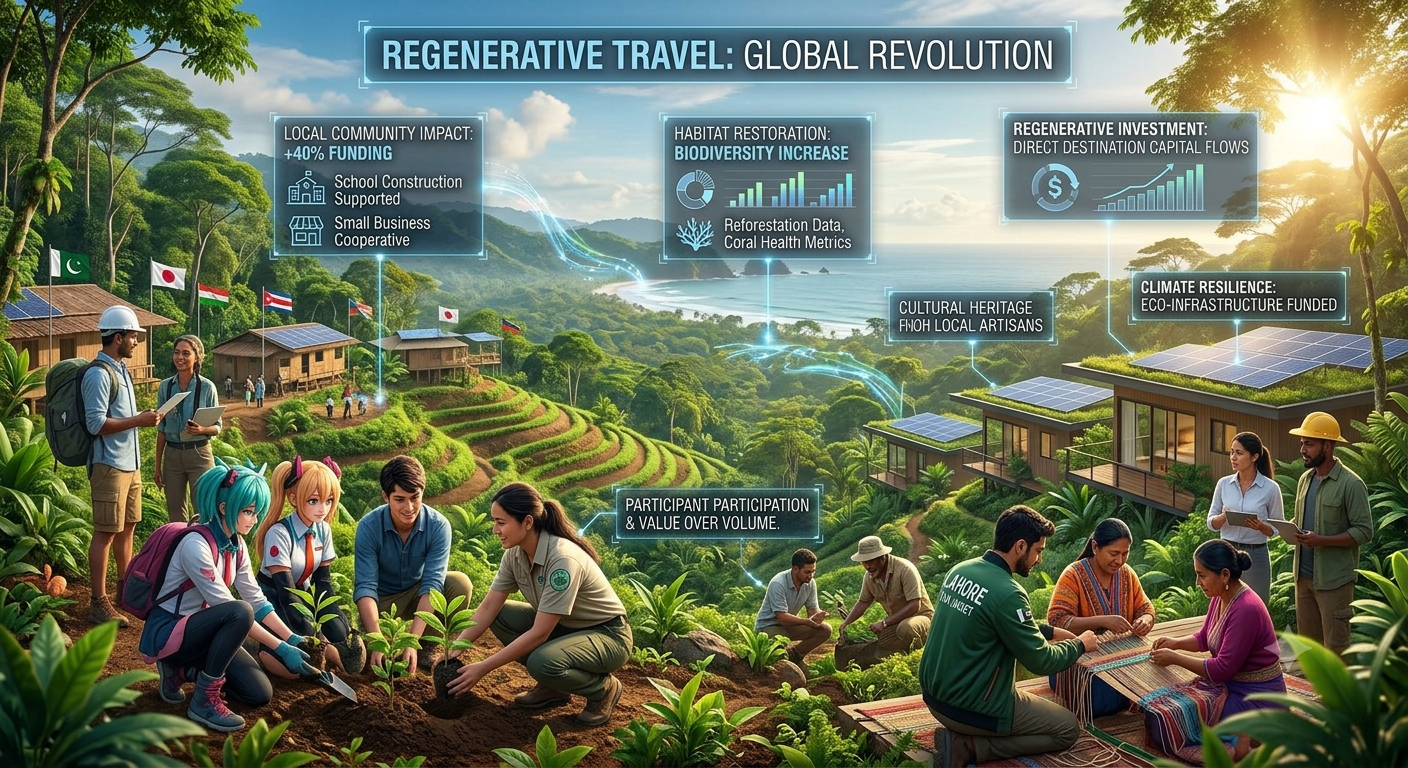
Regenerative tourism takes this concept much further by actively improving ecosystems that have already been damaged. Many modern travel programs now allow visitors to participate directly in conservation projects that create measurable environmental benefits.
Travelers may help plant native forests, restore coral reefs, monitor endangered wildlife populations, remove invasive plant species, clean beaches and rivers, or support scientific research conducted by conservation organizations. In agricultural regions, visitors can learn regenerative farming techniques that improve soil quality while reducing chemical use and increasing biodiversity.
These experiences transform tourists from passive observers into active contributors. Instead of simply enjoying beautiful landscapes, they become part of the long-term effort to restore and protect them for future generations.
Protecting Culture and Heritage
Regenerative tourism recognizes that culture is just as valuable as the natural environment. Around the world, many historic towns and cultural landmarks have become heavily commercialized due to mass tourism. Traditional neighborhoods are often replaced by souvenir shops, international restaurant chains, and short-term holiday rentals that force local residents to relocate because of rising housing costs.
To address these challenges, many destinations are introducing policies that prioritize cultural preservation over rapid tourism expansion. Local governments are restricting excessive short-term rentals, limiting large-scale commercial developments, and investing tourism revenue into restoring historic buildings, museums, cultural festivals, and indigenous traditions.
Visitors are increasingly encouraged to participate in authentic cultural experiences, such as learning traditional crafts, attending local festivals, supporting indigenous communities, and engaging with local artists and historians. These experiences not only preserve cultural heritage but also create meaningful interactions between travelers and residents that benefit both sides.
Quality Over Quantity
For decades, success in tourism was often measured by one simple statistic: the number of visitors. More tourists meant greater economic growth, higher hotel occupancy rates, and increased business activity. However, many destinations have learned that unlimited tourism growth often comes with significant consequences.
Cities such as Venice, Barcelona, Amsterdam, and Dubrovnik have struggled with overcrowded streets, overloaded public transport systems, excessive waste production, and declining quality of life for local residents. Popular natural attractions have also suffered from soil erosion, damaged ecosystems, and wildlife disturbances caused by excessive visitor numbers.
Regenerative tourism promotes a different approach. Instead of encouraging endless visitor growth, destinations are increasingly focusing on attracting travelers who stay longer, spend more within local communities, and engage more deeply with the destination.
Many protected parks and heritage sites now use visitor reservation systems, daily entry limits, and seasonal management strategies to reduce environmental pressure while providing a better experience for tourists. This model generates sustainable economic benefits without overwhelming local infrastructure or damaging sensitive ecosystems.
Innovation Driving Regenerative Tourism
Modern technology is playing an increasingly important role in supporting regenerative travel. Artificial intelligence helps predict visitor flows and prevent overcrowding at popular attractions. Satellite monitoring allows conservation organizations to track environmental changes in forests, oceans, and protected areas with remarkable accuracy.
Digital payment platforms enable travelers to make direct contributions to community conservation projects, while blockchain technology is being explored to improve transparency in sustainability certifications and carbon offset programs. Smart tourism systems also help governments monitor resource consumption, reduce waste, and improve transportation efficiency in busy tourist destinations.
These innovations make regenerative tourism more measurable, transparent, and effective than ever before.
A Global Movement Taking Shape
The principles of regenerative tourism are now being adopted across every continent, although each destination applies them in different ways according to its unique environmental and cultural needs.
Island nations are using tourism taxes to finance coral reef restoration, renewable energy projects, coastal protection systems, and climate adaptation initiatives. African conservation areas are strengthening community-led wildlife protection programs that create employment while reducing illegal poaching. Mountain regions are investing in sustainable hiking infrastructure and ecosystem restoration, while European cities are implementing regulations that protect affordable housing and preserve authentic neighborhood life.
Developing countries are also embracing regenerative tourism as an opportunity to build stronger economies without repeating the environmental mistakes made elsewhere. Eco-lodges, sustainable adventure tourism, community-based accommodations, and carefully managed cultural heritage routes are creating new opportunities while protecting valuable natural resources.
The Responsibility of Every Traveler
Although governments and businesses play a major role in shaping regenerative tourism, individual travelers remain at the center of this transformation. Every decision made before and during a journey has the potential to create either positive or negative impacts.
Choosing environmentally certified accommodations, supporting locally owned businesses, reducing plastic consumption, respecting local customs, traveling during off-peak seasons, using public transportation, participating in conservation projects, and purchasing locally produced goods are all simple actions that collectively make a significant difference.
Increasingly, travelers are moving away from rushed sightseeing itineraries and embracing slower, more meaningful travel experiences that allow them to build genuine connections with local communities and better understand the places they visit.
Looking Toward the Future
Regenerative tourism represents the future of global travel. As climate change, biodiversity loss, and overtourism continue to reshape the world, simply minimizing damage will no longer be sufficient. The tourism industry must evolve into a force that actively restores ecosystems, strengthens local economies, preserves cultural identity, and improves the well-being of future generations.
Rather than viewing tourism as an industry focused solely on entertainment and consumption, regenerative travel encourages people to see themselves as temporary custodians of the destinations they visit. Every journey becomes an opportunity to leave a positive legacy, ensuring that the world's forests, oceans, historic cities, wildlife, and diverse cultures remain vibrant and resilient for generations to come.
The future of travel will not belong to the destinations that attract the greatest number of visitors, but to those that successfully balance economic growth with environmental restoration and cultural preservation. By embracing regenerative tourism, governments, businesses, local communities, and travelers can work together to create a global tourism model that not only protects the planet but actively helps it recover and thrive.