



Introduction
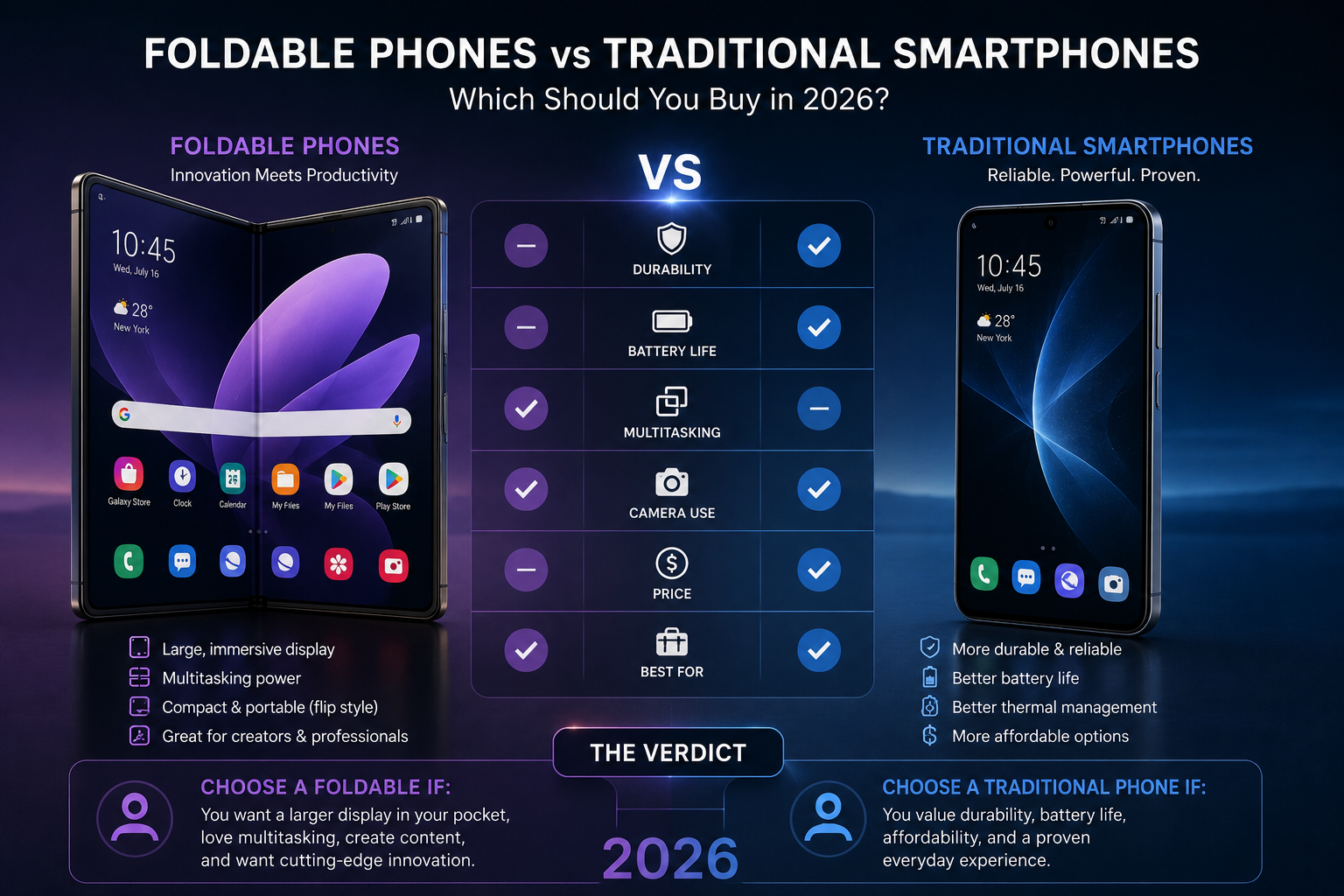
The smartphone industry has entered one of its most exciting periods. What was once considered an experimental technology has now become a serious competitor to the traditional smartphone. Foldable devices have matured significantly, offering improved durability, powerful performance, and innovative multitasking features, while conventional smartphones continue to set the standard for reliability, battery life, and affordability. In 2026, the choice is no longer about which technology is better—it is about which one best matches your daily needs.
The Evolution of Foldable Smartphones
When foldable phones first entered the market, many people viewed them as expensive gadgets designed more to showcase innovation than provide practical benefits. Concerns about fragile displays, visible screen creases, and limited durability prevented widespread adoption.
Fast forward to 2026, and the story has changed dramatically. Modern foldable smartphones feature stronger hinges, more durable flexible displays, improved water resistance, and better software optimization. As manufacturers continue refining the technology, foldables have become a realistic option for professionals, creators, and everyday users alike.
Why Traditional Smartphones Still Dominate
Despite the rapid rise of foldables, traditional smartphones remain the most popular choice worldwide. Their familiar design, dependable performance, and lower cost continue to make them the preferred option for millions of users.
Manufacturers have spent years perfecting the classic smartphone design, resulting in devices that deliver excellent cameras, powerful processors, long battery life, and outstanding durability.
Superior Durability
Traditional smartphones have a significant advantage when it comes to durability.
Without folding mechanisms or flexible displays, these devices contain fewer moving parts that could wear out over time. Most flagship smartphones also offer excellent water and dust resistance, making them better suited for everyday accidents and demanding environments.
For users who prioritize long-term reliability, conventional smartphones remain the safer investment.
Better Battery Life and Cooling
One of the greatest strengths of traditional smartphones is efficiency.
Their fixed internal design allows manufacturers to install larger batteries and more advanced cooling systems, helping devices maintain peak performance during gaming, video editing, and multitasking.
As a result, many flagship smartphones continue to deliver all-day battery life while remaining slim and lightweight.
Outstanding Value for Money
Traditional flagship smartphones offer exceptional value.
If your priorities include premium cameras, fast processors, vibrant displays, and dependable performance, a conventional smartphone provides nearly everything you need without the additional cost associated with foldable technology.
Lower repair costs and greater long-term reliability further strengthen their appeal.
The Foldable Revolution
Foldable smartphones have evolved far beyond being simple technology demonstrations.
Today’s foldables combine flagship performance with flexible form factors that increase productivity and convenience.
Whether using a book-style foldable that transforms into a tablet or a compact flip phone that easily fits into a pocket, users now enjoy experiences that traditional smartphones cannot provide.
Productivity Like Never Before
Perhaps the biggest advantage of foldable devices is multitasking.
Large internal displays allow users to run multiple apps simultaneously, making it easier to work with documents, attend video meetings, browse the web, and communicate without constantly switching between applications.
Professionals who frequently multitask benefit significantly from the additional screen space.
Perfect for Content Creators
Foldable smartphones have become especially popular among photographers, vloggers, and social media creators.
Flip-style devices can stand on their own, making hands-free photography and video recording incredibly convenient.
Unique camera angles, flexible shooting positions, and creative recording options give creators far greater flexibility than conventional smartphones.
One Device Instead of Two
Many book-style foldables effectively combine a smartphone and a small tablet into a single device.
Instead of carrying multiple gadgets, users can enjoy a compact smartphone during travel and instantly expand it into a larger display whenever extra workspace is needed.
This versatility makes foldables particularly attractive for business professionals and frequent travelers.
Software Has Improved Dramatically
Hardware isn’t the only area that has evolved.
Modern operating systems are now optimized specifically for foldable displays. Features such as split-screen multitasking, floating windows, app continuity, and drag-and-drop functionality create a seamless user experience.
Software improvements have transformed foldables from interesting gadgets into genuinely productive mobile devices.
Price Comparison
Although prices have gradually decreased, foldable smartphones remain more expensive than traditional flagship devices.
However, many consumers now view the additional cost as worthwhile because they receive both a smartphone and a tablet-like experience in one product.
As competition continues to increase throughout 2026, pricing is expected to become even more competitive.
Which Smartphone Is Right for You?
Choose a Traditional Smartphone If:
- You want maximum durability.
- Battery life is your highest priority.
- You prefer lower repair costs.
- You want flagship performance at the best value.
- You don’t need advanced multitasking features.
Choose a Foldable Smartphone If:
- You multitask frequently.
- You want a tablet-sized display in your pocket.
- You create photos and videos regularly.
- You enjoy cutting-edge technology.
- You want one device that replaces both a smartphone and a tablet.
The Future of Smartphones
The foldable smartphone market continues to grow rapidly, with manufacturers introducing stronger materials, thinner designs, lighter devices, and improved software experiences.
Industry experts expect even greater competition in late 2026 as additional premium manufacturers enter the foldable market. Increased competition will likely improve quality while making foldable devices more affordable for consumers.
Traditional smartphones will continue evolving as well, offering even better cameras, faster processors, and longer battery life.
Rather than replacing conventional smartphones, foldables are expanding consumer choice and redefining what a smartphone can be.
Conclusion
The debate between foldable phones and traditional smartphones is no longer about innovation versus practicality. Both categories have matured into powerful, premium devices designed for different types of users.
Traditional smartphones remain the best choice for those seeking durability, outstanding battery life, excellent value, and proven reliability. Foldable smartphones, meanwhile, deliver unmatched versatility, larger displays, advanced multitasking, and unique experiences that appeal to professionals, creators, and technology enthusiasts.
In 2026, there is no universal winner. The best smartphone is the one that complements your lifestyle, work habits, and personal preferences. As foldable technology continues to improve, consumers now have more choices than ever before, making this one of the most exciting eras in smartphone innovation.