



The Education System at a Crossroads
For centuries, education was built around a relatively predictable model.
Students completed their schooling, earned a degree, entered a profession, and gradually built a career within a stable industry.
That model is increasingly under pressure.
The rapid development of artificial intelligence, advanced automation, biotechnology, and digital technologies is changing the skills employers need at an unprecedented pace.
As industries evolve faster, a growing gap has emerged between what students learn in traditional classrooms and what they encounter in the modern workplace.
The result is a fundamental challenge for education systems around the world:
How can institutions prepare students for careers that may change dramatically before they even graduate?
The answer is increasingly found in a shift away from rigid, one-time education toward continuous and adaptable learning.
The Evolution of Curricula
For many years, universities and vocational institutions operated largely independently from industry.
Academic curricula could take years to develop and update, meaning that graduates sometimes entered the workforce with knowledge that did not fully reflect current professional practices.
That model is beginning to change.
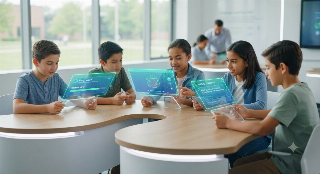
Forward-thinking educational institutions are increasingly collaborating with businesses and technology organizations to create more relevant learning programs.
These partnerships can help students gain exposure to:
- Current industry software and tools.
- Real-world business challenges.
- Practical problem-solving.
- Emerging technologies.
- Workplace communication and collaboration.
- Skills that are increasingly valued by employers.
The goal is to create a stronger connection between education and employment.
Rather than preparing students only for examinations, institutions are increasingly being asked to prepare them for real-world problems.
The Rise of Industry-Education Partnerships
Closer collaboration between employers and educational institutions can benefit both sides.
Students gain access to practical knowledge and real-world experience, while companies gain a stronger pipeline of candidates with relevant skills.
This relationship is particularly important in fast-moving industries.
Technology skills that are highly valuable today may evolve significantly within just a few years. By maintaining continuous communication with industry, educational institutions can respond more quickly to changes in the labor market.
Work-integrated learning, internships, apprenticeships, project-based education, and employer-led training are therefore becoming increasingly important components of modern education.
The Rise of Micro-Credentials
The traditional university degree is no longer the only pathway to professional development.
Micro-credentials, professional certificates, bootcamps, online courses, and skills-based portfolios are becoming increasingly important ways for individuals to demonstrate specialized capabilities.
These alternatives offer greater flexibility.
Instead of committing to a multi-year academic program, learners can focus on specific skills that are directly relevant to their career goals.
For workers already in the workforce, this can make it easier to reskill or transition into new industries without stepping away from their careers for extended periods.
From Degree-Based Hiring to Skills-Based Hiring
The shift toward skills-based hiring is also changing how employers evaluate candidates.
A degree can still provide valuable evidence of knowledge and persistence, but employers are increasingly interested in what candidates can actually do.
Practical experience, portfolios, certifications, technical assessments, and demonstrated problem-solving abilities can all play a role in the hiring process.
This creates new opportunities for individuals who may not follow traditional educational pathways.
It also encourages learners to think of education as an ongoing process rather than a single stage of life.
Lifelong Learning Becomes an Economic Necessity
In a rapidly changing economy, completing an education at age 20 or 22 may no longer provide all the skills needed for an entire career.
Workers may need to learn new technologies, transition into new roles, and develop entirely new competencies multiple times throughout their professional lives.
This makes lifelong learning increasingly important.
The future workforce will likely require people who are comfortable with continuous development and who view learning as a permanent part of their careers.
Organizations also have a role to play.
Employers that invest in employee training and reskilling can potentially reduce talent shortages while helping workers adapt to technological change.
The Digital Literacy Imperative
Technical skills are only one part of the equation.
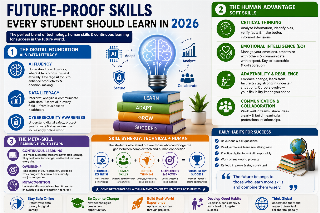
As artificial intelligence becomes integrated into everyday work, digital literacy is becoming a fundamental requirement across industries.
Students increasingly need to understand how to evaluate information, work effectively with digital tools, understand AI-generated content, and recognize the limitations of automated systems.
These capabilities will be important even for workers who are not employed directly in technology-related roles.
The future of education must therefore combine technical knowledge with critical thinking and responsible technology use.
Bridging the Education-Workforce Divide
Closing the gap between education and employment requires more than simply adding new courses.
It requires a fundamental redesign of how learning is structured.
Educational institutions can become more responsive by embracing:
- Modular and flexible learning programs.
- Continuous curriculum updates.
- Stronger partnerships with employers.
- Practical, project-based education.
- Industry-recognized micro-credentials.
- Digital literacy and AI awareness.
- Opportunities for lifelong reskilling.
At the same time, employers must recognize that skills development is a shared responsibility.
The workforce of tomorrow cannot be created by schools alone.
The Road Ahead
The future of education will likely be less linear than the traditional model.
Instead of following a single path from school to university to career, individuals may move continuously between learning and employment.
A person might earn a degree, develop specialized skills through online courses, gain practical experience through an apprenticeship, and later return to formal education to transition into an entirely new profession.
This more flexible model reflects the reality of a world where industries and technologies are constantly evolving.
Conclusion
The education system is entering a period of profound transformation.
Artificial intelligence, automation, biotechnology, and other emerging technologies are changing the skills required across the global economy.
To remain relevant, education must move beyond memorization and rigid degree structures toward flexible, practical, and lifelong learning.
The most successful institutions will not simply prepare students for their first job.
They will prepare them to continuously adapt throughout their entire careers.
The future of education is not about learning once and working forever. It is about building the ability to learn, adapt, and evolve for a lifetime.