



Introduction
For many years, educators, policymakers, and technology experts debated whether online learning would eventually replace traditional classrooms. The rapid growth of digital learning platforms, virtual classrooms, and educational applications led many to believe that physical schools might become less important in the future. However, by 2026, a different reality has emerged. Rather than replacing one another, digital technology and face-to-face education have evolved into complementary systems that work together to create more effective learning experiences. The discussion has shifted away from whether technology belongs in education and toward how it can be used responsibly to improve teaching, personalize learning, and strengthen collaboration among students.
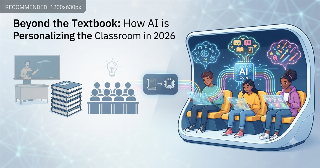
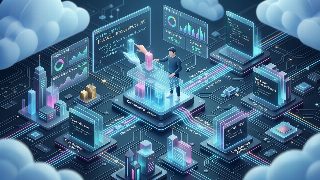
This transformation has given rise to a new educational model known as Personalization at Scale. Instead of delivering identical lessons to every student regardless of their abilities or learning pace, artificial intelligence enables schools to provide individualized educational experiences for each learner. AI-powered systems analyze student progress, identify strengths and weaknesses, recommend personalized learning materials, and adjust instruction according to individual needs. At the same time, teachers remain central to the educational process by providing mentorship, emotional support, critical thinking guidance, and meaningful human interaction that technology cannot replace.
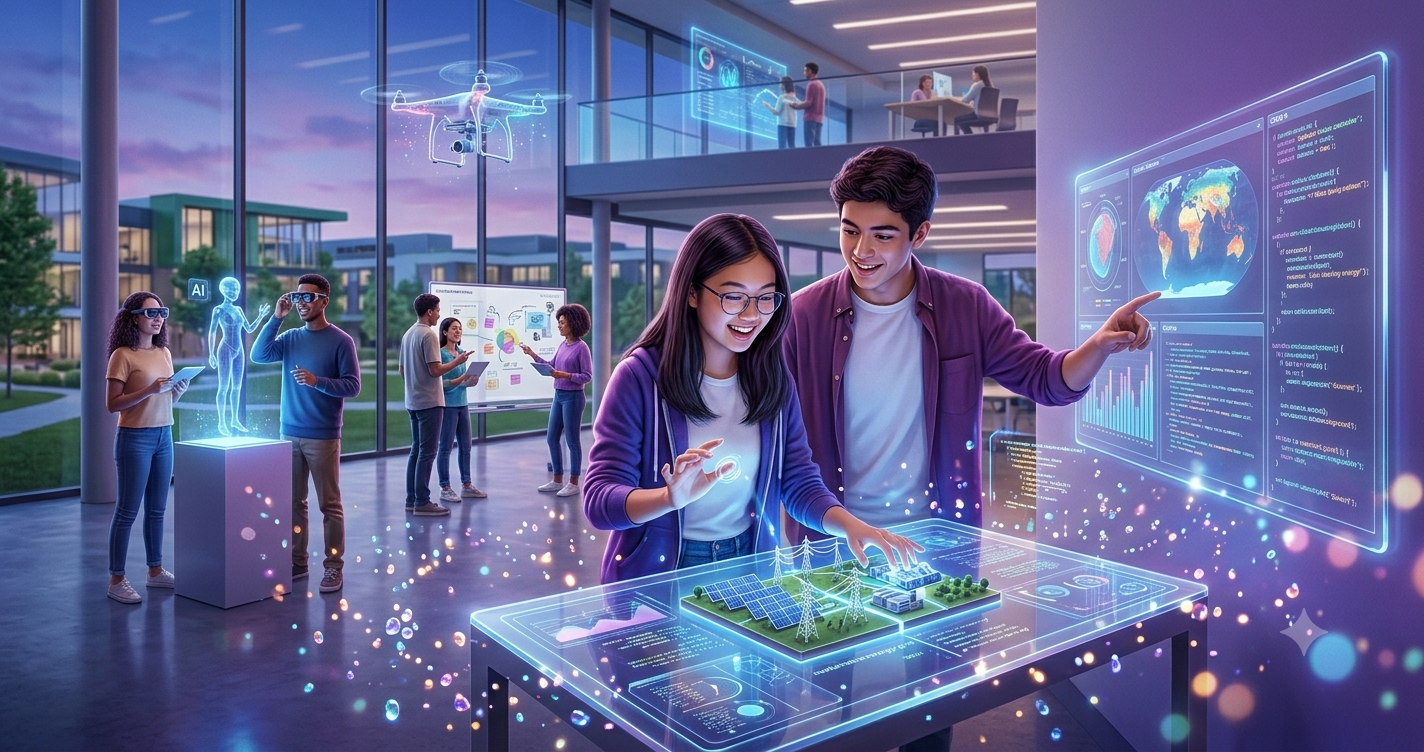
The classroom itself is also changing. Rather than serving solely as a place where teachers deliver lectures, modern learning spaces have become collaborative environments where students work together on real-world projects, participate in discussions, solve complex problems, and apply knowledge through practical experiences. Technology supports these activities by handling repetitive instructional tasks while allowing educators to focus on creativity, communication, and student development.
As education enters this new era, schools are recognizing that the most effective learning environment combines the efficiency of artificial intelligence with the empathy, experience, and inspiration provided by skilled teachers. This balanced approach is redefining the future of education around the world.
The Rise of AI Tutors and Hybrid Learning Agents
One of the most significant developments in modern education is the emergence of intelligent AI tutors and hybrid learning agents. Traditional education often relied on a one-to-many teaching model, where one teacher delivered the same lesson to an entire classroom despite students having different abilities, interests, and learning speeds. While effective in many situations, this approach often struggled to meet the unique needs of every learner.
Artificial intelligence is helping solve this challenge by providing personalized academic support throughout the learning process. Unlike basic educational chatbots that simply answer questions, modern AI tutors function as intelligent learning companions. They continuously monitor student progress, identify areas of difficulty, recommend additional practice materials, and adjust lesson complexity according to individual performance.
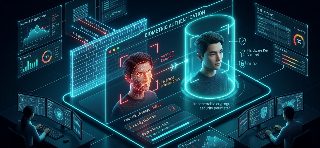
One of the most valuable capabilities of AI tutors is their ability to monitor cognitive load. Instead of overwhelming students with information, AI systems evaluate learning progress in real time by analyzing quiz results, assignment performance, participation, attention patterns, and—in advanced learning environments—extended reality (XR) sensors that help estimate focus and engagement. Based on this information, lessons can become more challenging when students are ready or simplified when additional support is needed.
Another important innovation is Peer Sync, where artificial intelligence identifies students with complementary strengths and learning needs. Instead of working independently throughout the day, students are encouraged to collaborate on projects, discuss concepts, and solve problems together. This creates a more interactive classroom environment while strengthening teamwork, communication, and social learning.
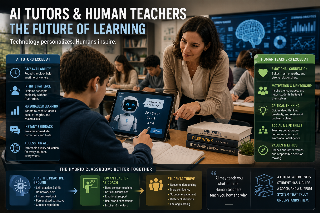
Importantly, AI tutors are not replacing teachers. Instead, they reduce administrative workload by automating routine tasks such as grading quizzes, tracking progress, generating practice exercises, and identifying students who may require additional support. Teachers can therefore devote more time to mentoring, encouraging creativity, supporting emotional well-being, and building meaningful relationships with students.
Personalized Learning at Scale
Personalization has long been considered one of the greatest goals of education. Every student learns differently, yet traditional classrooms often require everyone to follow the same curriculum at the same pace. Artificial intelligence makes true personalized learning possible on a much larger scale.
Modern educational platforms analyze multiple sources of information, including assessment scores, homework completion, classroom participation, learning preferences, and historical performance. Using these insights, AI systems recommend customized learning pathways that help each student progress according to their individual needs.
For example, if a student struggles with algebra but performs exceptionally well in geometry, the AI tutor can recommend additional algebra practice while allowing the student to continue advancing in geometry. This adaptive approach helps prevent frustration while encouraging continuous progress.
Students also receive immediate feedback rather than waiting days for assignments to be graded. Instant feedback helps learners correct mistakes quickly, improving both confidence and long-term understanding.
Redefining the Classroom
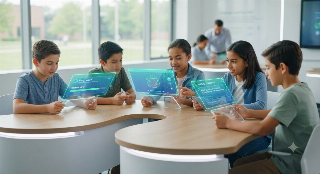
As artificial intelligence takes over repetitive instructional tasks, the physical classroom is being transformed into a space focused on collaboration, creativity, experimentation, and problem-solving. Instead of spending most of the school day listening to lectures, students increasingly participate in interactive learning experiences that encourage critical thinking and practical application.
Modern classrooms are becoming flexible learning environments equipped with digital displays, collaborative workstations, maker spaces, and immersive technologies that support project-based education.
One of the most exciting developments is the emergence of Immersive Simulation Zones. Using Extended Reality (XR), Augmented Reality (AR), and Virtual Reality (VR), students can explore historical civilizations, perform scientific experiments, visualize complex mathematical models, and investigate biological systems within interactive three-dimensional environments.
For example, history students may examine ancient architecture through augmented reality overlays while biology students collaborate on highly detailed three-dimensional organ simulations that replicate real biological structures. Engineering students can test virtual bridge designs before constructing physical prototypes, while environmental science students analyze realistic climate simulations.
These immersive experiences allow students to understand complex concepts through direct interaction rather than passive observation.
Maker Collaboration Hubs
Another important feature of modern education is the growth of Maker Collaboration Hubs. These spaces resemble research laboratories or innovation centers rather than traditional classrooms.
Students work together to solve authentic real-world problems using design thinking, engineering principles, digital fabrication tools, robotics, coding, and scientific experimentation.
Artificial intelligence supports this process by identifying meaningful project ideas based on current environmental, technological, or social challenges. Students then collaborate to design, build, test, and improve practical solutions.
For example, an AI system may analyze local energy consumption and suggest designing a more efficient microgrid for the community. Students research the problem, develop prototypes, collect data, evaluate results, and present their findings.
This approach develops technical knowledge while strengthening communication, creativity, leadership, teamwork, and problem-solving skills.
AThe Changing Role of Teachers
Although artificial intelligence is becoming increasingly capable, teachers remain the most important element of education. Technology cannot replace empathy, encouragement, ethical guidance, emotional intelligence, or meaningful human relationships.
Instead, the teacher’s role is evolving from information delivery toward mentorship and personalized support. Educators now spend less time presenting repetitive lessons and more time helping students develop critical thinking, creativity, collaboration, resilience, and lifelong learning skills.
Teachers also help students evaluate AI-generated information, identify misinformation, develop responsible digital citizenship, and understand the ethical implications of emerging technologies.
This partnership between teachers and intelligent systems creates a learning environment that combines technological efficiency with human understanding.
The Ethical Horizon and Data Sovereignty
As artificial intelligence becomes increasingly integrated into education, protecting student privacy has become one of the sector’s highest priorities.
AI-powered educational platforms collect information about academic progress, learning preferences, assessment results, participation patterns, and—in some advanced learning environments—attention and engagement data. Managing this information responsibly requires strong ethical standards and transparent policies.
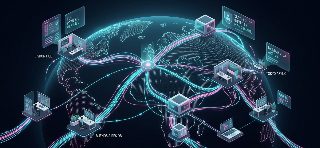
Many educational institutions are adopting edge computing, where sensitive student information is processed locally rather than continuously transmitted to centralized cloud servers. This approach improves privacy while reducing security risks.
Students and parents should understand exactly what information is collected, why it is collected, how it is used, and who has permission to access it. Schools must ensure that educational data supports learning rather than commercial purposes.
Algorithmic fairness is equally important. Artificial intelligence systems should be regularly evaluated to ensure they provide equal educational opportunities regardless of background, language, disability, or socioeconomic status.
Transparency, accountability, and informed consent remain essential foundations for responsible educational AI.
Challenges and Future Opportunities
Although personalized AI offers tremendous benefits, several challenges remain. Schools must ensure equal access to digital technologies so that all students can benefit regardless of geographic location or financial circumstances.
Teachers require ongoing professional development to effectively integrate AI into classroom instruction. Educational systems must also balance technological innovation with opportunities for face-to-face communication, physical activity, creativity, and emotional development.
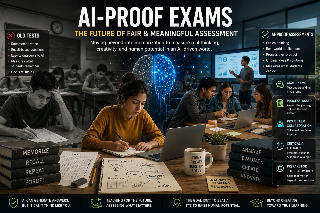
Future educational technologies may include intelligent virtual laboratories, multilingual AI tutors, adaptive examinations, predictive learning analytics, and even more sophisticated immersive simulations.
As these innovations continue to develop, education will become increasingly personalized, collaborative, and engaging.
Conclusion
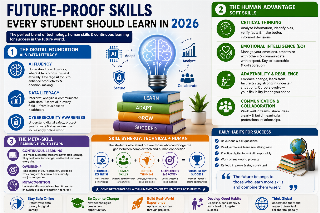
Education in 2026 represents the successful integration of human expertise and artificial intelligence rather than a competition between the two. Personalized AI tutors, adaptive learning systems, immersive classrooms, and collaborative maker spaces are transforming how students learn while preserving the essential role of teachers as mentors, guides, and role models.
The classroom is no longer simply a place for memorizing information. It has become a dynamic environment where students apply knowledge, solve authentic problems, collaborate with peers, and develop the critical skills required for an increasingly complex world.
At the same time, responsible use of artificial intelligence requires strong commitments to privacy, transparency, ethical decision-making, and data sovereignty. Educational institutions must ensure that technology always serves students’ best interests while protecting their personal information.
The future of education is not defined by replacing teachers with machines. Instead, it is built upon a partnership in which artificial intelligence enhances learning, supports personalization, and enables educators to focus on what humans do best—inspiring curiosity, nurturing creativity, and empowering every learner to reach their full potential.