





For centuries, human mortality has been the ultimate boundary line. Poets, philosophers, and scientists have grappled with the ephemeral nature of our existence, accepting that our bodies have an expiration date typically capped around eight decades. But what if everything we know about aging is wrong? What if the future generation looks at a 100th birthday not as the twilight of life, but as the mere beginning of middle age?
Driven by revolutionary advances in biotechnology, artificial intelligence, and regenerative medicine, science is beginning to peer over the horizon of extreme longevity. Let us explore what happens to our bodies, our careers, and our global society if humans could live up to 200 years.
1. The Biology of Immortality: How Do We Reach 200?
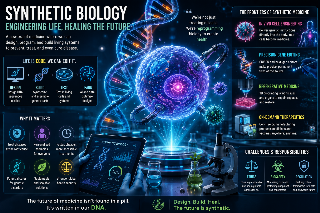
To stretch the human lifespan to two centuries, medicine must shift from merely treating age-related diseases to treating aging itself as a curable condition. Right now, researchers are focusing on several groundbreaking frontiers:
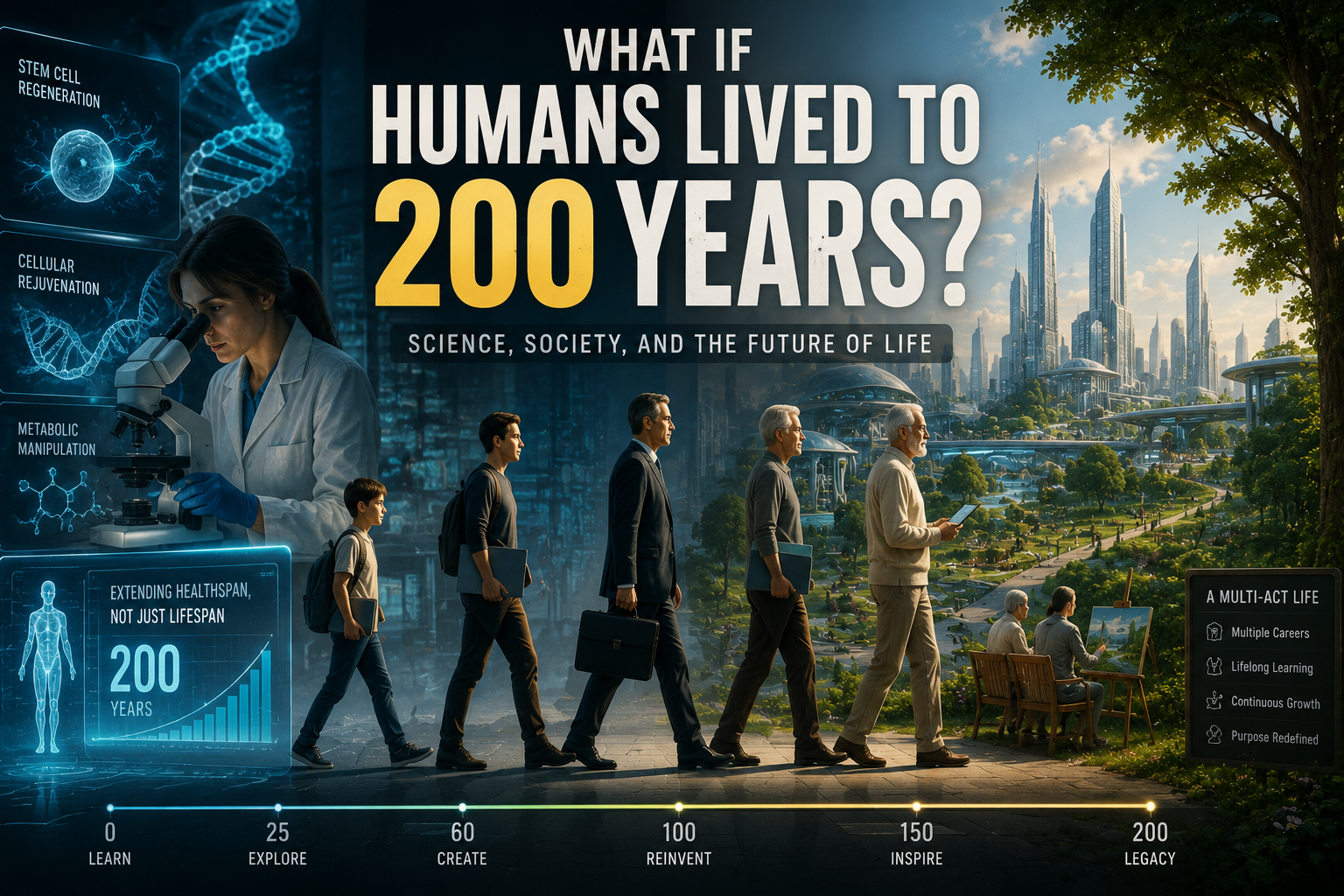
- Stem Cell Regeneration: Laboratories are already exploring how stem cells can be utilized to grow replacement tissues and organs—or even biological teeth—effectively swapping out worn-out parts like spare car components.
- Cellular Rejuvenation: As we age, our cells gradually lose their ability to repair themselves and accumulate genetic damage. Future therapies aim to reprogram senescent ("zombie") cells, flushing them out or reversing cellular decay.
- Metabolic Manipulation: Scientists are studying specialized pharmacological compounds and caloric-restriction mimetics that trick the body into triggering deep cellular maintenance, drastically lowering rates of obesity, diabetes, and cardiovascular failure.
2. Redefining the Human Timeline: A Multi-Act Life
If you knew you were going to live for 200 years, your entire approach to personal planning would change overnight. The traditional milestones of modern life—schooling in your youth, working for 40 years, and retiring at 65—would completely shatter.
Instead, life would become a multi-act play:
- Multiple Careers: You wouldn't just change jobs; you might completely reinvent your profession every 40 years. Someone could spend their first century as a pioneering aerospace engineer, retire from that, and spend their second century as a master painter or deep-sea explorer.
- Extended Education: Education would no longer be front-loaded into our first two decades. Learning would be continuous, cyclical, and spaced out across centuries as industries shift and evolve.
3. The Societal and Economic Earthquake
While the prospect of a longer life sounds utopian, it introduces profound structural challenges for global civilization.
Economically, traditional pension and retirement models would completely collapse unless reimagined. If workers remained healthy and vibrant well past 120, retirement ages would naturally stretch, altering the ratio of active workers to retirees. Furthermore, governments would need to heavily recalibrate healthcare spending, moving focus away from late-stage chronic illness management toward lifelong preventative care.
There is also the question of generational turnover. Would power, wealth, and political leadership remain locked in the hands of long-lived elites for centuries, stifling opportunities for younger generations? Society would need to invent creative governance structures to ensure dynamic social mobility.
4. The Psychological Dimension: Wisdom and Boredom
What does a 200-year mind look like? Human psychology is built around scarcity—knowing our time is limited gives our choices weight and urgency. Would an expanded lifespan breed complacency, or would it unlock unprecedented levels of human creativity and mastery?
With two centuries on the clock, individuals could master multiple languages, read thousands of books, build deep historical perspectives, and witness firsthand the long-term arc of technological and environmental recovery on Earth. The frantic rush of modern existence might give way to a more patient, deliberate human philosophy.
Conclusion: The Ultimate Frontier
Skeptics often argue that the human body has a hard biological limit, or that extending life would create insurmountable demographic crises. Yet, every major leap in public health—from sanitation to antibiotics—was once viewed as an impossible dream.
As science marches closer to unlocking the deep secrets of cellular aging, humanity is inching toward its most radical transformation yet. Living to 200 is no longer just a fantasy of mythology; it is the ultimate destination of modern science. The only question left is: *Are we ready for all that extra time?*