



The Urban Mobility Challenge
Cities around the world are growing at an unprecedented pace.
As millions of people move into metropolitan areas, transportation networks are facing increasing pressure from congestion, pollution, limited parking, and aging infrastructure.
For decades, urban mobility was largely built around private vehicle ownership.
But as populations increase, that model is becoming increasingly difficult to sustain.
More vehicles mean more congestion. More roads require more land. More traffic creates greater emissions and places additional pressure on public infrastructure.
City planners are therefore looking for a different approach—one that treats transportation as an integrated ecosystem rather than a collection of disconnected services.
The emerging answer is smart urban mobility.
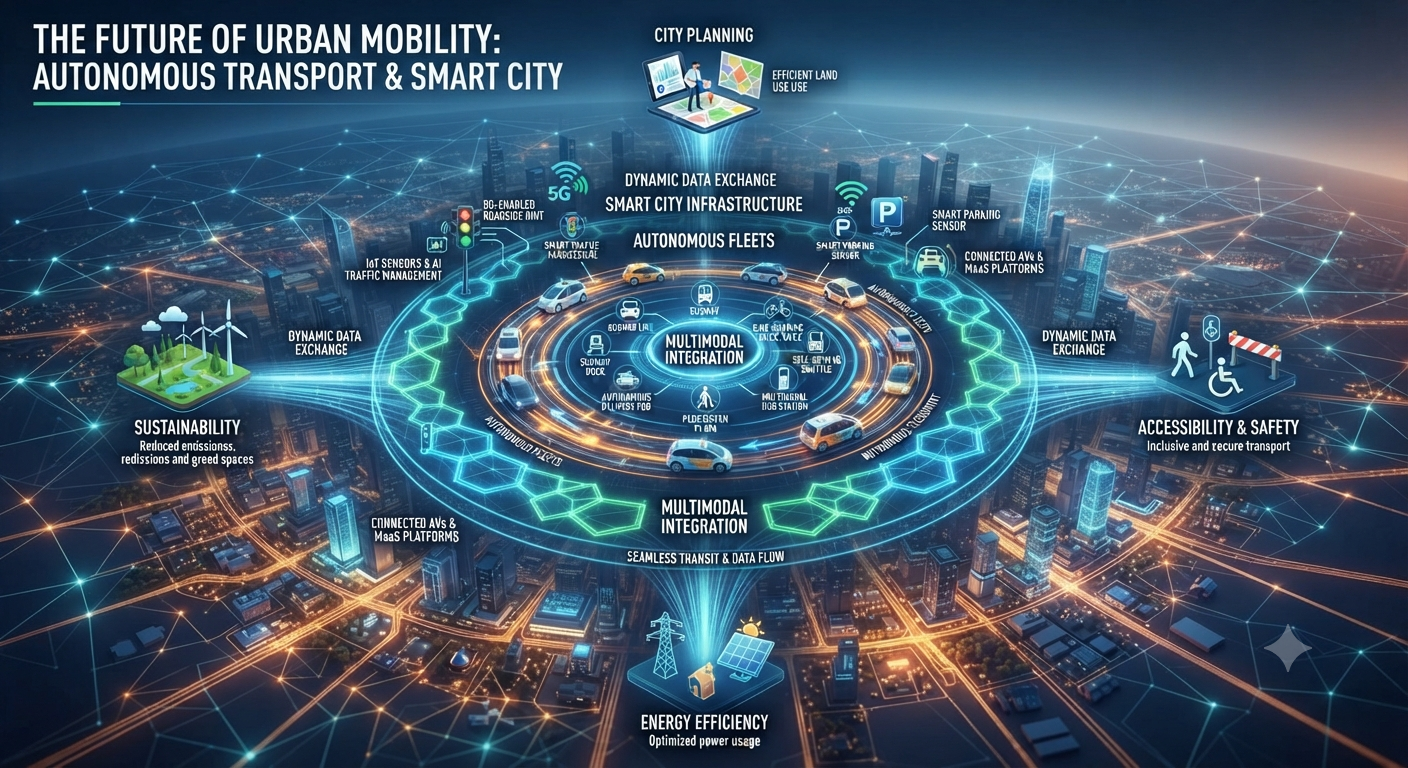
By combining autonomous transportation, artificial intelligence, Internet of Things (IoT) infrastructure, and mobility-as-a-service platforms, cities are beginning to rethink how people and goods move through urban environments.
The Rise of Autonomous Fleets
Autonomous vehicles have long been associated with futuristic visions of transportation.
Today, however, autonomous technology is gradually moving from experimental testing toward real-world applications.
While fully autonomous private vehicles may still require significant technological and regulatory development, autonomous fleets are already attracting attention as a potential component of future urban transportation.
These systems could include:
Robo-taxis.
Autonomous shuttles.
Automated delivery vehicles.
Self-driving public transit services.
Autonomous last-mile transportation.
One of the most promising applications is the first-and-last-mile problem.
Public transportation can efficiently move large numbers of people across cities, but getting passengers from their homes to transit stations—and from stations to their final destinations—can be challenging.
Autonomous shuttles and shared vehicles could help bridge this gap.
Mobility as a Service
The future of transportation may not be defined by owning a vehicle.
Instead, people may increasingly access transportation through integrated Mobility-as-a-Service (MaaS) platforms.
A single digital platform could allow users to plan and pay for journeys combining multiple transportation options, such as:
Buses.
Trains.
Subways.
Bicycles.
Electric scooters.
Ride-hailing services.
Autonomous vehicles.
This approach could make urban transportation more flexible and reduce dependence on private cars.
If fewer people need to own individual vehicles, cities could potentially reduce the amount of land dedicated to parking.
Former parking lots and garages could eventually be repurposed for parks, housing, public spaces, or commercial development.
The Smart Infrastructure Behind Autonomous Mobility
Autonomous vehicles cannot operate effectively in isolation.
Their success depends on the infrastructure surrounding them.
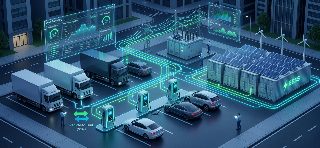
Modern smart cities are increasingly deploying networks of sensors, connected traffic signals, communication systems, and data platforms designed to provide real-time information about urban conditions.
The Internet of Things plays a central role in this transformation.
Sensors can monitor traffic conditions, infrastructure health, environmental conditions, and transportation demand.
Connected systems can then use this information to make decisions more quickly and efficiently.
Dynamic Traffic Management
One of the most immediate benefits of smart transportation infrastructure is improved traffic management.
AI-powered systems can analyze traffic patterns in real time and adjust traffic signals according to changing conditions.
Instead of relying entirely on fixed signal schedules, intelligent traffic systems can respond dynamically to congestion.
This could help reduce:
Traffic delays.
Vehicle idling.
Fuel consumption.
Unnecessary emissions.
Over time, these improvements could make urban transportation networks more efficient without requiring cities to build entirely new road systems.
Predictive Infrastructure Maintenance
Smart city technology can also transform how infrastructure is maintained.
Sensors placed within bridges, tunnels, roads, and transit systems can continuously monitor structural conditions and detect signs of wear.
Rather than waiting for major failures to occur, transportation authorities can use data to identify potential problems earlier.
This approach, known as predictive maintenance, can help cities prioritize repairs, reduce unexpected disruptions, and potentially extend the lifespan of critical infrastructure.
The same principle can be applied to public transportation systems.
Data from vehicles and infrastructure can help operators identify maintenance requirements and optimize service schedules.
The Rise of Multimodal Transportation Hubs
The future of urban mobility will likely involve multiple forms of transportation working together.
Instead of treating buses, trains, bicycles, scooters, and autonomous vehicles as separate systems, smart cities are increasingly exploring ways to connect them through unified digital platforms.
Imagine planning a journey through a single application.
The system could recommend walking to a nearby transit station, taking a train across the city, and then using an autonomous shuttle to reach the final destination.
A single payment system could potentially manage the entire journey.
This level of integration could make public transportation more convenient and encourage more people to choose alternatives to private vehicles.
Building More Livable Cities
The ultimate purpose of smart mobility is not simply to move people faster.
It is to create better places to live.
When cities reduce dependence on private vehicles, they can potentially reclaim valuable space currently dedicated to roads and parking.
That space could instead support:
Parks and green areas.
Pedestrian-friendly streets.
Cycling infrastructure.
Public gathering spaces.
Affordable housing.
Community facilities.
Cleaner transportation can also contribute to better air quality and lower urban emissions.
The result is a broader vision of mobility—one that prioritizes accessibility, sustainability, and quality of life alongside efficiency.
The Road Ahead
Significant challenges remain.
Autonomous transportation requires rigorous safety testing, regulatory frameworks, cybersecurity protections, and public trust.
Smart cities must also address data privacy and ensure that new mobility systems remain accessible to people across different income levels and abilities.
Technology should not create a transportation system that benefits only those who can afford the latest services.
The most successful urban mobility strategies will therefore combine technological innovation with inclusive public policy and thoughtful urban planning.
Conclusion
The future of urban transportation is moving toward integration.
Autonomous vehicles, IoT sensors, artificial intelligence, and Mobility-as-a-Service platforms are gradually transforming transportation from a collection of disconnected systems into a coordinated digital ecosystem.
The goal is not simply to make vehicles autonomous.
It is to make cities smarter, cleaner, safer, and easier to navigate.
As urban populations continue to grow, the cities that successfully integrate technology with sustainable planning will be better positioned to meet the transportation challenges of the future.
The future of mobility is not just about how fast we move—it is about creating cities where people can move freely while living healthier, more connected, and more sustainable lives.