





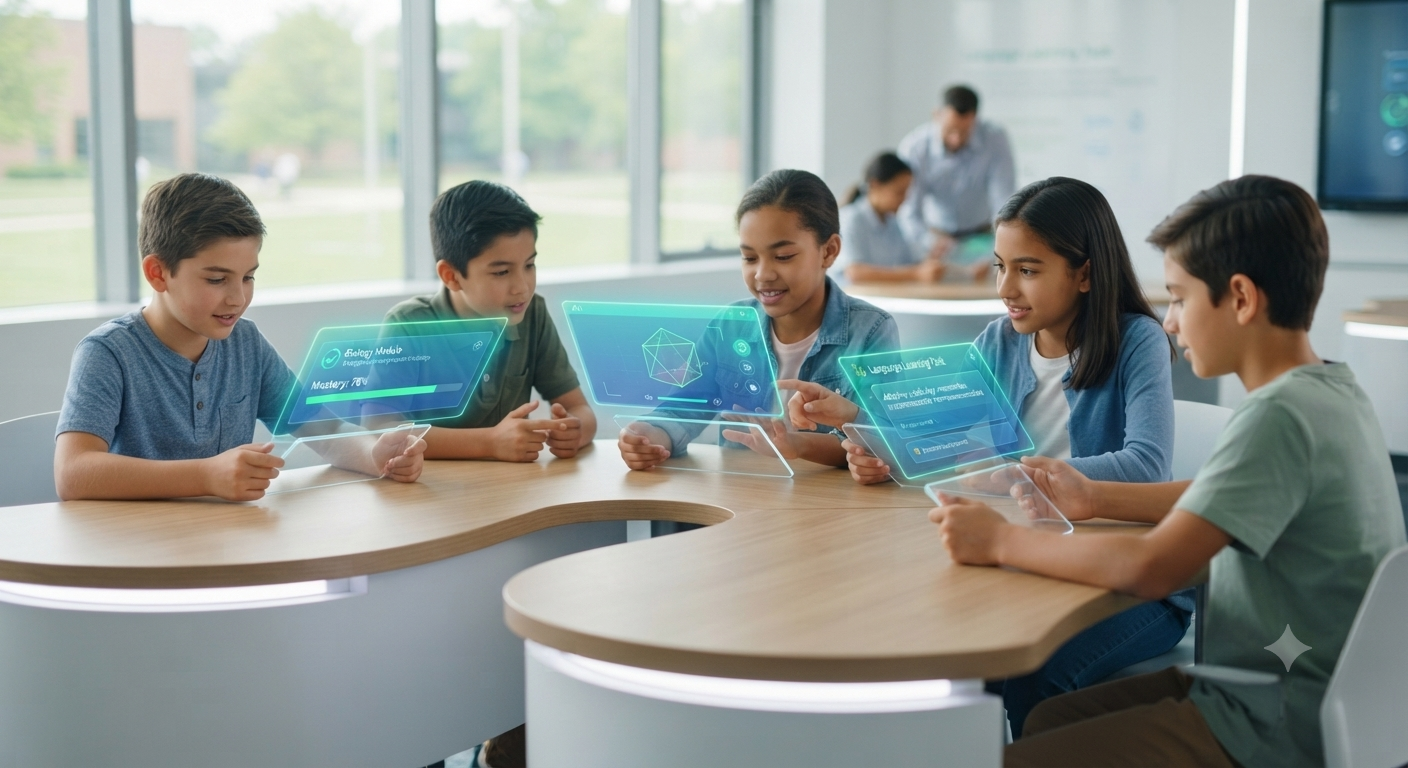
The AI Revolution: How Hyper-Personalized Learning is Reshaping Education in 2026

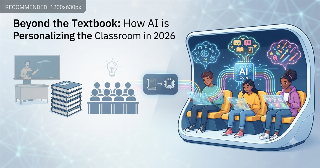
Personalized learning was once considered a "pedagogical gold standard" that was logistically impossible to implement at scale. In 2026, AI is turning that dream into a reality, offering students unique, adaptive learning pathways that evolve in real time.

The AI Revolution: How Hyper-Personalized Learning is Reshaping Education in 2026

Introduction

The classroom of 2026 looks dramatically different from just a few years ago. Powered by rapid advances in artificial intelligence, education is moving beyond the traditional one-size-fits-all model toward a learning experience tailored to each student’s individual strengths, pace, and learning style.

Rather than simply delivering information, AI is helping create more engaging, efficient, and student-centered classrooms.

The Rise of Hyper-Personalized Learning

Modern AI-powered learning platforms continuously analyze how students interact with lessons, quizzes, and assignments. By identifying knowledge gaps and areas of mastery in real time, these systems adjust content difficulty and recommend targeted learning resources.

This adaptive approach helps students build confidence while progressing at a pace that matches their individual needs.

Increased Student Engagement

Schools implementing AI-powered personalization have reported significant improvements in classroom participation, with some studies indicating engagement increases of up to 60%.

Improved Learning Efficiency

Adaptive learning pathways can improve learning efficiency by as much as 57%, allowing students to master concepts more quickly while reducing unnecessary repetition.

Better Student Retention

AI-driven early warning systems help educators identify students who may be struggling academically. By enabling timely interventions, some institutions have reported reductions in student dropout rates of around 15%.

Empowering Teachers Through AI

Artificial intelligence is designed to support—not replace—educators.

By automating time-consuming tasks such as lesson planning, grading, attendance tracking, and administrative reporting, AI allows teachers to devote more time to mentoring students, encouraging collaboration, and developing critical thinking and communication skills.

The result is a classroom where technology handles routine processes while teachers focus on meaningful human interaction and personalized guidance.

Addressing Ethical Challenges

Despite its enormous potential, AI in education also brings important responsibilities. Schools and policymakers must carefully address issues such as:

  • Protecting student data and privacy.
  • Reducing algorithmic bias.
  • Promoting responsible AI use.
  • Strengthening digital literacy among students and educators.
  • Maintaining transparency and human oversight.

Experts agree that successful AI adoption depends not only on technological innovation but also on thoughtful educational practices that place learners at the center of every decision.

Conclusion

Education in the AI era is about empowering both students and teachers.

As artificial intelligence continues to evolve throughout 2026, the most successful educational institutions will be those that combine personalized technology with the irreplaceable value of human mentorship. By striking this balance, schools can create learning environments that are more engaging, inclusive, and better prepared for the future.
Quick Summary

Personalized learning was once considered a "pedagogical gold standard" that was logistically impossible to implement at scale. In 2026, AI is turning that dream into a reality, offering students unique, adaptive learning pathways that evolve in real time.

Key Takeaways

  • Strengthening digital literacy among students and educators.
  • Maintaining transparency and human oversight.

Quick Facts

Category: Education
Published: July 16, 2026
Updated: September 24, 2026
Reading time: 2 min
52 views
Updated Sep 24, 2026 2 min read

Related Articles

View all

Popular

View all

Recommended For You

Mixed Content

Education
Article Education

The Post-Automation Economy: Architecting Human Skill Premiums in the Age of Autonomy

The rapid proliferation of agentic workflows and large action models is structurally inverting the traditional corporate skill pyramid. While routine analytical processes and information retrieval tasks are being automated into low-cost utility, uncommoditizable human traits—emotional intelligence, strategic ambiguity management, and ethical governance—are commanding an unprecedented value premium. Succeeding in the post-automation enterprise requires re-engineering workforce development to focu

Mutwassim 3 min 72
The Decline of Friction: Inside the FinTech Revolution in Cross-Border Settlement and Digital Identity Education
Article Education

The Decline of Friction: Inside the FinTech Revolution in Cross-Border Settlement and Digital Identity

The traditional plumbing of global finance—characterized by multi-day delays, hidden fees, and fragmented identity silo—is undergoing a profound transformation. A new generation of FinTech architectures, combining distributed ledger technology (DLT), synchronized liquidity pools, and decentralized digital passports, is enabling cross-border instant payments with near-zero friction.

Mutwassim 1 min 44
The City as a Switch: Architecting IoT Logistics for the Post-Congestion Urban Era Education
Article Education

The City as a Switch: Architecting IoT Logistics for the Post-Congestion Urban Era

The traditional model of urban delivery—reliant on high-emission diesel vans navigating static street grids—is creating unsustainable levels of congestion and pollution in global metros. To reclaim urban space, cities are transitioning to IoT-orchestrated logistics. This data-driven framework utilizes autonomous delivery swarms, automated micro-fulfillment centers, and dynamic digital kerb-side management to route goods with the efficiency of internet packets, transforming static streets into fl

Mutwassim 4 min 71
Beyond the Coffee Shop: How Cross-Border Employment and Sovereign Visas Are Institutionalizing Remote Work Education
Article Education

Beyond the Coffee Shop: How Cross-Border Employment and Sovereign Visas Are Institutionalizing Remote Work

Remote work is transitioning from an informal perk into an institutionalized pillar of international commerce. Over 60 nations have launched dedicated digital nomad visa regimes, while multi-jurisdictional compliance platforms and Employer of Record (EOR) frameworks dismantle traditional geographic barriers. As knowledge workers disperse globally, enterprises and municipal governments are formalizing policies around tax residency, permanent establishment risk, and asynchronous operational workfl

Mutwassim 3 min 71
The Death of Syntax: Inside the Shift to Intent-Driven Software Engineering Education
Article Education

The Death of Syntax: Inside the Shift to Intent-Driven Software Engineering

The day-to-day discipline of software engineering is undergoing its most radical abstraction leap since the transition from assembly language to high-level compilers. Generative code synthesis and deterministic reasoning engines are automating boilerplate syntax, turning software developers into systems architects. Survival in this new paradigm demands mastering intent formalization, specification design, and continuous verification.

Mutwassim 3 min 71
The Post-Visual Threat: Architecting Zero-Trust Defense Against Weaponized Deepfakes Education
Article Education

The Post-Visual Threat: Architecting Zero-Trust Defense Against Weaponized Deepfakes

The rapid weaponization of real-time voice cloning and synthetic video generation has transformed social engineering from opportunistic phishing into targeted executive identity emulation. High-profile incidents involving multi-million-dollar wire transfers authorized via synthetic video calls prove that sight and sound can no longer authenticate authorization. Securing modern enterprises requires an uncompromising zero-trust identity layer capable of neutralizing synthetic deception.

Mutwassim 3 min 137
Beyond the Battery: How Electric Mobility Is Forcing a Overhaul of the Global Power Grid Education
Article Education

Beyond the Battery: How Electric Mobility Is Forcing a Overhaul of the Global Power Grid

The global transition toward electric vehicles is no longer constrained primarily by battery chemistry or vehicle range. Instead, the real bottleneck has shifted directly to the electrical grid. As commercial fleets and passenger cars electrify at scale, utilities and city planners are racing to deploy vehicle-to-grid (V2G) bidirectional systems, AI-driven dynamic load balancers, and decentralized microgrid storage to avoid grid failure.

Mutwassim 3 min 58
Cloud 3.0: The Shift Toward Sovereign Data Architectures and Edge Computing Education
Article Education

Cloud 3.0: The Shift Toward Sovereign Data Architectures and Edge Computing

The architectural assumption that enterprise compute and storage should reside in a handful of centralized hyperscaler data centers is fracturing. Driven by strict cross-border data sovereignty regulations and the demand for millisecond-latency AI inference, global IT leaders are pivoting to Cloud 3.0—a model centered on distributed, locally governed, and hybrid sovereign architectures.

Mutwassim 3 min 61