





Introduction
In today’s fast-paced world, it’s easy to believe that changing your life requires dramatic action. Social media often promotes overnight success, extreme productivity routines, and complicated wellness trends that promise instant transformation. However, research consistently shows that lasting change comes from small, sustainable habits practiced every day rather than short bursts of motivation.
Modern life is filled with constant notifications, endless scrolling, busy work schedules, and information overload. These distractions quietly steal our focus, increase stress levels, and leave us feeling mentally exhausted. Fortunately, improving your lifestyle doesn’t require expensive gadgets, strict diets, or unrealistic routines. Instead, a few intentional habits can significantly improve your physical health, mental clarity, emotional well-being, and overall productivity.
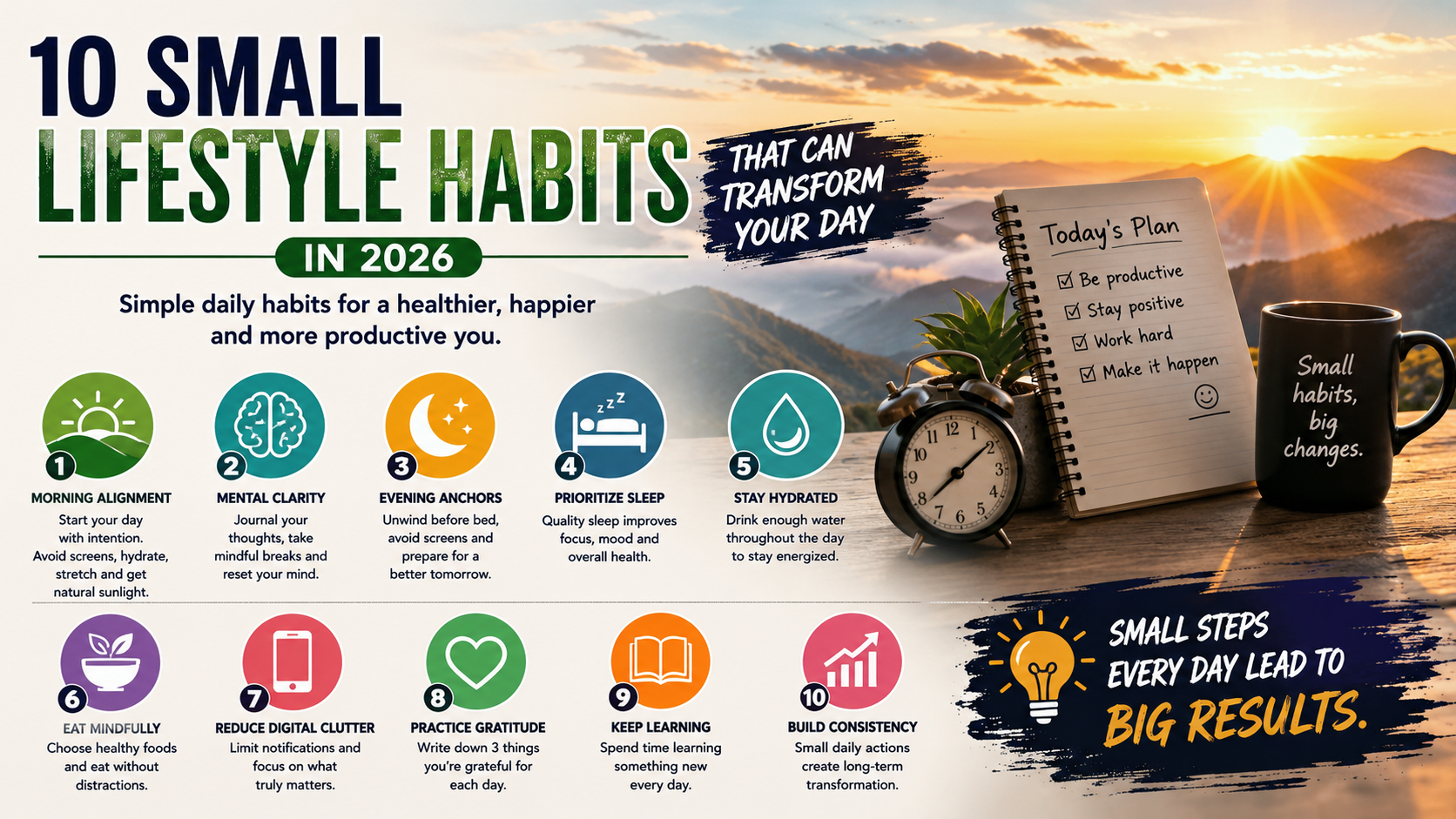
The following lifestyle habits are practical, science-backed, and easy to incorporate into almost any schedule. They focus on protecting your attention, reducing stress, improving sleep quality, and helping you feel more energized throughout the day. The goal isn’t perfection—it’s consistency. Even small improvements, repeated daily, can create remarkable long-term results.
1. Morning Alignment: Protecting Your Focus
How you begin your morning shapes your mindset, energy, and productivity for the rest of the day. Instead of allowing the outside world to dictate your mood immediately after waking up, create a morning routine that gives your mind time to wake up naturally and intentionally.
The Zero-Screen First 30 Minutes
One of the healthiest habits you can develop is avoiding your phone for the first 30 minutes after waking. Many people immediately begin checking emails, social media, messages, or news updates before even getting out of bed. This floods the brain with information before it has fully awakened, increasing stress hormones and making your mind reactive instead of focused.
Instead, use the first half hour to hydrate your body with a glass of water, stretch your muscles, open the curtains to let natural light in, or spend a few quiet moments planning your day. These simple actions allow your brain to wake up gradually without unnecessary stimulation.
Over time, replacing early-morning scrolling with intentional habits can improve concentration, reduce anxiety, and create a calmer start to every day.
Intentional Movement
You don’t need to complete an intense workout before sunrise to experience the benefits of movement. Even a 15-minute walk outside provides significant physical and mental advantages.
Morning sunlight helps regulate your circadian rhythm, making it easier to feel alert during the day and sleepy at night. Gentle movement also improves blood circulation, reduces stiffness, boosts mood, and increases energy naturally.
If walking isn’t possible, simple stretching, yoga, light mobility exercises, or a few minutes of bodyweight movements can prepare both your body and mind for the day ahead.
2. Mental Clarity: Processing and Resetting
Modern lifestyles expose us to more information in a single day than previous generations experienced in weeks. Without intentional mental breaks, stress accumulates, making it difficult to think clearly or stay focused.
Creating daily moments of reflection allows your brain to process information instead of constantly consuming more.
Brain Dumping and Journaling
Keeping a notebook nearby can become one of the most valuable tools for mental health.
Instead of trying to remember every task, idea, appointment, or concern, write everything down. This practice—often called a “brain dump”—reduces cognitive overload because your brain no longer needs to hold onto every detail.
You don’t need to write pages every day. Even five minutes is enough.
Consider writing:
- Tasks you need to complete
- Thoughts causing stress
- Ideas worth exploring
- Personal goals
- Things you’re grateful for
- Lessons learned during the day
Journaling also improves self-awareness by helping you recognize recurring patterns in your thoughts and behaviors. Over time, it becomes easier to identify what motivates you, what drains your energy, and what habits deserve more attention.
The Midday Reset
Productivity naturally decreases after several hours of concentrated work. Rather than forcing yourself to push through fatigue, schedule a short reset.
Take five minutes to:
- Step away from your computer.
- Relax your shoulders.
- Stretch your neck and back.
- Practice slow, deep breathing.
- Look outside or take a brief walk.
These short pauses reduce stress, improve concentration, and prevent mental exhaustion. Instead of wasting time, they actually help you work more efficiently during the remainder of your day.
3. Evening Anchors: Preparing for Success
Many people focus entirely on improving their mornings while ignoring the importance of their evenings. In reality, tomorrow begins tonight.
Your evening routine directly affects sleep quality, recovery, mood, and morning energy.
The Digital Sunset
Screens have become a normal part of daily life, but using them immediately before bed can interfere with quality sleep.
Blue light emitted from phones, tablets, and computers suppresses melatonin production, making it more difficult to fall asleep naturally.
Try creating a “digital sunset” by turning off screens at least one hour before bedtime.
Replace scrolling with relaxing alternatives such as:
- Reading a physical book
- Gentle stretching
- Meditation
- Writing in a journal
- Listening to calming instrumental music
- Spending time with family
These activities help your nervous system transition into rest mode.
Micro-Preparation
Preparing for tomorrow eliminates unnecessary decision-making in the morning.
Simple examples include:
- Choosing tomorrow’s outfit
- Packing your work or school bag
- Preparing healthy snacks
- Organizing your workspace
- Writing your top three priorities
These small actions reduce stress and make mornings smoother and more productive.
4. Prioritize Quality Sleep
Sleep is one of the strongest foundations of a healthy lifestyle, yet it is often sacrificed in favor of work, entertainment, or endless scrolling.
Adults generally benefit from seven to nine hours of quality sleep each night.
Poor sleep affects:
- Memory
- Mood
- Immune function
- Focus
- Decision-making
- Physical recovery
Improving sleep doesn’t always require sleeping longer. Creating a consistent bedtime, maintaining a cool bedroom, limiting caffeine late in the day, and following a calming evening routine often produce noticeable improvements.
5. Stay Hydrated Throughout the Day
Water plays a vital role in nearly every function of the human body.
Even mild dehydration can lead to fatigue, headaches, reduced concentration, and lower physical performance.
Begin each morning with a glass of water and continue drinking consistently throughout the day instead of waiting until you feel thirsty.
Adding slices of lemon, cucumber, or mint can make hydration more enjoyable while encouraging healthier habits.
6. Eat Mindfully Instead of Rushing Meals
Many people eat while watching television, scrolling social media, or answering emails.
Mindful eating encourages you to slow down and focus entirely on your meal.
Benefits include:
- Better digestion
- Improved satisfaction
- Reduced overeating
- Greater awareness of hunger signals
Choose balanced meals containing lean protein, vegetables, healthy fats, whole grains, and fruit whenever possible. Consistency matters more than perfection.
7. Reduce Digital Clutter
Digital clutter contributes to mental clutter.
Organize your phone by deleting unused apps, turning off unnecessary notifications, unsubscribing from unwanted emails, and limiting social media usage.
Consider scheduling specific times for checking messages instead of responding to every notification immediately.
Protecting your attention is one of the most valuable skills in today’s digital world.
8. Practice Daily Gratitude
Gratitude shifts attention away from what’s missing toward what’s already meaningful.
Each evening, write down three things you’re grateful for.
They don’t need to be extraordinary.
Examples include:
- A good conversation
- Completing an important task
- Enjoying a healthy meal
- Spending time outdoors
- Receiving help from a friend
Over time, gratitude strengthens optimism and emotional resilience.
9. Continue Learning Every Day
Personal growth doesn’t stop after formal education.
Spend at least fifteen to twenty minutes daily learning something new.
You could:
- Read a book
- Listen to educational podcasts
- Take an online course
- Learn a language
- Explore a new skill
Continuous learning improves confidence, creativity, and adaptability in an ever-changing world.
10. Build Consistency Instead of Chasing Perfection
Perhaps the most important lifestyle habit is abandoning the pursuit of perfection.
Missing one workout, eating one unhealthy meal, or skipping one journal entry doesn’t erase your progress.
Success comes from returning to healthy habits repeatedly over months and years.
Small improvements practiced consistently outperform dramatic changes that last only a few weeks.
Instead of asking yourself, “How can I completely change my life today?” ask, “What’s one healthy action I can repeat every day?”
Those small actions eventually become routines, routines become habits, and habits shape your future.
Conclusion
Living a healthier, happier, and more productive life in 2026 doesn’t require expensive programs or impossible routines. It begins with protecting your mornings, creating moments of mental clarity, preparing for restful evenings, sleeping well, staying hydrated, eating mindfully, reducing digital distractions, practicing gratitude, continuing to learn, and focusing on consistency over perfection.
These habits may appear simple, but their long-term impact is extraordinary. Every intentional choice strengthens your physical health, sharpens your mental focus, and improves your emotional well-being. The key is to start small. Choose one habit today, practice it until it becomes effortless, and then gradually add another.
Remember, transformation isn’t created by one perfect day—it is built through hundreds of ordinary days filled with small, meaningful choices. The lifestyle you want tomorrow begins with the habits you practice today.