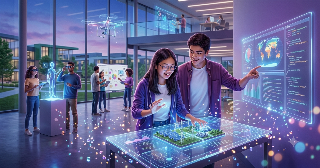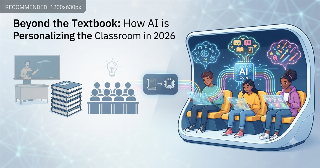






Artificial intelligence is reshaping education at an unprecedented pace. What began as a collection of experimental learning tools has evolved into a powerful educational ecosystem that is changing how students learn, teachers teach, and schools deliver instruction. Around the world, educational institutions are moving beyond limited AI pilot programs and integrating intelligent technologies directly into classrooms, digital learning platforms, and standard curricula.
Unlike traditional teaching methods that often follow a "one-size-fits-all" approach, modern AI-powered learning systems can adapt to the unique needs of every student. Intelligent Tutoring Systems (ITS), adaptive learning platforms, and AI-powered educational assistants analyze student performance in real time, adjusting lesson difficulty, pacing, and instructional methods according to each learner's strengths and weaknesses. This personalized approach has the potential to improve academic performance while making education more accessible and inclusive for millions of learners worldwide.
However, the rapid expansion of AI in education has also sparked important discussions among educators, researchers, policymakers, and parents. While AI offers tremendous opportunities to improve learning outcomes, concerns remain about its long-term impact on critical thinking, independent learning, creativity, and the essential human relationships that define effective education.
The Benefits of AI-Powered Education
When implemented thoughtfully and responsibly, artificial intelligence can significantly improve both teaching effectiveness and student learning experiences.
Personalized Learning for Every Student
One of AI's greatest strengths is its ability to deliver truly personalized education. Traditional classrooms often require teachers to instruct large groups of students at a common pace, making it difficult to address individual learning needs. AI-powered learning platforms continuously analyze student performance, identifying knowledge gaps, learning patterns, and areas where additional support is required.
Rather than waiting until students fall behind, adaptive systems provide targeted exercises, customized explanations, and additional practice precisely when needed. This individualized support helps improve student confidence, increase engagement, and strengthen long-term academic achievement while reducing learning gaps between students.
Reducing Teacher Workload
Teachers spend a significant portion of their time performing administrative tasks such as lesson planning, grading assignments, preparing instructional materials, tracking student progress, and managing classroom documentation. AI can automate many of these routine responsibilities, allowing educators to devote more time to teaching, mentoring, and supporting students.
Modern AI tools can generate lesson outlines, create quizzes, translate educational content into multiple languages, organize curriculum resources, and produce differentiated learning materials for students with varying ability levels. By reducing repetitive administrative work, AI helps alleviate teacher burnout while improving overall classroom efficiency.
Expanding Access to Quality Education
AI also has the potential to reduce educational inequalities, particularly in underserved communities and developing regions where qualified teachers may be scarce. AI-powered tutoring systems, multilingual voice assistants, and interactive learning applications can provide students with high-quality educational support regardless of their geographic location.
These technologies make learning more accessible for students with disabilities, language barriers, or limited educational resources, helping to bridge global instructional gaps and promote more equitable access to quality education.
The Risk of the "Illusion of Learning"
Despite these significant advantages, education experts caution that artificial intelligence must be used carefully. One of the growing concerns is a phenomenon often described as the "illusion of learning."
General-purpose AI chatbots can generate well-written essays, solve mathematical problems, summarize complex topics, and answer academic questions within seconds. While this convenience can improve productivity, it also creates the temptation for students to rely on AI instead of actively engaging with the learning process.
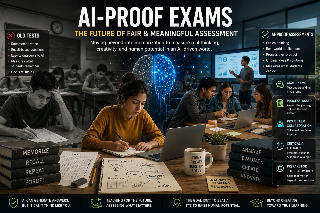
Research suggests that students who depend excessively on AI-generated answers may produce impressive assignments without fully understanding the underlying concepts. As a result, they often struggle to recall information, solve unfamiliar problems, or demonstrate genuine understanding during examinations where AI tools are unavailable.
Overdependence on AI may also weaken several essential lifelong skills, including independent research, critical thinking, analytical reasoning, creativity, problem-solving, and metacognitive awareness—the ability to evaluate and regulate one's own learning process.
Another important concern is the potential reduction in meaningful human interaction. Strong relationships between teachers and students play a vital role in building confidence, motivation, communication skills, and emotional well-being. Excessive reliance on screen-based learning may diminish these valuable personal connections that contribute significantly to educational success.
The Future: AI as an Educational Partner
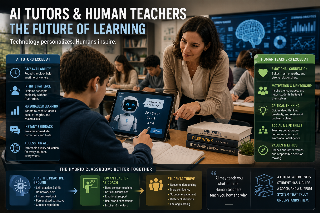
Most education specialists agree that artificial intelligence should not replace teachers but instead serve as a powerful educational assistant. The most effective learning environments will combine the efficiency of AI with the experience, empathy, creativity, and guidance that only human educators can provide.
To achieve this balance, schools must invest in comprehensive teacher training so educators can confidently integrate AI into classroom instruction while maintaining high educational standards. Students should also receive strong digital literacy education that teaches them how to use AI responsibly, verify information from multiple sources, recognize misinformation, and understand the ethical implications of emerging technologies.
Rather than encouraging shortcuts, AI should be used to promote deeper learning. Well-designed educational systems can use artificial intelligence to generate challenging questions, encourage critical discussion, support collaborative projects, and guide students toward evidence-based reasoning instead of simply providing instant answers.
Looking Ahead
Artificial intelligence is set to become an integral part of modern education, offering unprecedented opportunities to personalize learning, expand educational access, and improve teaching efficiency. Yet its long-term success will depend not on the sophistication of the technology itself, but on how thoughtfully it is integrated into the learning process.
The classrooms of the future will not be defined by replacing teachers with machines. Instead, they will combine intelligent technology with skilled educators who inspire curiosity, encourage independent thinking, and foster meaningful human connections.
Ultimately, AI should be viewed not as a substitute for education, but as a tool that empowers teachers and students alike. When used responsibly, it can enhance learning, support innovation, and prepare future generations with the knowledge, critical thinking skills, and adaptability needed to thrive in an increasingly digital world.