





The Power Paradox of Artificial Intelligence
Artificial intelligence is advancing at an extraordinary pace.
From generative AI and autonomous systems to advanced scientific computing, the technology is driving a new wave of digital innovation. But behind every AI model is a physical infrastructure that requires enormous amounts of electricity.
The result is a growing paradox.
The same technology promising to transform industries and improve efficiency is also increasing demand for energy-intensive data centers and high-performance computing infrastructure.
What was once a gradual utility challenge is becoming an urgent infrastructure priority.
The Power Crunch: When AI Meets Legacy Infrastructure
For decades, electricity demand from data centers generally grew at a relatively predictable pace.
The rapid expansion of AI has disrupted that pattern.
Modern AI workloads require specialized processors and increasingly dense computing systems. Large clusters of these machines can create substantial electricity demand in a concentrated geographic area, placing pressure on local substations, transmission networks, and distribution infrastructure.
In many regions, existing power systems were not designed for such rapid increases in demand.
The challenge is not simply generating enough electricity. It is also delivering that electricity to the right location at the right time.
The Renewable Energy Bottleneck
The energy challenge is complicated further by the long timelines required to connect new generation projects to electricity grids.
Large renewable energy projects can face lengthy interconnection processes, while new transmission infrastructure may require years of planning, permitting, construction, and investment.
This creates a frustrating paradox: new clean energy capacity may be available or under development, yet connecting it to the locations experiencing the fastest growth in electricity demand can remain difficult.
For the AI industry, waiting years for infrastructure to catch up may not be an option.
The Shift Toward Grid Flexibility and On-Site Solutions
To address these challenges, technology companies, utilities, and energy developers are exploring new approaches to electricity generation, storage, and distribution.
Utility-Scale Battery Storage
Battery energy storage systems are emerging as an important tool for managing electricity demand.
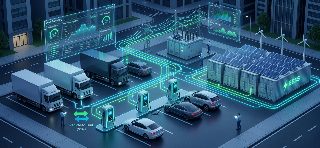
Large-scale batteries can store electricity when supply is abundant and release it when demand rises. They can also respond quickly to fluctuations in the grid, providing flexibility while larger infrastructure projects are developed.
For regions experiencing rapid growth in electricity demand, storage can serve as an important bridge between today’s grid and tomorrow’s infrastructure.
AI-Driven Grid Management
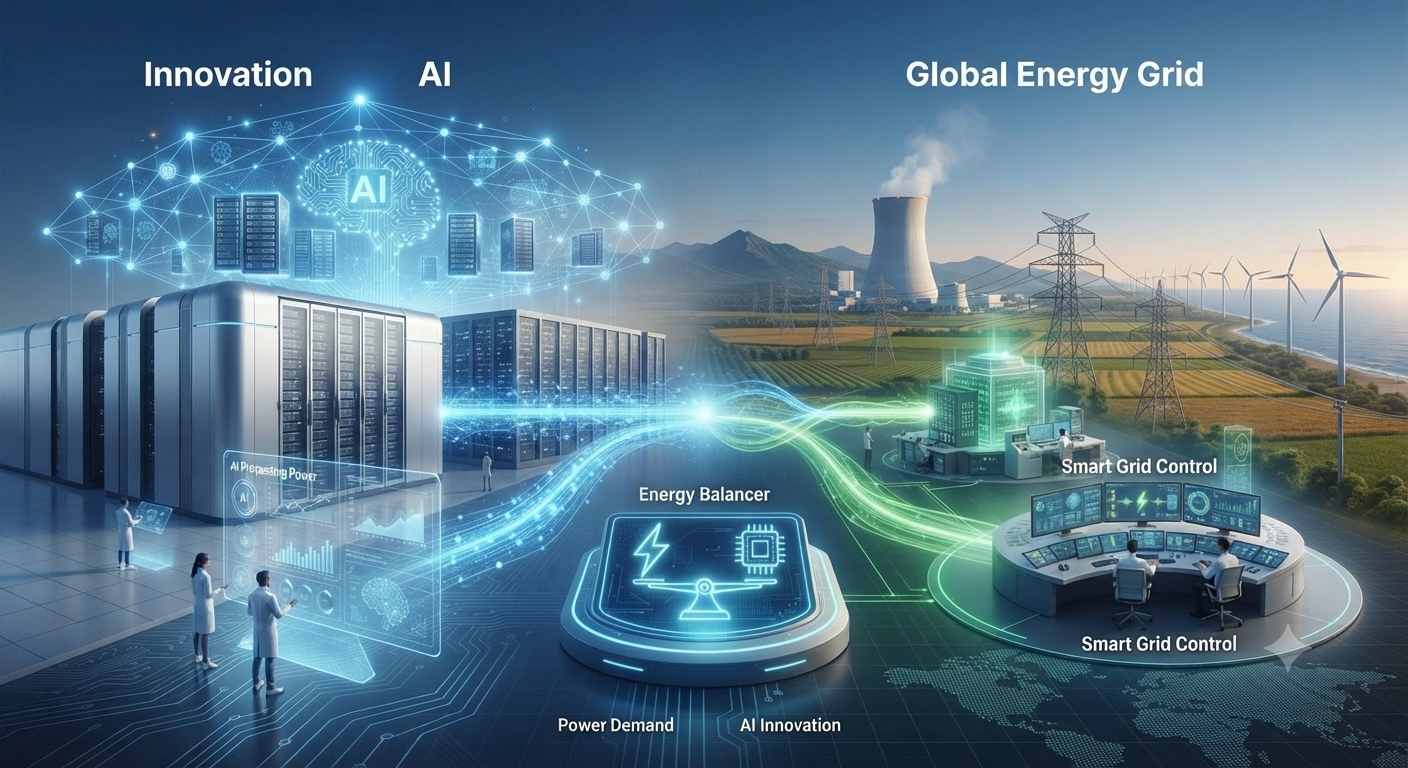
Artificial intelligence is also becoming part of the solution to the energy challenge it helped create.
Machine learning and advanced analytics can help grid operators forecast demand, identify potential bottlenecks, optimize electricity flows, and better manage variable renewable sources such as wind and solar.
As energy systems become more complex, intelligent software could play a growing role in coordinating generation, storage, and consumption in real time.
On-Site Generation and Microgrids
Some technology companies are also exploring ways to reduce their dependence on traditional grid connections.
Potential solutions include dedicated renewable energy projects, battery storage, microgrids, fuel cells, and other forms of on-site or directly contracted power generation.
Nuclear energy is also receiving renewed attention as a potential source of reliable, low-carbon electricity for energy-intensive industries, although the deployment of new nuclear capacity typically involves significant regulatory, financial, and construction challenges.
The Infrastructure Race Behind the AI Revolution
The future of artificial intelligence will depend on much more than software and computer chips.
It will also depend on the physical infrastructure supporting the technology.
Data centers require land, electricity, cooling systems, transmission capacity, and increasingly sophisticated energy management. As AI adoption accelerates, these resources are becoming strategic assets.
This is creating a new infrastructure race in which technology companies and energy providers are increasingly connected.
The winners may not simply be those who develop the most powerful AI models, but those capable of securing reliable and sustainable access to the resources required to operate them.
A Balancing Act for the Future
The relationship between AI and energy will be one of the defining infrastructure stories of the next decade.
Meeting rising electricity demand will require substantial investment in generation, transmission, storage, grid modernization, and digital management systems.
At the same time, the energy transition must continue moving toward cleaner sources while maintaining reliability and affordability.
The challenge is therefore not simply to produce more electricity. It is to build an energy system that is cleaner, smarter, more flexible, and more resilient.
Conclusion
The AI revolution is creating an enormous demand for computing power—and computing power ultimately depends on electricity.
As data centers expand and AI workloads become more intensive, the limitations of aging energy infrastructure are becoming increasingly visible.
Solving the AI power crunch will require collaboration between technology companies, utilities, governments, energy developers, and local communities.
The next chapter of the AI revolution may therefore be shaped not only by breakthroughs in algorithms and hardware, but by something far more fundamental: our ability to build the energy infrastructure needed to power the future.
The AI race is also an energy race—and the grid may be the most important technology of all.