






The Quiet Revolution: How AI Is Becoming a Seamless Part of Our Daily Lives

Artificial intelligence has moved beyond the research lab and into our routines. In 2026, it is no longer just about flashy robots; it is about the quiet, human-centric ways AI helps us navigate our personal and professional lives more effectively.

The Quiet Revolution: How AI Is Becoming a Seamless Part of Our Daily Lives

Introduction

Not long ago, artificial intelligence seemed like something confined to science fiction or advanced research laboratories. Today, that perception has changed dramatically.

In 2026, AI has become an integral part of daily life, working quietly behind the scenes to simplify routine tasks, improve decision-making, and create more personalized experiences. From smartphones and navigation apps to healthcare and education, AI is no longer a futuristic concept—it is a practical tool that millions of people rely on every day.

AI in Everyday Activities

From the moment we wake up, artificial intelligence begins working in the background.

Modern smartphones use AI to optimize battery performance, enhance camera quality, filter spam, and personalize notifications based on user behavior. Navigation apps analyze real-time traffic conditions to recommend the fastest routes, while digital assistants help manage schedules, reminders, and everyday tasks.

These intelligent systems reduce friction in daily life, saving time and allowing people to focus on what matters most.

Transforming the Workplace

Artificial intelligence is also reshaping the modern workplace. Rather than replacing human talent, AI is increasingly serving as a powerful productivity partner.

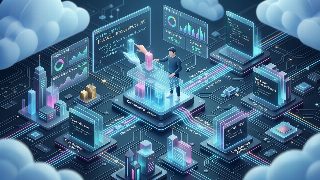
Businesses use AI to generate marketing content, analyze customer data, automate repetitive administrative tasks, and improve decision-making. Researchers can summarize lengthy reports within minutes, while professionals across industries use AI to streamline workflows and increase efficiency.

By taking over routine tasks, AI allows employees to dedicate more time to creativity, strategic thinking, and problem-solving—areas where human expertise remains essential.

Personalizing Healthcare and Education

AI is making healthcare and education more personalized than ever before.

In education, intelligent tutoring systems adapt lessons to each student’s learning pace, helping learners better understand challenging concepts through customized instruction and real-time feedback.

In healthcare, AI-powered diagnostic tools assist medical professionals by identifying patterns in medical data, supporting earlier detection of diseases, and enabling more informed clinical decisions.

These applications are improving outcomes while enhancing accessibility and efficiency across essential services.

Building Trust in the AI Era

As AI becomes part of everyday infrastructure, responsible development and ethical use are becoming increasingly important.

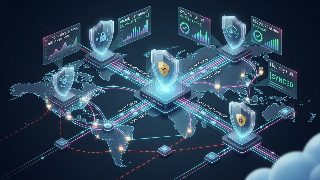
Organizations are prioritizing transparency, data privacy, security, and human oversight to ensure AI systems remain reliable and trustworthy. Building public confidence requires more than technological innovation—it requires responsible governance and thoughtful implementation.

Understanding how to collaborate effectively with AI, rather than relying on it blindly, will be one of the defining skills of the coming years.

Conclusion

Artificial intelligence is no longer a technology of the future—it is a technology of the present.

As AI continues to evolve throughout 2026, it is transforming how we live, work, learn, and communicate. The greatest opportunities will come not from replacing human capabilities but from combining human creativity with AI-powered intelligence to build a smarter, more productive, and more connected world.
Quick Summary

Artificial intelligence has moved beyond the research lab and into our routines. In 2026, it is no longer just about flashy robots; it is about the quiet, human-centric ways AI helps us navigate our personal and professional lives more effectively.

Key Takeaways

  • Artificial intelligence has moved beyond the research lab and into our routines.
  • In 2026, it is no longer just about flashy robots; it is about the quiet, human-centric ways AI helps us navigate our personal and professional lives more effectively.

Quick Facts

Category: Technology
Published: July 16, 2026
Updated: October 6, 2026
Reading time: 3 min
46 views
Updated Oct 6, 2026 3 min read

Related Articles

View all
The 2026 Smartphone Divide: iPhone vs. Android Technology
Article Technology

The 2026 Smartphone Divide: iPhone vs. Android

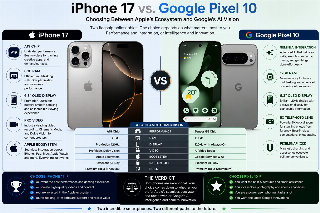
As we move through 2026, the long-standing rivalry between iOS and Android has evolved. While both platforms are more capable and secure than ever, they serve fundamentally different philosophies: Apple’s curated ecosystem versus Android’s open-source flexibility.

Orwell, George 9 min 294

Mixed Content

Technology
Article Technology

The Post-Automation Economy: Architecting Human Skill Premiums in the Age of Autonomy

The rapid proliferation of agentic workflows and large action models is structurally inverting the traditional corporate skill pyramid. While routine analytical processes and information retrieval tasks are being automated into low-cost utility, uncommoditizable human traits—emotional intelligence, strategic ambiguity management, and ethical governance—are commanding an unprecedented value premium. Succeeding in the post-automation enterprise requires re-engineering workforce development to focu

Mutwassim 3 min 73
The Decline of Friction: Inside the FinTech Revolution in Cross-Border Settlement and Digital Identity Technology
Article Technology

The Decline of Friction: Inside the FinTech Revolution in Cross-Border Settlement and Digital Identity

The traditional plumbing of global finance—characterized by multi-day delays, hidden fees, and fragmented identity silo—is undergoing a profound transformation. A new generation of FinTech architectures, combining distributed ledger technology (DLT), synchronized liquidity pools, and decentralized digital passports, is enabling cross-border instant payments with near-zero friction.

Mutwassim 1 min 44
The City as a Switch: Architecting IoT Logistics for the Post-Congestion Urban Era Technology
Article Technology

The City as a Switch: Architecting IoT Logistics for the Post-Congestion Urban Era

The traditional model of urban delivery—reliant on high-emission diesel vans navigating static street grids—is creating unsustainable levels of congestion and pollution in global metros. To reclaim urban space, cities are transitioning to IoT-orchestrated logistics. This data-driven framework utilizes autonomous delivery swarms, automated micro-fulfillment centers, and dynamic digital kerb-side management to route goods with the efficiency of internet packets, transforming static streets into fl

Mutwassim 4 min 72
Beyond the Coffee Shop: How Cross-Border Employment and Sovereign Visas Are Institutionalizing Remote Work Technology
Article Technology

Beyond the Coffee Shop: How Cross-Border Employment and Sovereign Visas Are Institutionalizing Remote Work

Remote work is transitioning from an informal perk into an institutionalized pillar of international commerce. Over 60 nations have launched dedicated digital nomad visa regimes, while multi-jurisdictional compliance platforms and Employer of Record (EOR) frameworks dismantle traditional geographic barriers. As knowledge workers disperse globally, enterprises and municipal governments are formalizing policies around tax residency, permanent establishment risk, and asynchronous operational workfl

Mutwassim 3 min 72
The Death of Syntax: Inside the Shift to Intent-Driven Software Engineering Technology
Article Technology

The Death of Syntax: Inside the Shift to Intent-Driven Software Engineering

The day-to-day discipline of software engineering is undergoing its most radical abstraction leap since the transition from assembly language to high-level compilers. Generative code synthesis and deterministic reasoning engines are automating boilerplate syntax, turning software developers into systems architects. Survival in this new paradigm demands mastering intent formalization, specification design, and continuous verification.

Mutwassim 3 min 72
The Post-Visual Threat: Architecting Zero-Trust Defense Against Weaponized Deepfakes Technology
Article Technology

The Post-Visual Threat: Architecting Zero-Trust Defense Against Weaponized Deepfakes

The rapid weaponization of real-time voice cloning and synthetic video generation has transformed social engineering from opportunistic phishing into targeted executive identity emulation. High-profile incidents involving multi-million-dollar wire transfers authorized via synthetic video calls prove that sight and sound can no longer authenticate authorization. Securing modern enterprises requires an uncompromising zero-trust identity layer capable of neutralizing synthetic deception.

Mutwassim 3 min 146
Beyond the Battery: How Electric Mobility Is Forcing a Overhaul of the Global Power Grid Technology
Article Technology

Beyond the Battery: How Electric Mobility Is Forcing a Overhaul of the Global Power Grid

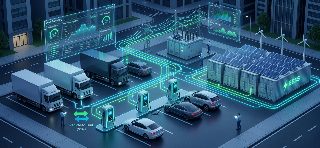
The global transition toward electric vehicles is no longer constrained primarily by battery chemistry or vehicle range. Instead, the real bottleneck has shifted directly to the electrical grid. As commercial fleets and passenger cars electrify at scale, utilities and city planners are racing to deploy vehicle-to-grid (V2G) bidirectional systems, AI-driven dynamic load balancers, and decentralized microgrid storage to avoid grid failure.

Mutwassim 3 min 61
Cloud 3.0: The Shift Toward Sovereign Data Architectures and Edge Computing Technology
Article Technology

Cloud 3.0: The Shift Toward Sovereign Data Architectures and Edge Computing

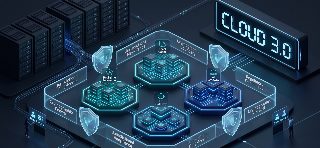
The architectural assumption that enterprise compute and storage should reside in a handful of centralized hyperscaler data centers is fracturing. Driven by strict cross-border data sovereignty regulations and the demand for millisecond-latency AI inference, global IT leaders are pivoting to Cloud 3.0—a model centered on distributed, locally governed, and hybrid sovereign architectures.

Mutwassim 3 min 64