





Introduction
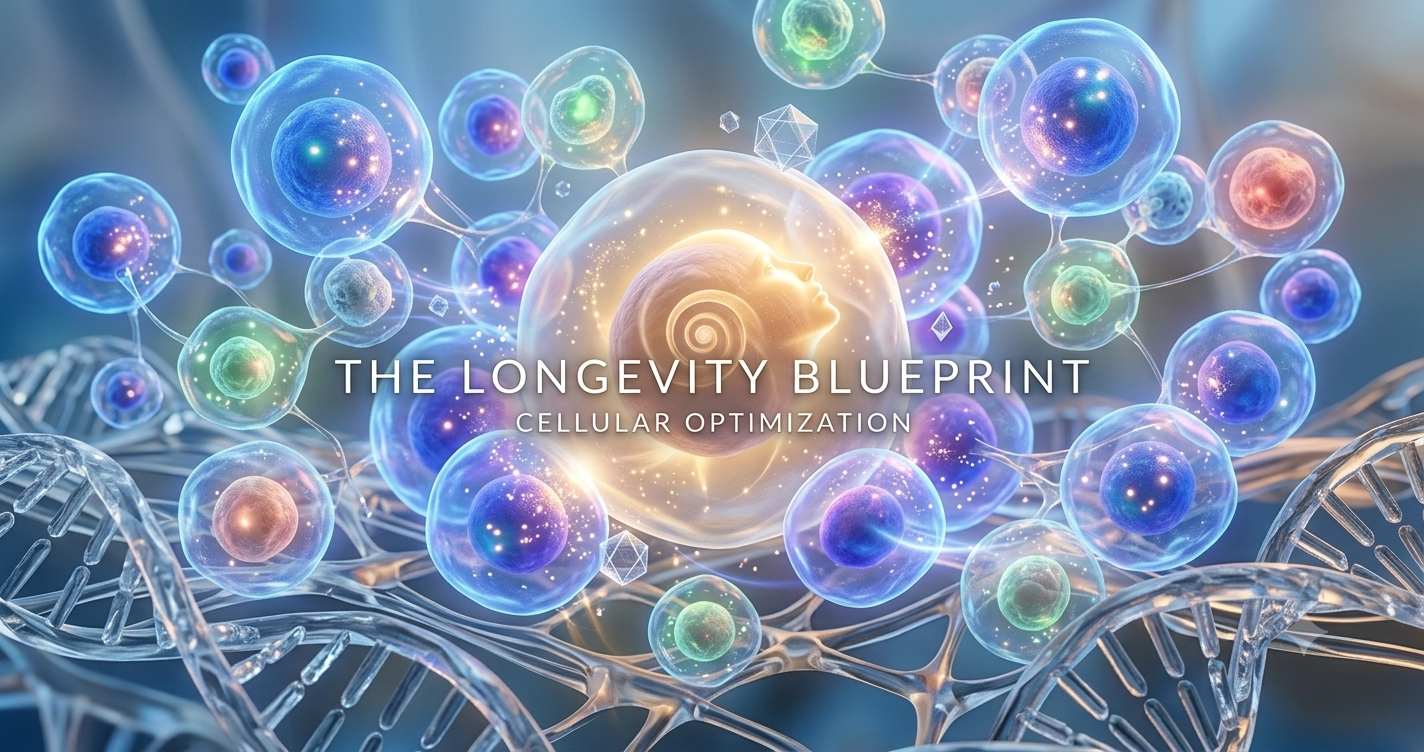
For decades, conversations about health and wellness revolved around visible habits and external outcomes. People searched for the perfect diet, the most effective workout routine, or the latest supplement that promised better energy, weight loss, or disease prevention. While these strategies remain valuable, modern science has begun shifting its focus toward something much smaller—but far more influential: the health of our cells.
This emerging field of cellular health is transforming how researchers, physicians, and longevity experts think about aging. Instead of asking how we can simply live longer, scientists are asking a more meaningful question: How can we stay healthier for longer?
The answer increasingly points toward optimizing the trillions of cells that make up the human body.
Every heartbeat, every thought, every movement, and every healing process begins at the cellular level. When our cells function efficiently, our organs perform better, our immune system responds more effectively, and our bodies recover more quickly from physical and mental stress. Conversely, when cellular function declines, the effects become visible throughout the body, contributing to fatigue, inflammation, slower recovery, cognitive decline, and age-related diseases.
This perspective has introduced an important concept known as health span. Unlike lifespan, which measures the total number of years a person lives, health span refers to the years spent living in good physical and mental health. Extending health span means preserving vitality, independence, and quality of life rather than merely increasing longevity.
The exciting part is that researchers now believe many aspects of cellular aging are not entirely predetermined. Lifestyle choices, nutrition, exercise, sleep, stress management, and emerging scientific interventions may all influence how well our cells function over time.
Rather than treating illness after it develops, the future of wellness may lie in protecting cellular function before problems appear. This shift represents one of the most significant developments in preventive medicine and longevity science.
Understanding Cellular Health
Every human body contains an estimated 30 to 40 trillion cells, each performing specialized tasks that collectively keep us alive. Skin cells create protective barriers, muscle cells generate movement, immune cells defend against infection, nerve cells transmit information, and countless other cell types work continuously without conscious effort.
Despite their different functions, all healthy cells share several important characteristics.
They efficiently produce energy.
They communicate effectively with neighboring cells.
They repair damage when it occurs.
They remove waste products.
They divide in a controlled manner.
They respond appropriately to environmental signals.
When these processes function smoothly, the body maintains balance, known as homeostasis. However, aging, environmental toxins, poor nutrition, chronic stress, and lack of physical activity gradually interfere with these mechanisms.
Instead of viewing aging as a sudden event, scientists increasingly describe it as the gradual accumulation of microscopic cellular damage.
Fortunately, many of these processes appear responsive to healthy lifestyle interventions, making cellular health an exciting target for improving long-term wellness.
The First Pillar: Mitochondrial Efficiency
One of the most important components of cellular health is the function of the mitochondria.
Often called the powerhouses of the cell, mitochondria convert nutrients from food into adenosine triphosphate (ATP), the body’s primary source of usable energy.
Every heartbeat, every muscle contraction, every nerve impulse, and every thought depends on ATP production.
Without healthy mitochondria, life simply cannot exist.
Young, healthy mitochondria efficiently generate energy while minimizing harmful byproducts known as reactive oxygen species. As people age, however, mitochondrial efficiency gradually declines.
The consequences become increasingly noticeable.
Energy levels decrease.
Recovery after exercise becomes slower.
Mental clarity diminishes.
Muscles lose strength.
Fatigue becomes more common.
Researchers have linked mitochondrial dysfunction to numerous chronic conditions, including cardiovascular disease, neurodegenerative disorders, metabolic syndrome, and type 2 diabetes.
Because mitochondria influence nearly every organ system, protecting them has become one of the primary goals of longevity research.
Fortunately, everyday lifestyle habits significantly affect mitochondrial health.
Regular physical activity stimulates the production of new mitochondria.
Adequate sleep allows cellular repair.
Balanced nutrition provides essential building blocks for energy production.
Stress management reduces excessive oxidative damage.
These seemingly simple habits collectively support one of the body’s most essential biological systems.
The Second Pillar: Autophagy
If mitochondria provide cellular energy, autophagy serves as the cell’s internal maintenance department.
The word autophagy literally means “self-eating,” although the term can sound more alarming than the process actually is.
Autophagy is a natural recycling mechanism through which cells identify damaged proteins, worn-out cellular structures, and dysfunctional components before breaking them down into reusable building blocks.
Imagine a city where garbage collection suddenly stopped.
Trash would accumulate.
Infrastructure would deteriorate.
Productivity would decline.
Eventually, the city would struggle to function.
Cells experience a similar problem when autophagy slows with age.
Damaged proteins accumulate.
Cellular waste builds up.
Normal biological functions become increasingly inefficient.
Researchers believe impaired autophagy contributes to aging and numerous chronic diseases, including Alzheimer’s disease, Parkinson’s disease, certain cancers, and metabolic disorders.
By maintaining efficient cellular housekeeping, autophagy helps preserve healthier cells for longer periods.
This process represents one of the body’s most remarkable natural defense systems.
Why These Two Processes Matter Together
Mitochondria and autophagy work closely together.
Healthy mitochondria provide the energy required for normal cellular function.
Autophagy removes damaged mitochondria before they become harmful.
Together, these systems maintain cellular resilience.
As one process declines, the other often suffers as well.
Supporting both simultaneously may represent one of the most effective strategies for slowing aspects of biological aging.
“By supporting mitochondrial function and activating autophagy, we aren’t just fighting symptoms—we are strengthening the body from its most fundamental biological level.”
Rather than masking fatigue or treating isolated symptoms, cellular optimization addresses the underlying systems responsible for maintaining long-term health.
Lifestyle Habits That Support Cellular Health
Perhaps the most encouraging aspect of cellular science is that many interventions require no advanced technology.
Daily habits remain the foundation of healthy cells.
Exercise
Regular exercise remains one of the strongest promoters of cellular health.
Both aerobic training and resistance exercise stimulate mitochondrial production, improve insulin sensitivity, reduce inflammation, and support healthy aging.
Even moderate daily movement provides measurable benefits.
Walking, cycling, swimming, and strength training all contribute to healthier cellular function.
Nutrition
Food supplies the nutrients every cell requires.
A diet rich in colorful vegetables, fruits, legumes, whole grains, healthy fats, and lean proteins provides antioxidants, vitamins, minerals, and essential amino acids that support cellular repair.
Ultra-processed foods, excessive sugar, and chronic overeating may accelerate oxidative stress and inflammation.
Choosing nutrient-dense foods consistently creates an internal environment that favors healthier cellular performance.
Sleep
Quality sleep is one of the body’s most important recovery periods.
During sleep, hormonal balance improves, damaged tissues repair, immune function strengthens, and numerous cellular maintenance processes become more active.
Adults generally benefit from seven to nine hours of quality sleep each night.
Poor sleep, especially over long periods, has been associated with accelerated biological aging and reduced cellular efficiency.
Stress Management
Chronic psychological stress affects far more than emotional well-being.
Persistent elevation of stress hormones increases inflammation, disrupts immune regulation, and contributes to oxidative damage throughout the body.
Meditation, mindfulness, deep breathing, spending time in nature, and maintaining supportive social relationships all help reduce these harmful effects.
Emerging Research and New Possibilities
Scientists continue exploring additional methods that may enhance cellular resilience.
Among the most discussed approaches is intermittent fasting.
Periods without food appear to activate beneficial stress responses, including autophagy, although researchers continue studying optimal fasting schedules for different individuals.
Heat exposure through saunas has also attracted scientific interest.
Repeated heat stress may stimulate protective proteins, improve cardiovascular health, and support cellular adaptation.
Cold exposure, although less extensively studied, may produce complementary effects through different biological pathways.
Researchers are also investigating naturally occurring compounds such as NAD+ precursors and Urolithin A.
NAD+ plays an important role in energy metabolism and DNA repair, while Urolithin A has demonstrated promising effects on mitochondrial renewal in early research.
Although these compounds show potential, experts emphasize that research remains ongoing and lifestyle fundamentals continue providing the strongest evidence for long-term health benefits.
Measuring Biological Age
One of the most exciting developments in longevity science is the ability to estimate biological age.
Chronological age simply counts the years since birth.
Biological age attempts to measure how well the body is actually aging.
Two people may both be fifty years old chronologically while exhibiting dramatically different biological ages based on lifestyle, genetics, and environmental exposures.
Scientists increasingly use DNA methylation tests, often called epigenetic clocks, to estimate biological aging.
These tests analyze specific chemical modifications on DNA associated with aging processes.
Although still evolving, biological age testing provides valuable insight into how lifestyle interventions influence long-term health.
Rather than relying solely on appearance or subjective feelings, individuals can monitor measurable changes in cellular aging over time.
This represents a major shift toward personalized preventive healthcare.
Redefining Longevity
For generations, aging was viewed as an unavoidable decline.
Wrinkles, reduced energy, weaker muscles, memory changes, and chronic disease were considered inevitable consequences of growing older.
Modern longevity science challenges this assumption.
While aging itself cannot currently be stopped, many biological processes associated with aging appear surprisingly adaptable.
Healthy nutrition.
Regular exercise.
Quality sleep.
Stress reduction.
Avoiding smoking.
Limiting excessive alcohol.
Maintaining healthy relationships.
Each of these behaviors influences cellular biology in measurable ways.
Rather than accepting decline as unavoidable, researchers increasingly describe aging as a process that can be influenced by daily choices.
This perspective transforms longevity from a distant dream into an achievable lifestyle goal.
Challenges and Limitations
Despite tremendous excitement, cellular health remains a rapidly evolving field.
Many discoveries originate from laboratory experiments or animal studies.
Large, long-term human clinical trials are still needed to confirm the effectiveness of certain interventions.
Consumers should also remain cautious about exaggerated marketing claims.
Many products advertise “cellular rejuvenation” or “anti-aging breakthroughs” without sufficient scientific evidence.
No supplement, device, or treatment replaces the fundamental importance of healthy living.
The strongest evidence continues supporting exercise, balanced nutrition, restorative sleep, stress management, and avoiding harmful habits.
Scientific progress is promising, but realistic expectations remain essential.
The Future of Wellness
Healthcare is gradually shifting from disease treatment toward disease prevention.
Instead of waiting until illness develops, future medicine may increasingly identify subtle cellular changes years before symptoms appear.
Artificial intelligence, advanced diagnostics, precision nutrition, wearable health technology, and personalized medicine may eventually help individuals optimize cellular function throughout life.
Researchers envision a future in which healthcare focuses not only on adding years to life but also on preserving strength, cognition, mobility, and independence well into older age.
Cellular health sits at the center of this vision.
Every improvement in energy production, waste removal, DNA repair, inflammation control, and mitochondrial function contributes to a healthier human body.
The future of wellness is unlikely to revolve around one miracle supplement or revolutionary treatment.
Instead, it will combine scientific innovation with timeless lifestyle principles supported by increasingly sophisticated biological understanding.
Final Thoughts
The science of cellular health is redefining what it means to age well.
Rather than viewing the body as a collection of separate organs, researchers increasingly recognize that every aspect of health begins within individual cells. From the energy produced by mitochondria to the cellular housekeeping performed through autophagy, these microscopic processes influence nearly every aspect of human life.
While exciting research continues to uncover new possibilities, the foundation of cellular health remains surprisingly familiar: regular physical activity, nourishing food, restorative sleep, effective stress management, and healthy daily habits.
Emerging technologies such as biological age testing, precision medicine, and targeted nutritional compounds may further enhance our ability to support these natural processes in the years ahead. However, their greatest value will likely come from complementing—not replacing—the basics of healthy living.
Ultimately, the goal of longevity is no longer simply to increase the number of birthdays we celebrate. It is to ensure those years are filled with strength, vitality, mental clarity, resilience, and independence. Every healthy choice made today supports the trillions of cells working tirelessly inside the body, creating a foundation for a longer, healthier, and more fulfilling life.
The wellness revolution has officially entered the microscopic world. As science continues to unlock the secrets of cellular biology, one message becomes increasingly clear: the journey toward lifelong health doesn’t begin in the gym, the kitchen, or the medicine cabinet—it begins inside a single healthy cell.