



For generations, burnout has been the silent epidemic of the modern workplace. It creeps in subtly—a creeping cynicism here, a drop in productivity there, profound emotional exhaustion masking itself as mere diligence. By the time you consciously *feel* the crushing weight of burnout, you are often already deep in the crisis, requiring weeks or months of recovery. The traditional approach to managing burnout is entirely reactive.
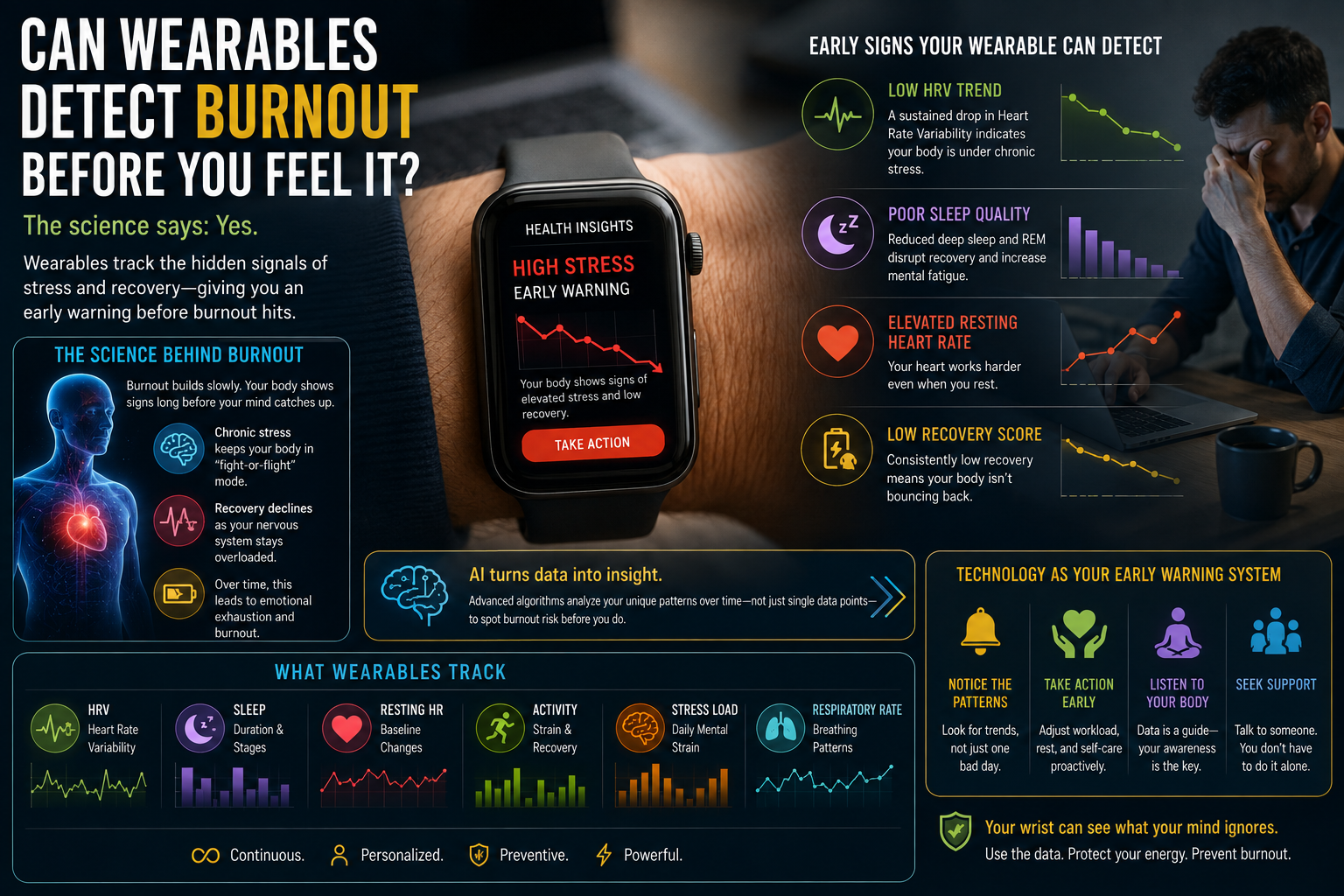
What if the solution was not found in introspection, but on your wrist? We are standing on the precipice of a revolution in digital health where the same devices counting our steps are learning to read our stress. With the proliferation of advanced smartwatches, continuous heart rate variability (HRV) monitoring, and sophisticated sleep tracking, the technology now exists to create an early warning system for mental exhaustion. The critical question facing the tech and health industries is: Can wearables detect burnout before you consciously feel it? The answer, backed by emerging science and AI-driven analytics, is a cautious but increasingly optimistic: Yes.
The Invisible Physiology of Burnout: Why We Miss the Signs
Burnout is not simply being "tired" or "stressed out." It is formally classified by the World Health Organization as an occupational phenomenon resulting from chronic workplace stress that has not been successfully managed. Crucially, burnout develops over time; it is a slow-burning fuse.
The reason we often miss the early signs is that our conscious minds are adept at rationalizing high-stress behavior. We tell ourselves, "I just need to get through this project," or "This is just the busy season." Our brains adapt to elevated baselines of stress hormones like cortisol and adrenaline. While our rational mind may convince us we are "coping fine," our physiology tells a very different, objective story long before we hit the emotional wall.
This is where wearable technology becomes a powerful diagnostic tool. It bypasses our cognitive biases and taps directly into the autonomic nervous system (ANS), which operates beneath conscious awareness and governs our stress response.
1. The Key Biomarker: Heart Rate Variability (HRV)
If wearable technology had a "gold standard" metric for detecting the precursors to burnout, it would be Heart Rate Variability. It is essential to understand that HRV is not the same as heart rate (BPM).
Your heart does not beat like a metronome. There are tiny, millisecond-level variations in time intervals between consecutive heartbeats. This variation is controlled by your ANS, specifically its two branches: the sympathetic (fight-or-flight) and the parasympathetic (rest-and-digest) systems.
A high HRV indicates that your body is resilient, adaptable, and balanced, easily shifting between stress and recovery states. A consistently low HRV indicates that the sympathetic nervous system is dominant—you are essentially stuck in "fight-or-flight" mode, even when sleeping. Chronic stress and the onset of burnout are almost universally preceded by a significant, sustained drop in baseline HRV. Wearables track this quietly in the background, providing an objective metric of internal strain that your mind cannot simply talk its way out of.
2. The Role of Sleep Quality and Recovery
Burnout doesn't just happen during the day; it systematically dismantles your ability to recover at night. Traditional sleep tracking has moved far beyond simple duration; modern devices—such as the Oura Ring, Whoop strap, and advanced Apple Watch models—analyze sleep architecture, including time spent in REM and deep sleep.
When approaching burnout, the body struggles to enter restorative deep sleep stages due to elevated sympathetic nervous system activity. Wearables can detect this deterioration in sleep efficiency. Furthermore, many platforms now offer a daily "Recovery Score" or "Readiness Score" based on the relationship between your previous day’s strain and the quality of your overnight recuperation. A string of consecutive "low recovery" days, despite getting eight hours of sleep, is a major physiological red flag indicating the onset of burnout.
3. From Data to Prediction: The Role of Artificial Intelligence
Collecting raw data on HRV, sleep, and resting heart rate is useful, but it is not sufficient on its own to predict burnout. A single low HRV score could just be the result of a tough workout, a glass of wine the night before, or a mild cold. The real breakthrough lies in applying Artificial Intelligence (AI) and machine learning to longitudinal personal data.
Advanced wellness platforms are beginning to develop algorithms that establish your unique, long-term personal baseline across dozens of biometric markers. The AI looks for meaningful deviations from *your* normal. It isn’t comparing you to an average 35-year-old; it is comparing your current state to your physiological state three months ago. When the AI detects a statistically significant, multi-week trend of declining HRV, rising resting heart rate, and decreasing sleep efficiency—in the absence of external factors like illness—it can flag a high probability of approaching burnout long before you consciously feel emotionally exhausted.
4. The Limits of Technology: What Wearables *Cannot* Do
While the potential is enormous, it is critical to acknowledge the limitations. We are not yet at the stage where a watch alert can definitively diagnose burnout with 100% accuracy. Here is why caution is still required:
- The Noise Problem: Biometric data is noisy. An argument with a partner, an impending deadline, caffeine consumption, or the early stages of asymptomatic illness can all temporarily depress HRV. Distinguishing between temporary situational stress and chronic, burnout-inducing stress remains a complex algorithmic challenge.
- Correlation vs. Causation: Wearables excel at detecting the *correlation* that something is wrong physiologically, but they cannot identify the *causation*. The data might tell you your body is under extreme stress, but it cannot tell you if it is due to an unmanageable workload, a toxic manager, or financial anxiety outside of work.
- The Risk of Techno-Anxiety: There is a legitimate psychological risk to relying too heavily on this data. If a user wakes up feeling okay, but their wearable tells them they have a "low readiness score," they may induce the very stress they are trying to avoid by obsessing over the data. This phenomenon is sometimes referred to as "orthosomnia"—an unhealthy preoccupation with achieving perfect sleep data.
Conclusion: A Powerful Partner, Not a Final Authority
So, can wearables detect burnout before you feel it? The final verdict is that they serve as an indispensable early warning system, offering a personalized, objective mirror reflecting the true state of your nervous system.
They cannot feel the cynicism or emotional detachment that defines burnout, but they can detect the physiological wreckage that precedes it. When your Oura Ring or Whoop strap shows a concerning multi-week downward trend in recovery and HRV, it is time to pay attention. It serves not as a final diagnosis, but as a data-driven prompt to engage in proactive self-care, difficult conversations about workload, or seek professional support before the slow-burn becomes a full blaze. In the future of mental health, wearable data won't replace human self-awareness, but it might just save us from ourselves.