





Artificial intelligence has rapidly become one of the most transformative technologies of the modern era. From generative AI and autonomous systems to predictive analytics and enterprise automation, organizations worldwide are investing billions of dollars to remain competitive. While most discussions focus on breakthroughs in algorithms, computing power, and model capabilities, a far more fundamental challenge is emerging behind the scenes: electricity.
The future of AI is no longer determined solely by who builds the most advanced models or acquires the fastest GPUs. Instead, it increasingly depends on who can secure reliable, scalable, and sustainable energy infrastructure. As AI workloads continue to grow, electricity has become one of the industry's most valuable resources, making power availability a strategic competitive advantage.
The Rising Energy Demand
The rapid expansion of artificial intelligence is dramatically increasing global electricity consumption. As of 2026, data centers worldwide are expected to consume more than 1,000 terawatt-hours (TWh) of electricity annually. To put this into perspective, this amount exceeds the total annual electricity consumption of entire industrialized nations such as Japan.
This unprecedented demand is being driven primarily by large-scale AI training, continuous inference workloads, cloud computing services, and increasingly powerful GPU clusters. Unlike traditional enterprise servers, modern AI infrastructure operates around the clock while processing enormous volumes of data, resulting in significantly higher energy consumption and cooling requirements.
Today's hyperscale AI data centers require between 100 and 750 megawatts (MW) of power per facility—enough electricity to supply hundreds of thousands of homes. As organizations deploy increasingly sophisticated AI systems, these requirements are expected to grow even further over the coming decade.
The Infrastructure Bottleneck
The rapid growth of AI infrastructure is exposing the limitations of aging electrical grids around the world. Many existing power networks were never designed to support the enormous and concentrated energy demands created by modern AI facilities.
For organizations planning new AI data centers, obtaining high-capacity grid connections has become one of the biggest barriers to expansion. In many major technology hubs, companies now face waiting periods of four to seven years before sufficient electrical capacity becomes available. These delays significantly slow innovation, increase project costs, and create uncertainty for businesses investing in AI infrastructure.
Infrastructure expansion has also generated increasing public concern. Local communities are raising questions about electricity consumption, water usage for cooling systems, environmental sustainability, and rising utility costs. During the first quarter of 2026 alone, community opposition reportedly contributed to the delay or cancellation of more than $130 billion worth of planned AI data center projects. These developments demonstrate that future AI growth depends not only on technological progress but also on public acceptance and responsible infrastructure planning.
Next-Generation Infrastructure Solutions
To overcome these challenges, technology companies are investing in innovative energy and cooling technologies designed to support the next generation of AI computing while reducing environmental impact.
Direct-to-Chip Liquid Cooling (DLC)
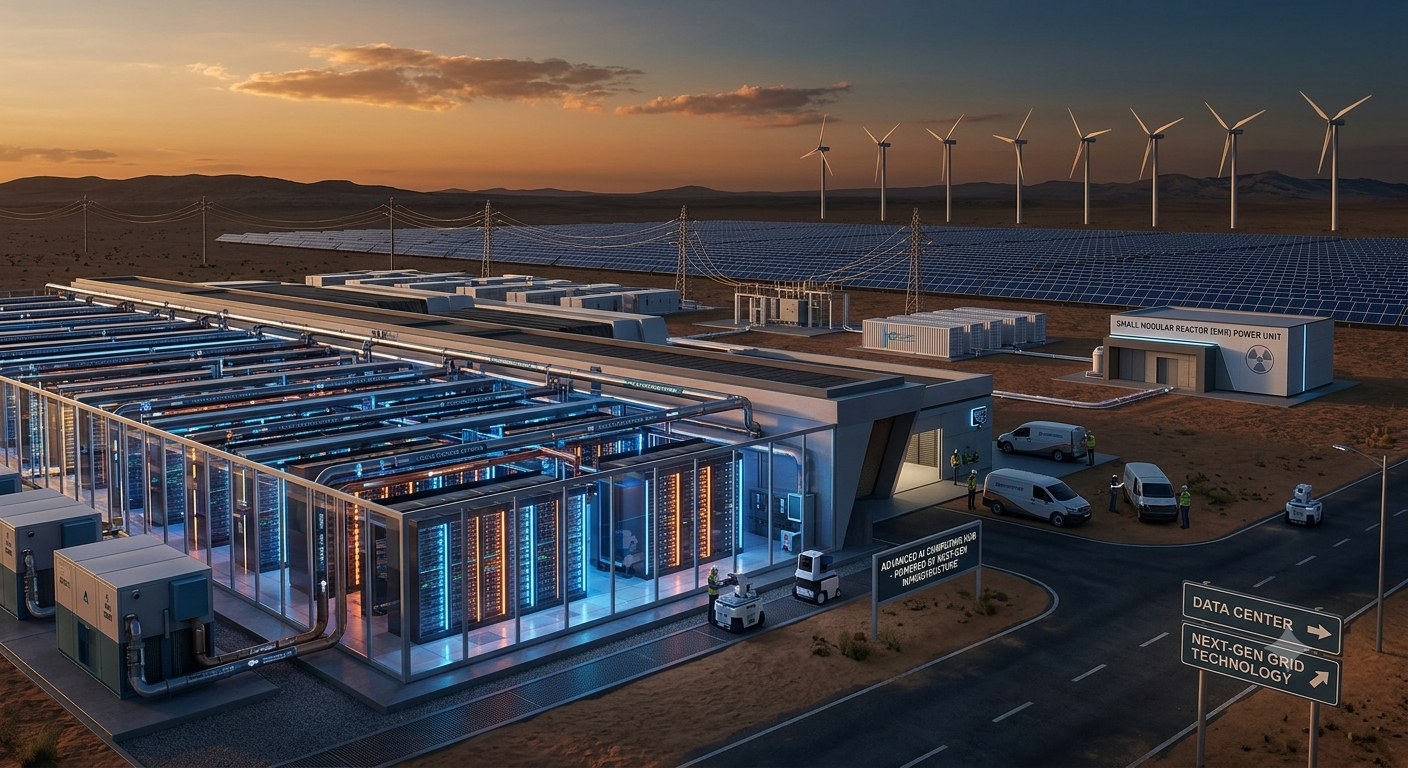
Traditional air-cooling systems are reaching their physical limits as next-generation GPUs generate unprecedented levels of heat. Direct-to-chip liquid cooling delivers coolant directly to processors, removing heat far more efficiently than conventional air-based systems. This approach can reduce cooling-related energy consumption by as much as 30%, improve hardware reliability, and enable higher computing densities within data centers.
Small Modular Reactors (SMRs)
To secure long-term, carbon-free energy supplies, several major cloud providers and hyperscale operators are exploring Small Modular Reactors (SMRs). Unlike conventional nuclear power plants, SMRs are smaller, more flexible, and capable of delivering reliable baseload electricity with minimal carbon emissions. They offer a potential solution for powering AI infrastructure independently of increasingly constrained public power grids.
Hybrid Microgrids and Renewable Energy Storage
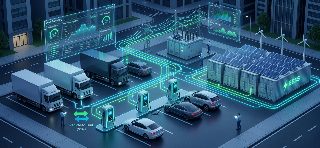
Many organizations are also adopting hybrid energy systems that combine solar power generation with advanced battery Energy Storage Systems (ESS). These microgrids enable data centers to generate, store, and manage their own electricity while reducing dependence on fossil-fuel backup generators and minimizing pressure on local utility networks during periods of peak demand. Such systems also improve resilience against power outages and fluctuating electricity prices.
Looking Ahead
The next decade of digital innovation will depend as much on energy infrastructure as on advances in artificial intelligence itself. Building larger models and faster processors will mean little if organizations cannot supply the electricity required to operate them efficiently and sustainably.
The companies that lead the AI revolution will not simply be those with the most powerful algorithms or the largest computing clusters. They will be the organizations that successfully combine technological innovation with resilient energy strategies, sustainable infrastructure, and intelligent power management. In the emerging AI economy, the smartest power grid may prove just as valuable as the smartest AI model.