





Artificial intelligence is entering a new phase of enterprise transformation. During the first wave of AI adoption, businesses primarily embraced generative AI tools capable of drafting emails, summarizing reports, writing software code, creating presentations, and answering conversational prompts. These applications dramatically improved individual productivity by helping employees complete routine tasks more quickly and efficiently.
However, despite their impressive capabilities, generative AI systems still depend heavily on human guidance. They respond to prompts, execute individual requests, and generate content, but they generally do not manage complex business processes independently.
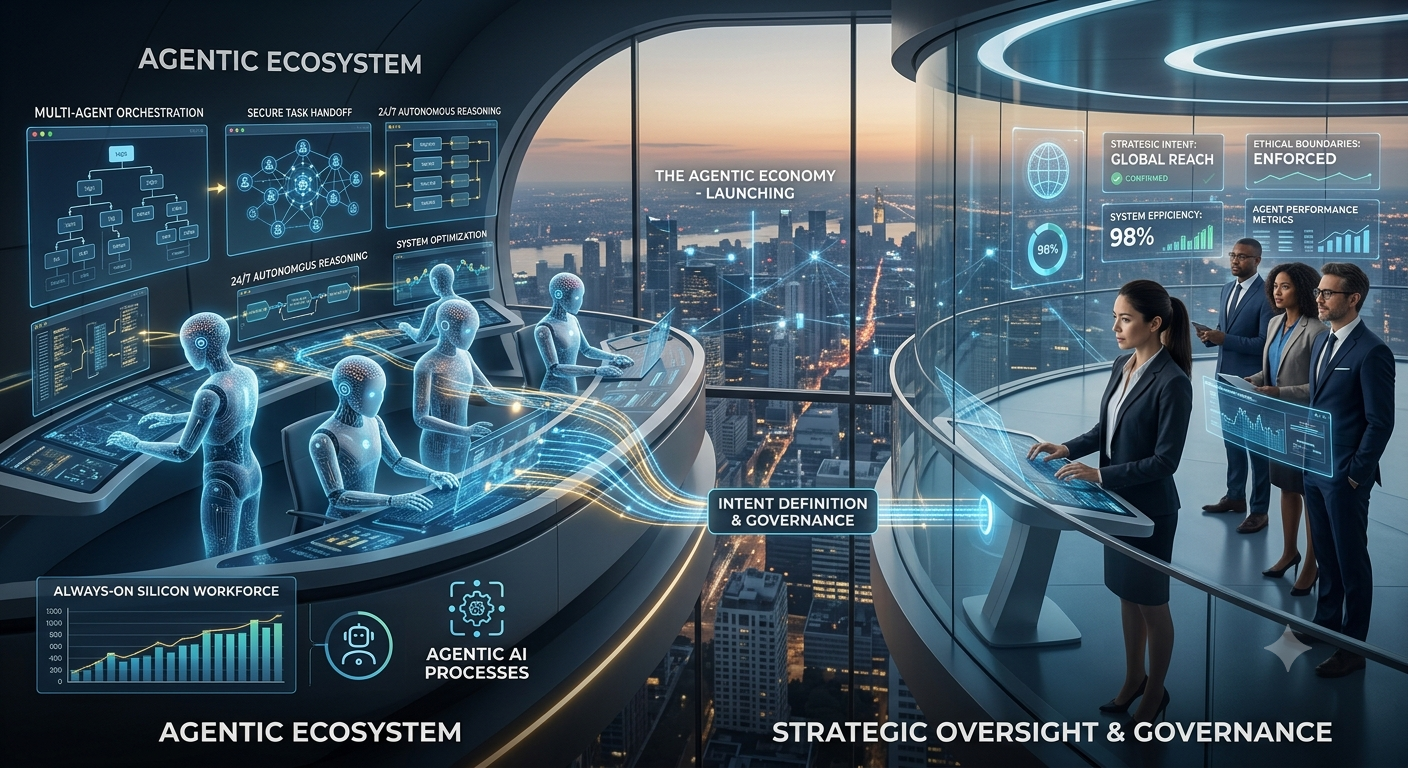
Today, organizations are moving toward a far more advanced model known as the agentic economy. Rather than functioning solely as intelligent assistants, modern AI agents are becoming autonomous digital workers capable of planning tasks, making decisions, coordinating with other systems, and pursuing high-level business objectives with minimal human intervention.
This shift represents one of the most significant changes in enterprise technology since the emergence of cloud computing, fundamentally redefining how organizations operate, innovate, and compete.
Understanding Agentic AI
Unlike traditional automation software that follows fixed rules and predefined workflows, agentic AI is designed to reason, adapt, and act independently within established objectives and constraints.
Instead of requiring step-by-step instructions, an AI agent can receive a broad business goal—such as improving customer service response times, optimizing inventory management, or resolving a billing issue—and determine how best to accomplish it.
To achieve its objective, the agent analyzes available information, divides the problem into manageable tasks, selects appropriate software tools, executes actions, monitors results, and continuously adjusts its strategy based on changing conditions. This iterative decision-making process allows AI agents to solve problems dynamically rather than simply executing predefined commands.
As these systems become more sophisticated, they are increasingly capable of managing complex workflows that previously required coordination among multiple employees or departments.
The Architecture of Autonomous Decision-Making
Modern AI agents operate through continuous cycles of observation, reasoning, action, and evaluation.
They begin by interpreting the assigned objective and gathering relevant information from business databases, enterprise software, cloud applications, or external data sources. Based on this information, the system develops an execution plan and determines the sequence of actions required to achieve the desired outcome.
Throughout the process, the AI agent continuously evaluates its own performance. If unexpected challenges arise—such as missing information, unavailable software services, or changes in business conditions—the system can modify its approach, explore alternative solutions, and continue progressing toward the objective without requiring constant human supervision.
This ability to adapt distinguishes agentic AI from conventional automation systems, making it particularly valuable in complex and rapidly changing business environments.
The Evolution of Enterprise Operations
The introduction of autonomous AI agents is transforming enterprise technology across multiple dimensions.
Multi-Agent Collaboration
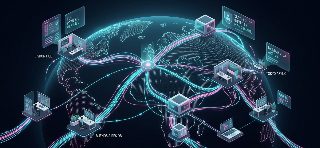
Organizations are increasingly moving away from isolated software applications toward interconnected ecosystems of specialized AI agents that collaborate to complete business processes.
For example, a customer service agent may identify a technical issue and automatically transfer relevant information to an engineering agent responsible for diagnosing the problem. That engineering agent may then coordinate with another AI system responsible for software testing before forwarding the validated solution to a deployment agent. Each specialized agent contributes expertise while working together toward a shared organizational objective.
This collaborative approach enables businesses to automate increasingly sophisticated workflows while maintaining greater speed, consistency, and operational efficiency.
Always-On Business Operations
Unlike human employees, AI agents can operate continuously without fatigue, time zone limitations, or scheduling constraints.
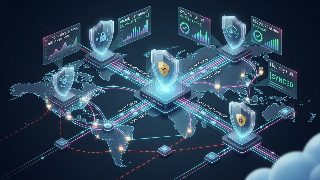
Organizations can use autonomous systems to monitor cybersecurity threats, analyze financial transactions, reconcile databases, optimize logistics, detect equipment failures, and process customer requests around the clock. Continuous operation improves responsiveness, reduces delays, and enables businesses to identify problems before they escalate into larger operational challenges.
This capability is especially valuable for global enterprises that must manage operations across multiple regions and maintain uninterrupted digital services.
Redesigning Business Processes
Many organizations initially attempt to apply AI to existing workflows without fundamentally changing how work is performed. However, leading enterprises increasingly recognize that the greatest value of agentic AI comes from redesigning business processes rather than simply automating inefficient legacy systems.
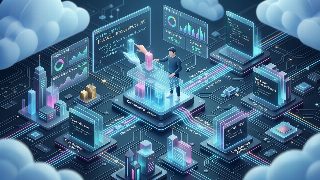
AI-native workflows are built around modular processes that allow autonomous agents to collaborate, exchange information, and make decisions efficiently. By simplifying unnecessary procedures and eliminating repetitive administrative work, organizations can fully leverage the flexibility and speed of autonomous systems while improving overall operational performance.
The Human–AI Partnership
The growing adoption of autonomous AI does not eliminate the need for human expertise. Instead, it changes the nature of human work.
As AI agents assume responsibility for repetitive analysis, workflow coordination, monitoring, scheduling, and routine decision-making, professionals can devote more time to strategic planning, creative problem-solving, relationship management, innovation, and ethical oversight.
Human judgment remains essential in situations involving ambiguity, organizational values, legal considerations, complex negotiations, and decisions that require empathy or cultural understanding. AI can provide recommendations and execute operational tasks, but defining priorities, interpreting broader business goals, and making value-based decisions remain fundamentally human responsibilities.
This evolving relationship transforms employees from task executors into supervisors, collaborators, and decision-makers who guide increasingly capable autonomous systems.
Preparing Organizations for the Agentic Economy
Successfully adopting agentic AI requires more than purchasing advanced technology. Organizations must establish strong governance frameworks, clear operational boundaries, robust cybersecurity protections, and transparent accountability mechanisms that ensure autonomous systems operate safely and responsibly.
Leaders must also invest in workforce development by helping employees understand how to collaborate effectively with AI agents, interpret AI-generated insights, and oversee automated decision-making processes. Building trust between humans and intelligent systems will be essential for realizing the full potential of autonomous operations.
Looking Ahead
The transition from generative AI to autonomous AI agents represents the next major evolution in enterprise technology. Businesses are moving beyond tools that simply generate content toward intelligent systems capable of planning, reasoning, adapting, and executing complex business processes independently.
The organizations that will lead this transformation are unlikely to be those that view AI merely as a cost-cutting tool. Instead, success will belong to companies that redesign their operations around intelligent collaboration between people and autonomous systems, creating workplaces that combine the efficiency of AI with the creativity, leadership, and ethical judgment of human professionals.
Ultimately, the future of work will not be defined by competition between humans and machines. It will be shaped by how effectively they work together to build faster, smarter, more resilient, and more innovative organizations.