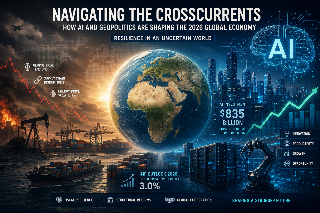






The global economy is entering a defining period characterized by two powerful yet opposing forces. According to the mid-2026 economic outlooks released by the International Monetary Fund (IMF) and the World Bank, global economic growth is expected to remain between 2.5% and 3.0%. While these figures suggest that the world economy continues to demonstrate resilience, they also conceal a widening gap between sectors, industries, and regions experiencing rapid expansion and those facing prolonged economic challenges.
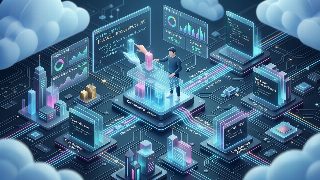
On one side, unprecedented investment in artificial intelligence, cloud computing, automation, and digital transformation is fueling productivity gains, corporate profitability, and innovation. Businesses are accelerating technology adoption at a pace rarely seen before, creating new opportunities across industries ranging from healthcare and manufacturing to finance and logistics.
On the other side, persistent geopolitical tensions, fragmented global trade, elevated energy prices, and financial uncertainty continue to place significant pressure on traditional industries and consumer spending. As a result, the global economy is no longer moving in a single direction. Instead, it is increasingly becoming a "two-speed" economy where technology-driven sectors continue to accelerate while more conventional industries face slower and more uncertain growth.
The Main Headwinds Facing Global Growth
Although fears of a severe global recession have eased, several structural challenges continue to limit economic expansion and create uncertainty for governments, businesses, and investors.
Commodity Market Volatility
Global commodity markets remain highly sensitive to geopolitical events and supply chain disruptions. Critical shipping routes, particularly strategic waterways such as the Strait of Hormuz, continue to face operational risks that influence the global supply of oil, natural gas, and essential raw materials. These disruptions contribute to volatile fuel prices, higher transportation costs, and increased fertilizer expenses, ultimately raising production costs across agriculture, manufacturing, and logistics. The result is higher prices for businesses and consumers alike, effectively acting as an additional economic burden on households worldwide.
Sticky Inflation and Rising Public Debt
Although inflation has moderated compared to previous peaks, it remains above the long-term targets of many central banks. Global headline inflation is projected to experience a temporary increase toward 4.7% before gradually easing as supply conditions improve and monetary policies continue to take effect.
At the same time, governments around the world are managing historically high levels of public debt accumulated during years of economic stimulus and crisis response. Higher interest rates have increased borrowing costs for both governments and businesses, with emerging economies facing particularly significant challenges in financing infrastructure projects, public services, and long-term development initiatives.
Trade Fragmentation
International trade is becoming increasingly fragmented as countries adopt new tariffs, stricter rules of origin, export controls, and industrial policies designed to strengthen domestic production. While these measures aim to improve national economic security, they also increase complexity for multinational corporations operating global supply chains.
Many organizations are now redesigning manufacturing strategies, diversifying supplier networks, and relocating production facilities to reduce geopolitical risk. Although these adjustments improve long-term resilience, they often require significant investment and can temporarily increase operational costs.
Pockets of Economic Resilience
Despite these headwinds, several powerful growth drivers continue to support the global economy and reduce the likelihood of a widespread economic downturn.
The AI Capital Expenditure Boom
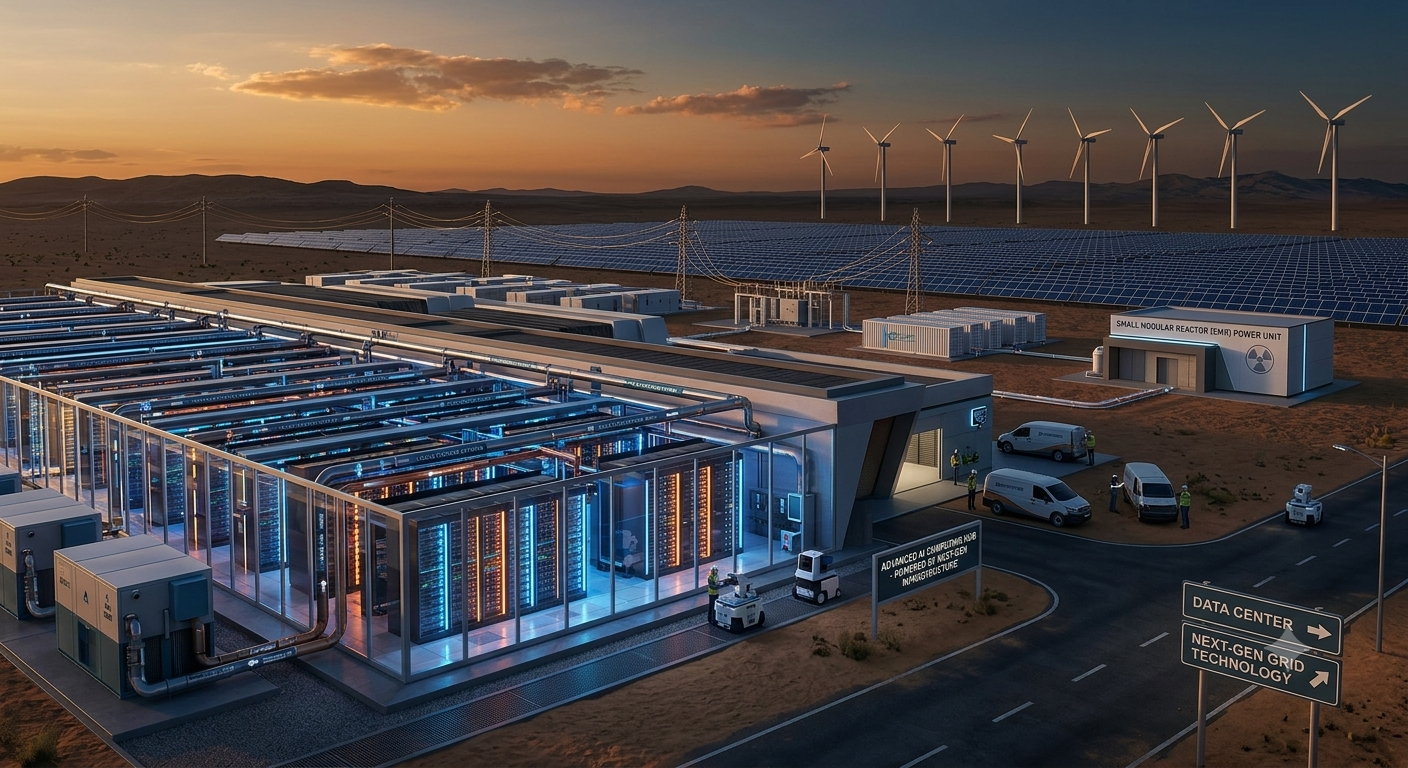
Artificial intelligence has become one of the world's largest investment themes. Major technology companies are investing hundreds of billions of dollars into advanced data centers, semiconductor manufacturing, cloud infrastructure, and AI software development. This wave of capital expenditure is stimulating demand across the technology supply chain, creating new business opportunities for hardware manufacturers, software developers, engineering firms, and infrastructure providers.
Strong Labor Markets
Employment conditions in many advanced economies remain relatively healthy despite slowing economic growth. Stable labor markets continue to support household incomes and consumer spending, helping sustain demand across retail, hospitality, healthcare, and service industries. Strong employment also provides businesses with greater confidence to continue investing in innovation and expansion.
Diverging Performance Among Emerging Markets
Not all developing economies are experiencing the same level of growth. Countries that play an important role in semiconductor manufacturing, critical minerals, renewable energy, or AI-related supply chains are generally outperforming nations that remain heavily dependent on imported energy or vulnerable commodity markets. Access to strategic resources, investment-friendly policies, and expanding technology industries are increasingly becoming key drivers of economic success.
The Corporate Playbook for an Uncertain Economy
In today's rapidly changing economic environment, relying on traditional business strategies is no longer sufficient. Organizations must become more agile, resilient, and technology-driven to remain competitive.
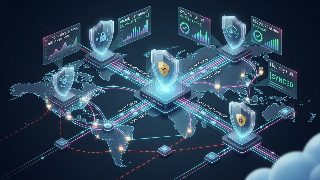
Businesses should diversify supply chains across multiple regions to reduce exposure to tariffs and geopolitical disruptions. Continued investment in digital infrastructure, cybersecurity, cloud computing, and artificial intelligence will be essential for improving operational efficiency and maintaining long-term competitiveness. At the same time, careful financial management, disciplined capital allocation, and prudent debt strategies will help organizations navigate an environment of elevated borrowing costs and economic uncertainty.
Looking Ahead
The global economy is no longer defined by a single, unified growth story. Instead, it is increasingly characterized by two distinct trajectories—one driven by technological innovation and digital transformation, and another constrained by geopolitical tensions, inflationary pressures, and structural economic challenges.
Organizations that successfully balance innovation with resilience will be best positioned to thrive in this evolving landscape. The businesses that embrace technological advancement while strengthening supply chains, managing financial risks, and adapting to changing global trade dynamics will be the ones that transform uncertainty into long-term competitive advantage.