




The computing world is standing at the edge of a monumental hardware shift. For decades, the traditional clamshell laptop—featuring a rigid physical keyboard, a fixed screen, and a tried-and-true mechanical hinge—has been the undisputed king of productivity. But as flexible display technology matures, a new challenger has entered the arena: the foldable laptop. Boasting seamless, all-screen canvases that bend to your will, foldable PCs promise to redefine how we work, travel, and create. But are they truly ready to replace the classic laptop, or is traditional reliability still the smarter bet?
Design and Display: The Flexible Future vs. Solid Reliability
The core difference lies entirely in how you interact with your screen and workspace:
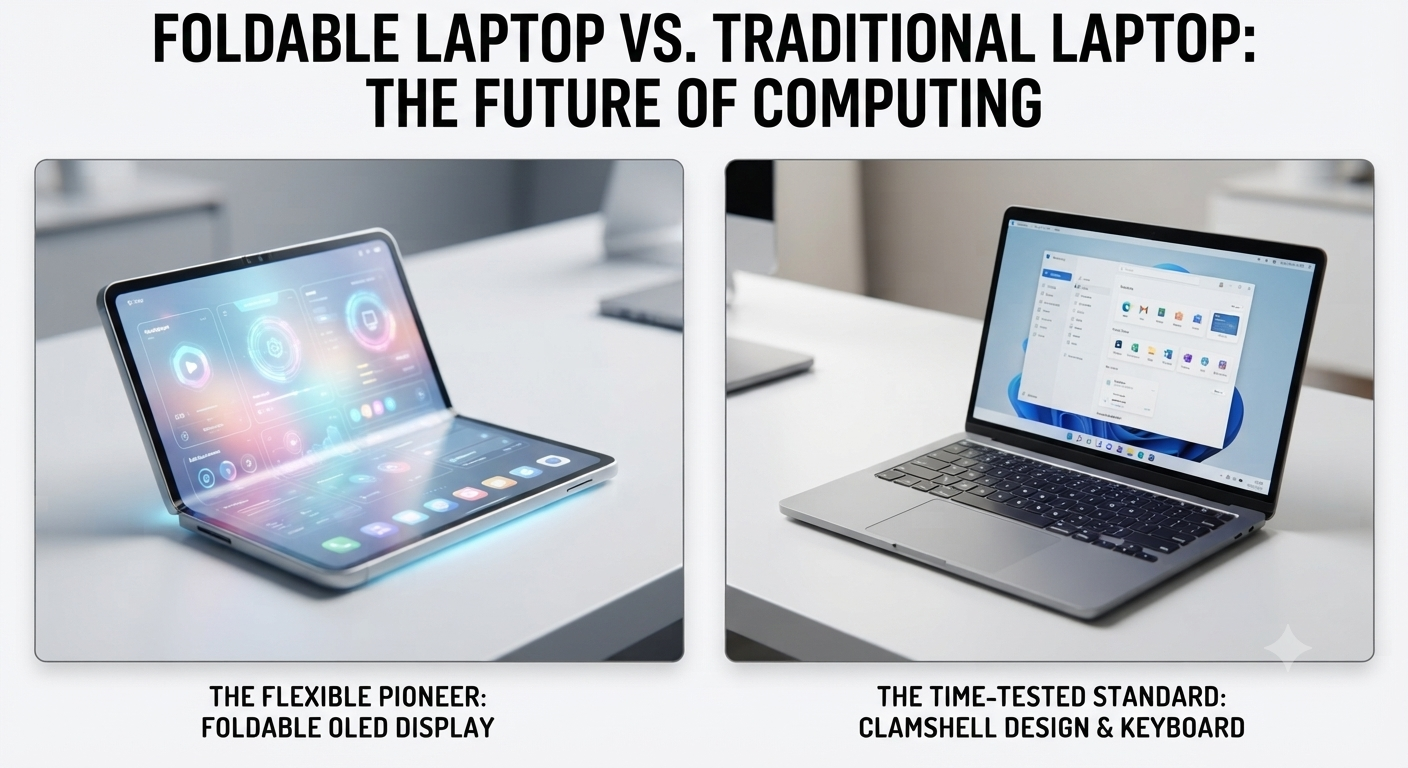
- Foldable Laptops: These cutting-edge devices feature continuous flexible OLED panels (often reinforced with ultra-thin glass) that can fold down into a compact notebook or unfold into a massive, nearly 17-inch workspace. They offer ultimate versatility, allowing you to use a virtual keyboard on the lower half or expand an app across a giant vertical canvas.
- Traditional Laptops: Built with rigid chassis layouts, physical keyboards, and fixed aspect ratios. While they cannot shape-shift, they offer zero compromises on structural sturdiness, structural feedback, and long-term mechanical predictability.
Productivity and Typing Ergonomics
How you type and manage daily tasks changes dramatically depending on which form factor you choose:
- Foldable Laptops: Perfect for multi-taskers and creators who want a desktop-sized monitor in a portable bag. However, typing on a flat glass screen using virtual haptic keyboards takes getting used to, though you can snap on a physical Bluetooth keyboard when working at a desk.
- Traditional Laptops: The gold standard for tactile feedback. With deep key travel, reliable mechanical hinges, and rock-solid lapability, traditional laptops are still built for maximum writing and coding comfort right out of the box.
Specification Showdown
| Feature | Foldable Laptops | Traditional Laptops |
|---|---|---|
| Display Versatility | Transforms from compact size to giant single-screen workspace | Fixed display size and aspect ratio |
| Keyboard & Input | Virtual glass typing or detachable physical keys | Integrated physical keyboard and trackpad |
| Durability & Build | Advanced multi-link hinges (rated for tens of thousands of folds) | Robust, rigid, time-tested physical chassis |
| Price & Value | Ultra-premium, early-adopter luxury tier | Ranging from budget-friendly to high-end performance |
The Verdict: Which Form Factor Wins?
Your choice depends entirely on your lifestyle and how much you value bleeding-edge innovation:
"Choose a foldable laptop if you want to be an early adopter of shape-shifting technology, crave massive screen real estate in a compact travel size, and love pushing mobile innovation forward. Stick with a traditional laptop if you want maximum mechanical durability, a proven physical keyboard, and better overall value for your investment."