





The New Resource Race
For decades, global economic power was closely tied to access to oil and natural gas.
Today, that equation is changing.
The transition toward renewable energy, electric vehicles, advanced electronics, and artificial intelligence is creating unprecedented demand for a new class of strategic resources: critical minerals and rare earth elements.
Materials such as lithium, cobalt, nickel, graphite, neodymium, and gallium are essential components in many of the technologies driving the modern economy.
They may not attract the same attention as oil, but they are becoming just as strategically important.
The New Epicenter of Global Trade
Critical minerals are used across a wide range of industries.
They are essential for technologies including:
- Electric vehicle batteries.
- Wind turbines.
- Solar energy systems.
- Smartphones and consumer electronics.
- Semiconductor manufacturing.
- Energy storage systems.
- Advanced defense technologies.
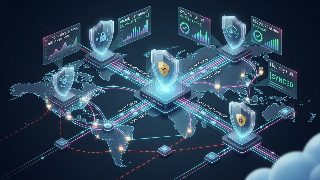
The challenge is that the supply chains for these materials are often highly concentrated.
Mining may take place in one country, processing in another, and manufacturing in a third. In some cases, a small number of countries dominate crucial stages of the supply chain.
This concentration creates vulnerabilities.
A disruption caused by geopolitical tensions, export restrictions, trade disputes, or political instability can potentially affect industries around the world.
As a result, access to critical minerals is increasingly being treated as a matter of economic security and national defense.
The Geopolitics of Critical Minerals
The growing importance of these resources is changing international competition.
Governments are increasingly using export controls, investment restrictions, strategic stockpiles, and industrial policies to protect access to key materials.
The result is a new form of resource competition in which countries are attempting to secure not only raw materials, but also the infrastructure required to process and refine them.
The strategic question is no longer simply:
Who has the minerals?
It is increasingly:
Who controls the entire supply chain?
Diversification and Innovation in Supply Chains
To reduce dependence on concentrated sources, governments and companies are exploring several strategies.
Reshoring and Friend-Shoring
Countries are investing in domestic mining and processing capabilities while developing stronger supply relationships with trusted international partners.
This strategy—often described as friend-shoring—aims to reduce exposure to geopolitical disruptions by building supply chains among countries considered reliable strategic partners.
However, developing new mines and processing facilities can take years and often requires significant investment and environmental oversight.
Advanced Recycling and Urban Mining
Recycling is emerging as another important part of the critical-minerals strategy.
Discarded electronics, industrial equipment, and used electric vehicle batteries contain valuable materials that can potentially be recovered and reused.
This concept, sometimes called urban mining, could help reduce pressure on primary mining while creating a more circular materials economy.
Although recycling cannot currently replace the need for new mining entirely, technological improvements could make it an increasingly important source of supply.
Material Substitution
Scientists and engineers are also searching for alternatives.
Research into new battery chemistries, advanced materials, and alternative manufacturing processes aims to reduce dependence on scarce or geopolitically sensitive minerals.
If successful, material substitution could fundamentally change the balance of power within global supply chains.
The Environmental Challenge
The critical-minerals race presents a major paradox.
The world needs these materials to build cleaner technologies, but mining and processing can themselves create significant environmental impacts.
Extraction can require large amounts of water and energy, while poorly managed mining operations can damage ecosystems and communities.
This means the clean-energy transition cannot simply focus on replacing fossil fuels.
It must also address the environmental and social consequences of the materials required to build the new energy system.
Responsible mining, stronger environmental standards, improved recycling, and more efficient material use will all be important.
A High-Stakes Transition
The race for critical minerals is becoming one of the defining geopolitical stories of the 21st century.
As countries compete to secure the resources needed for clean energy, advanced technology, and national security, the global economy is entering a new era of strategic resource competition.
The outcome will depend on more than who controls the largest deposits.
It will also depend on who can build resilient supply chains, develop advanced processing capabilities, expand recycling, and innovate around material shortages.
Conclusion
The global transition toward cleaner energy is creating a new map of economic and geopolitical power.
Oil and gas will remain important, but critical minerals are becoming increasingly central to the technologies that will define the future.
The countries that successfully secure reliable access to these resources—and build resilient, responsible supply chains around them—could gain a significant strategic advantage in the decades ahead.
The great resource race of the future may therefore look very different from the one that shaped the last century.
The world’s next geopolitical battleground may not be beneath an oil field. It may be inside a battery, a semiconductor, or a wind turbine.