





Introduction
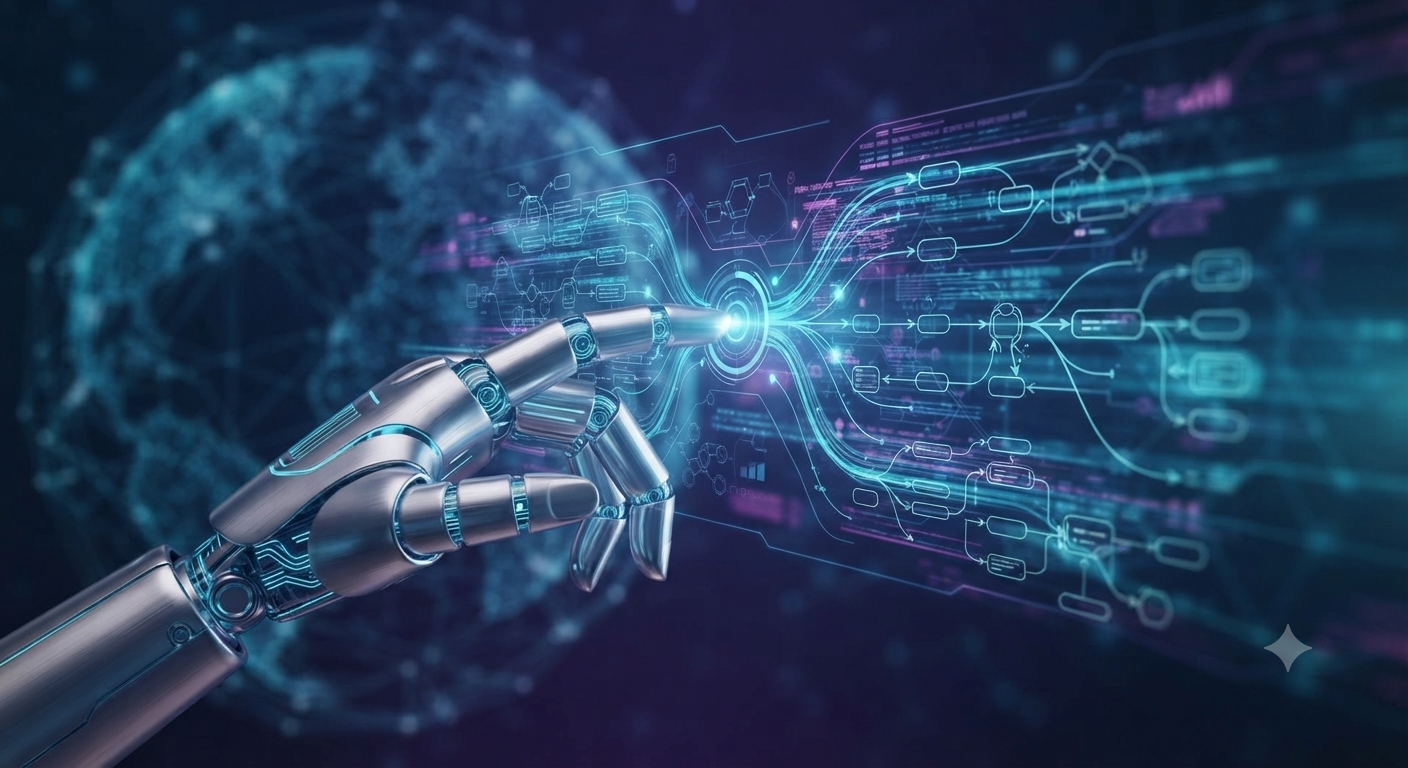
The era of simple AI interactions is rapidly coming to an end. While traditional AI systems were designed primarily to respond to prompts, 2026 marks the emergence of Agentic AI—intelligent systems capable of pursuing goals independently, making decisions, using digital tools, and executing complex workflows from start to finish.
Rather than serving only as assistants, these AI agents are becoming active collaborators that can operate with increasing autonomy while remaining aligned with human objectives.
From Individual Tasks to Intelligent Systems
Unlike conventional chatbots that handle isolated conversations, Agentic AI is built for long-term, multi-step work. These systems can plan, adapt, and continuously improve their approach as they work toward a defined objective.
Common applications include:
- Managing complex supply chain operations.
- Coordinating large-scale software deployments and updates.
- Conducting in-depth research and analysis.
- Automating customer service and business workflows.
- Supporting enterprise decision-making across multiple departments.
This shift allows organizations to automate not just individual tasks, but entire business processes.
Why Agentic AI Matters for Business
Businesses are moving beyond AI experimentation and focusing on measurable business value. Early adopters are already reporting improvements in productivity, operational efficiency, and decision-making.
Operational Efficiency
Agentic AI automates repetitive, high-volume processes, allowing employees to focus on strategic initiatives, innovation, and customer relationships.
Autonomous Coordination
Modern AI ecosystems increasingly consist of multiple specialized agents working together. For example, a sales agent can negotiate pricing while a finance agent simultaneously validates profitability and compliance, creating faster and more coordinated business operations.
Greater Business Resilience
AI agents can continuously monitor systems, detect cybersecurity threats, identify operational risks, and trigger automated responses within seconds—often much faster than traditional manual processes.
Governance, Security, and Human Oversight
As AI systems become more autonomous, governance becomes increasingly important. Organizations are investing in human-in-the-loop frameworks that combine AI efficiency with human judgment.
Key priorities include:
- Transparent decision-making.
- Ethical AI deployment.
- Security and regulatory compliance.
- Continuous monitoring and accountability.
- Risk management and auditability.
These safeguards help ensure that autonomous systems remain aligned with organizational goals and societal expectations.
The Future of AI-Human Collaboration
The future of work is not about replacing people with AI—it is about enabling people and AI to work together more effectively.
Agentic AI has the potential to transform how organizations operate by increasing agility, improving decision-making, and accelerating innovation. As adoption continues throughout 2026, business leaders are asking a new question:
The challenge is no longer “What can AI do?” but “How can autonomous AI agents be orchestrated to create lasting business value?”