





Introduction
There’s nothing more frustrating than spending time perfecting your makeup only to see it fade, crease, or become patchy after just a few hours. Whether you’re heading to work, attending a wedding, creating content for social media, or spending a long day outdoors, everyone wants makeup that stays fresh from morning until night.
In 2026, long-lasting makeup isn’t about applying heavy layers of products. Instead, beauty experts focus on smart skin preparation, lightweight formulas, strategic layering, and modern application techniques that allow makeup to blend naturally with the skin while remaining comfortable for hours. The latest beauty trends emphasize a “skin-first” approach, where healthy, hydrated skin becomes the foundation for flawless makeup.
Advancements in primers, transfer-resistant foundations, ultra-fine setting powders, and long-wear setting sprays have made achieving all-day makeup easier than ever. Combined with proper skincare and the right application methods, these products help resist humidity, sweat, oil production, and everyday wear without creating a cakey appearance.
This guide shares professional makeup techniques, common mistakes to avoid, and the best practices that will help your makeup remain beautiful throughout the day, regardless of your skin type.
Why Makeup Doesn’t Last
Before learning how to make makeup last longer, it’s important to understand why it breaks down.
Several factors affect makeup longevity, including:
- Excess oil production
- Dry or dehydrated skin
- Poor skin preparation
- Heavy skincare products
- Incorrect product layering
- Humidity and heat
- Frequent face touching
- Low-quality makeup formulas
Fortunately, most of these issues can be prevented with the right routine.
Part 1: Build the Perfect Canvas with Proper Skin Preparation
Professional makeup artists agree that flawless makeup begins long before foundation is applied.
Healthy, balanced skin allows makeup to adhere better and wear more evenly throughout the day.
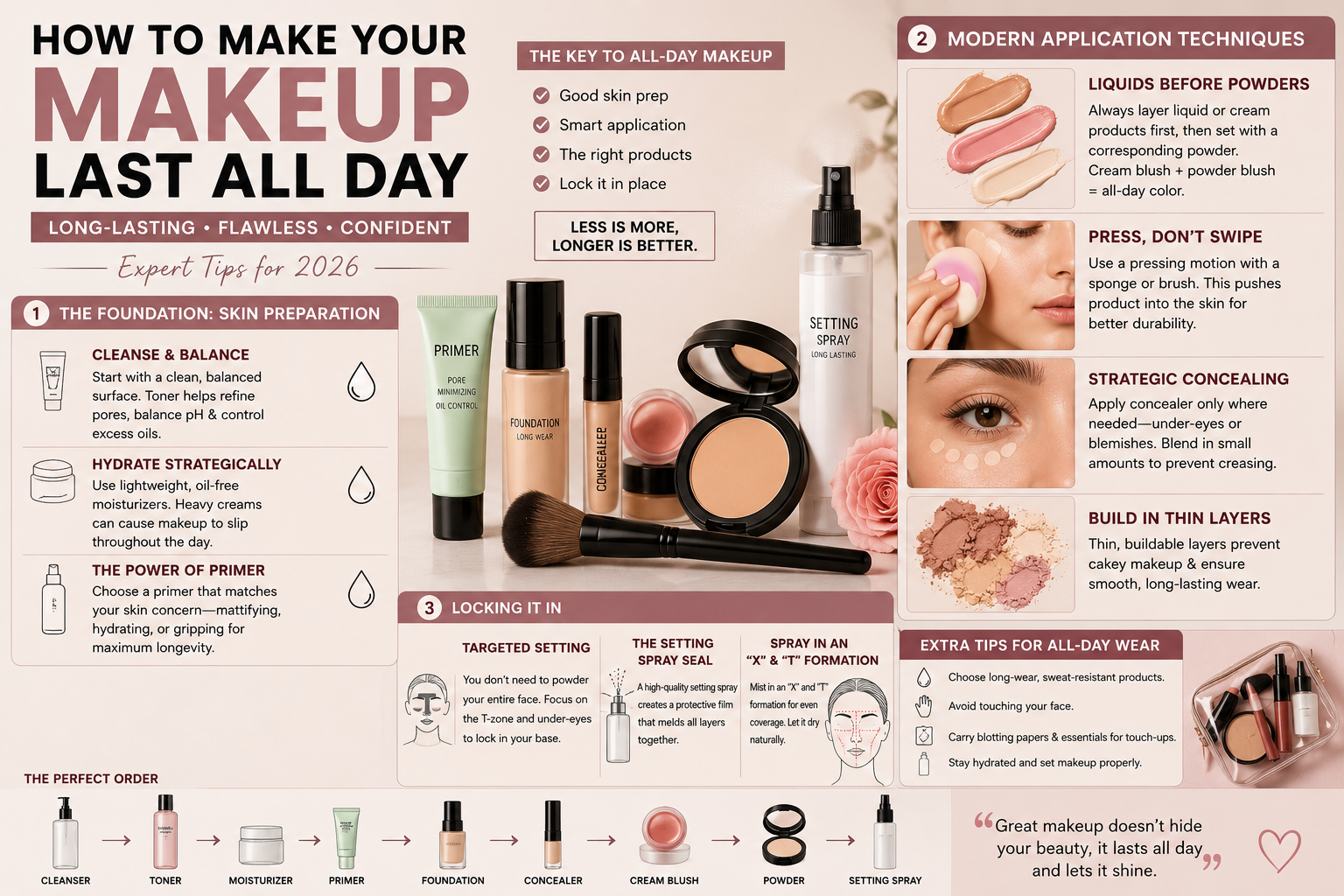
Step 1: Cleanse Your Skin Thoroughly
Every makeup routine should begin with clean skin.
Throughout the day, your face collects oil, sweat, dirt, pollution, and leftover skincare products that can interfere with makeup application.
Using a gentle cleanser removes these impurities without stripping the skin’s natural moisture.
Choose a cleanser suitable for your skin type:
- Gel cleansers for oily skin
- Cream cleansers for dry skin
- Foaming cleansers for combination skin
- Gentle hydrating cleansers for sensitive skin
Freshly cleansed skin provides the perfect surface for makeup.
Step 2: Balance the Skin with Toner
Many people skip toner, but it remains one of the most underrated makeup preparation steps.
A hydrating toner helps:
- Balance skin pH
- Reduce excess oil
- Refine the appearance of pores
- Improve product absorption
- Prepare the skin for moisturizer
Balanced skin helps foundation apply more evenly and reduces the likelihood of separation later in the day.
Step 3: Hydrate Strategically
Hydration is essential for long-lasting makeup.
However, choosing the wrong moisturizer can cause foundation to slide or separate.
Instead of heavy creams, use lightweight moisturizers that absorb quickly.
Look for ingredients such as:
- Hyaluronic Acid
- Glycerin
- Panthenol
- Ceramides
- Squalane
People with oily skin should choose oil-free moisturizers, while dry skin benefits from richer but fast-absorbing formulas.
Proper hydration keeps makeup looking fresh without becoming greasy.
Step 4: Never Skip Primer
Primer acts as the bridge between skincare and makeup.
It smooths the skin’s surface while helping foundation grip better.
Different primers solve different concerns.
Mattifying Primer
Best for:
- Oily skin
- Large pores
- Shiny T-zone
Hydrating Primer
Perfect for:
- Dry skin
- Flaky areas
- Dehydrated complexions
Gripping Primer
Designed to:
- Increase makeup longevity
- Improve foundation adherence
- Prevent fading
Selecting the correct primer significantly improves wear time.
Part 2: Modern Makeup Application Techniques
The biggest makeup trend of 2026 is simplicity.
Rather than applying thick layers, professionals now recommend building coverage gradually.
Thin layers not only look more natural but also stay in place longer.
Apply Thin, Buildable Layers
Applying excessive foundation often leads to:
- Cracking
- Creasing
- Cakey texture
- Uneven fading
Instead, begin with a light layer.
Only add additional coverage where necessary.
This technique creates a natural skin-like finish while improving durability.
Liquids Before Powders
Following the correct product order is essential.
Always apply:
- Liquid foundation
- Liquid concealer
- Cream contour
- Cream blush
- Powder products
This prevents patchiness and creates smoother blending.
Setting cream products with their powder versions also increases longevity.
For example:
- Cream blush followed by powder blush
- Cream bronzer followed by powder bronzer
This layering technique helps color remain vibrant throughout the day.
Press Instead of Swiping
The way products are applied matters just as much as the products themselves.
Instead of dragging or swiping foundation across the skin, gently press it into place using a damp makeup sponge.
Pressing:
- Improves adhesion
- Reduces streaks
- Creates an airbrushed finish
- Prevents foundation from lifting
The same technique works well when applying loose powder.
Rather than sweeping powder across the face, lightly press it into oily areas.
Conceal Only Where Needed
One common mistake is applying concealer everywhere.
Modern makeup focuses on targeted concealing.
Use concealer only where necessary:
- Under the eyes
- Around the nose
- Blemishes
- Dark spots
Applying smaller amounts reduces creasing and keeps the complexion looking fresh.
Build coverage gradually rather than applying thick layers all at once.
Blend Slowly
Rushing makeup application often leads to uneven texture.
Take time blending each product before moving to the next.
Allow creams and liquids to settle slightly before layering additional products.
Well-blended makeup lasts significantly longer.
Part 3: Lock Everything in Place
Even perfectly applied makeup needs protection.
Setting products ensure that your hard work survives humidity, heat, sweat, and long hours.
Use Powder Strategically
Many people mistakenly powder their entire face.
Modern makeup artists recommend targeted setting.
Focus on areas that naturally become oily:
- Forehead
- Nose
- Chin
- Under-eyes
Leaving naturally radiant areas untouched maintains a healthy glow while preventing unnecessary dryness.
Ultra-fine translucent powders provide the most natural finish.
Bake Only When Necessary
Heavy baking is becoming less popular in 2026.
Instead of applying thick layers of powder, use light baking only when:
- Attending special events
- Performing on stage
- Filming videos
- Wearing makeup for many hours
For everyday makeup, minimal powder looks fresher and feels lighter.
Finish with Setting Spray
Setting spray is the final step that brings the entire makeup look together.
Rather than simply holding makeup in place, modern formulas create an invisible protective layer.
Benefits include:
- Preventing transfer
- Reducing fading
- Increasing wear time
- Eliminating powderiness
- Creating a natural finish
Professionals recommend spraying in both an “X” and “T” motion to ensure even coverage across the face.
Allow the spray to dry naturally without touching the skin.
Choose Long-Wearing Products
Modern beauty brands now produce formulas specifically designed for long wear.
Look for products labeled:
- Long Wear
- Waterproof
- Sweat Resistant
- Transfer Proof
- Humidity Resistant
These products maintain their appearance under challenging conditions.
Touch-Up Essentials
Even long-lasting makeup may benefit from small touch-ups.
Carry essentials such as:
- Blotting papers
- Compact powder
- Lipstick
- Lip liner
- Mini setting spray
- Beauty sponge
Avoid repeatedly adding powder without first removing excess oil.
Blotting papers preserve makeup while reducing shine.
Common Mistakes That Ruin Makeup
Many makeup problems result from simple mistakes.
Avoid these habits:
- Skipping moisturizer
- Using too much foundation
- Applying excessive powder
- Mixing incompatible formulas
- Touching your face constantly
- Ignoring primer
- Using dirty brushes
- Sleeping with makeup on
Correcting these habits dramatically improves makeup longevity.
Makeup Tips for Different Skin Types
Oily Skin
- Use mattifying primer.
- Choose oil-free foundation.
- Set the T-zone with powder.
- Carry blotting papers.
Dry Skin
- Prioritize hydration.
- Use luminous foundation.
- Avoid excessive powder.
- Finish with hydrating setting spray.
Combination Skin
- Mattify oily areas only.
- Hydrate dry patches.
- Powder strategically.
Sensitive Skin
- Choose fragrance-free products.
- Patch-test new makeup.
- Avoid harsh alcohol-based formulas.
The Future of Long-Wear Makeup
Beauty technology continues to evolve rapidly.
Future makeup innovations may include:
- AI skin analysis
- Smart color-matching foundations
- Self-adjusting pigments
- Climate-adaptive formulas
- Skin barrier-supporting makeup
- Personalized foundation formulas
- Longer-lasting clean beauty products
The focus is shifting toward makeup that not only looks beautiful but also improves overall skin health.
Conclusion
Long-lasting makeup in 2026 is no longer about wearing thick, heavy products that feel uncomfortable throughout the day. Instead, it begins with healthy, well-prepared skin, lightweight hydration, and carefully chosen products that work together to create a natural, durable finish. Proper cleansing, balancing the skin with toner, using the right primer, and applying thin, buildable layers all contribute to makeup that remains fresh and flawless for hours.
Modern techniques such as pressing products into the skin, strategically concealing only where needed, setting oily areas instead of the entire face, and finishing with a quality setting spray ensure that makeup withstands heat, humidity, and daily activities. By avoiding common mistakes and tailoring your routine to your skin type, you can enjoy comfortable, beautiful makeup that looks just as good at the end of the day as it did when you first applied it.
With the latest beauty innovations and a skin-first approach, achieving all-day, long-lasting makeup has never been easier. Consistency, quality products, and smart application techniques are the true secrets to a flawless look that lasts.