




The modern workplace is experiencing one of the most significant transformations in its history. For decades, professional success was largely defined by technical expertise. Learning to code, mastering spreadsheets, analyzing data, and developing specialized industry knowledge were considered the strongest pathways to career growth and long-term employability.
Today, that definition is rapidly evolving. As artificial intelligence, automation, and intelligent software become capable of performing many routine technical tasks with remarkable speed and accuracy, technical knowledge alone is no longer enough to distinguish professionals in the job market.
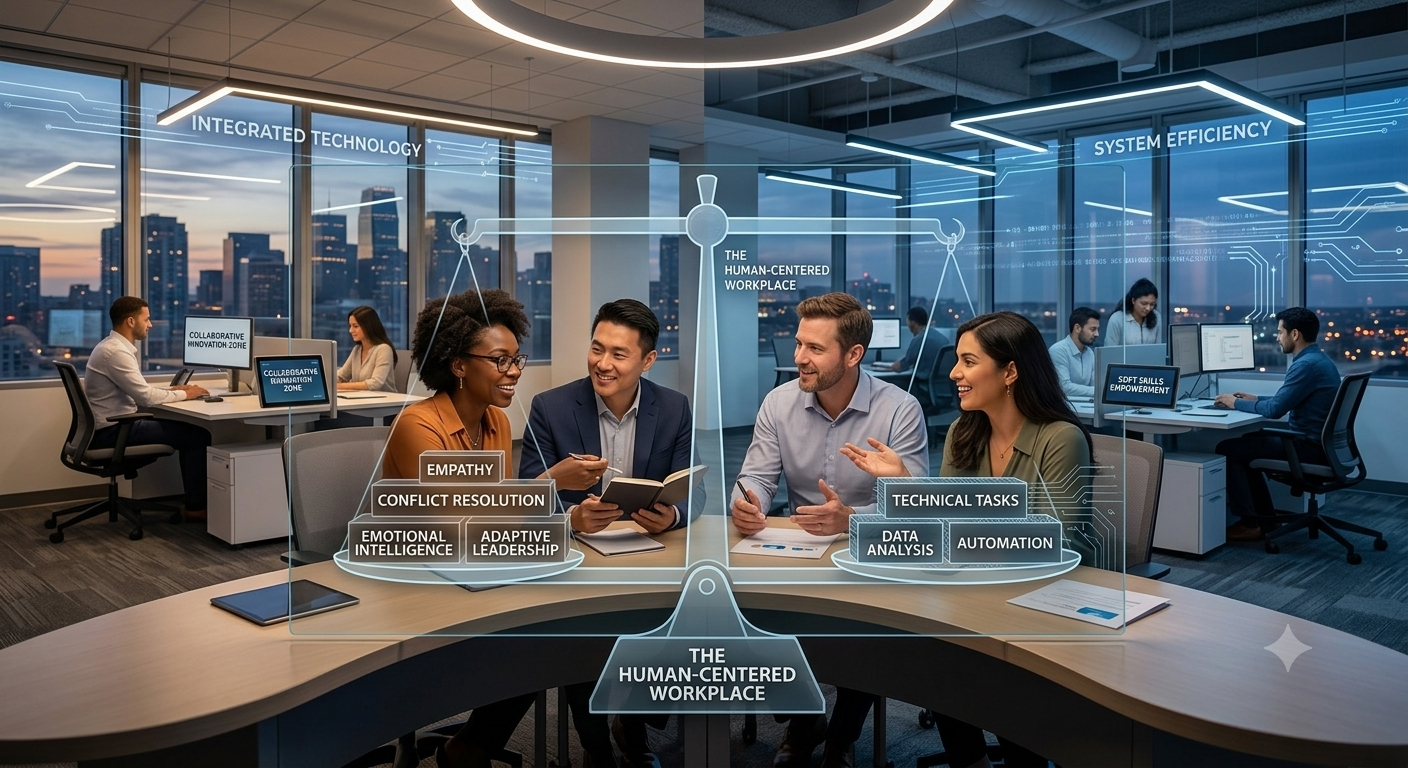
This does not mean technical skills have become unimportant. Rather, they are becoming the baseline expectation for many roles. What increasingly separates exceptional professionals from the rest is their ability to perform the uniquely human tasks that machines cannot easily replicate. The future of work is shifting toward a human-centered model where emotional intelligence, creativity, communication, adaptability, and leadership are becoming the most valuable professional assets.
The Rise of Non-Automatable Skills
As AI systems take over repetitive analysis, administrative work, and routine decision-making, employees are spending more time on complex responsibilities that require human judgment, collaboration, and emotional awareness.
Empathy, Leadership, and Emotional Intelligence
Leading people has always required more than assigning tasks and monitoring performance. Successful leaders understand the emotions, motivations, and challenges of their teams. They inspire confidence, build trust, resolve uncertainty, and create environments where employees feel supported and motivated to perform at their best.
Artificial intelligence can generate project plans, summarize meetings, and analyze performance metrics, but it cannot replace genuine empathy or build meaningful human relationships. As organizations become increasingly digital, emotionally intelligent leadership will become even more important for maintaining strong workplace cultures.
Conflict Resolution and Relationship Management
Every workplace experiences disagreements, competing priorities, and communication challenges. Resolving these situations requires patience, active listening, diplomacy, and an understanding of different perspectives.
Whether negotiating with clients, managing cross-functional teams, or resolving internal conflicts, professionals who can navigate complex interpersonal situations will remain highly valuable. These skills rely heavily on emotional intelligence and contextual judgment—qualities that current AI systems cannot authentically replicate.
Creative and Adaptive Problem Solving
Artificial intelligence performs exceptionally well when solving structured problems using existing data and predefined rules. However, real-world business challenges are often unpredictable, incomplete, and constantly evolving.
Economic uncertainty, changing customer expectations, technological disruption, and unexpected crises require professionals who can think creatively, evaluate ethical implications, and develop innovative solutions where no established playbook exists. Human imagination, intuition, and critical thinking continue to be essential for navigating uncertainty and driving innovation.
Rethinking Recruitment and Talent Development
As the workplace evolves, organizations are fundamentally changing how they identify, recruit, and develop talent.
Traditional hiring practices often focused heavily on degrees, certifications, technical expertise, and years of experience. While these qualifications remain important, many employers now place equal or greater emphasis on interpersonal abilities, learning agility, adaptability, and collaboration.
Behavioral interviews, situational judgment assessments, group problem-solving exercises, and communication evaluations are becoming increasingly common during recruitment. These methods help employers understand how candidates respond to pressure, work within teams, resolve conflict, and adapt to unfamiliar situations—qualities that are increasingly difficult to automate.
At the same time, companies are redesigning internal learning and development programs. Rather than concentrating solely on technical upskilling, organizations are investing in leadership development, emotional intelligence training, resilience building, coaching, communication skills, and cross-cultural collaboration. These capabilities strengthen both individual performance and organizational effectiveness in an increasingly interconnected workplace.
Technology as a Workplace Partner
Contrary to popular fears, artificial intelligence is not simply replacing human workers—it is changing the nature of work itself.
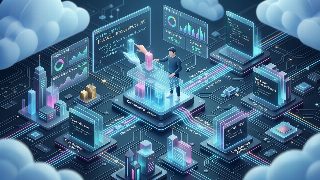
By automating repetitive administrative tasks, organizing information, generating reports, and processing large volumes of data, AI allows employees to spend more time on strategic thinking, relationship building, innovation, and decision-making. Instead of competing with technology, professionals who learn to work alongside AI can become significantly more productive and effective.
The most successful employees will not be those who resist technological change, nor those who depend entirely on automation. Instead, they will be individuals who combine technical competence with strong human skills, using AI as a tool to enhance rather than replace their own expertise.
Looking Ahead
The future of work belongs to professionals who continuously develop both their technical capabilities and their human strengths. As automation becomes increasingly sophisticated, qualities such as empathy, creativity, ethical judgment, communication, leadership, and adaptability will become even more valuable across every industry.
Organizations that recognize this shift will build stronger, more resilient, and more innovative workforces by investing not only in technology but also in the people who use it. Likewise, individuals who embrace lifelong learning while strengthening their interpersonal skills will be better prepared to thrive in an economy where human potential remains the greatest competitive advantage.
Ultimately, technology does not diminish the value of people—it highlights what makes human professionals truly irreplaceable. The future workplace will belong to those who can combine the efficiency of intelligent machines with the uniquely human ability to connect, collaborate, inspire, and innovate.