





For more than three decades, search engines have served as the primary gateway to the internet. Whenever users needed information, whether researching a product, finding a business, or learning a new skill, they entered a series of keywords into a search engine and browsed through pages of results. This model shaped the digital world, influencing how websites were built, how businesses marketed their products, and how consumers discovered information online.
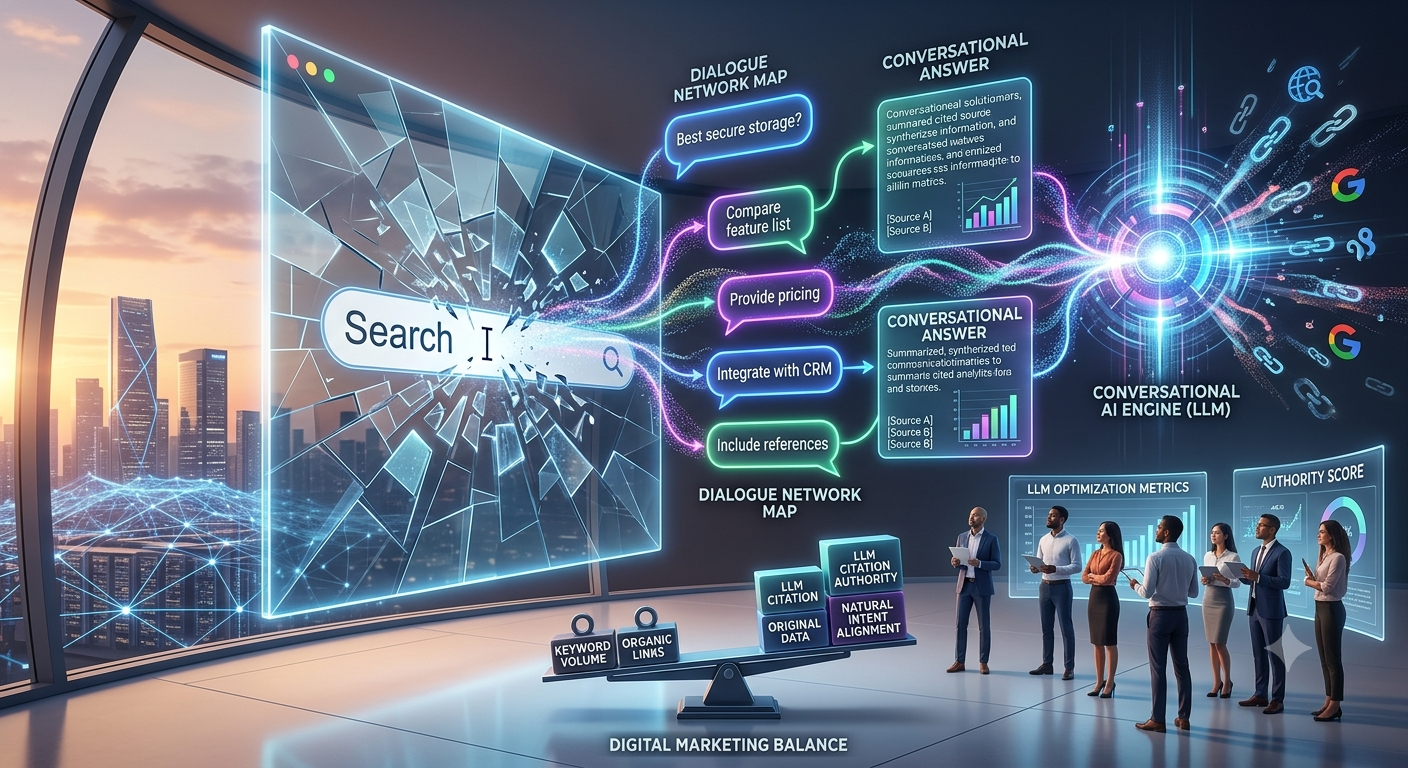
However, the rapid advancement of Artificial Intelligence is fundamentally transforming this experience. Instead of receiving a long list of websites to explore, users now expect immediate, accurate, and conversational answers to their questions. AI-powered search assistants can understand natural language, analyze information from multiple sources, and generate comprehensive responses within seconds. This shift marks one of the most significant changes in internet usage since the birth of modern search engines.
The transition from keyword-based searching to AI-driven answer generation is not simply changing how people access information—it is redefining digital marketing, search engine optimization (SEO), online publishing, and the overall relationship between businesses and their audiences. Organizations that understand this transformation early will be better positioned to remain visible and competitive in an increasingly AI-powered digital landscape.
The Evolution of Online Search
Traditional search engines were designed to match user queries with relevant webpages. People learned to simplify their questions into short keyword phrases such as "best project management software," "how to invest in stocks," or "top universities in Europe."
Search engines responded by ranking millions of webpages according to complex algorithms that considered factors such as content relevance, backlinks, page speed, user experience, and domain authority. Users were then responsible for opening multiple websites, comparing information, filtering advertisements, and deciding which source best answered their questions.
While this approach has served the internet well for decades, modern users increasingly prefer convenience. They want complete answers rather than a collection of links. The rise of conversational AI reflects this changing expectation by allowing users to ask detailed, natural-language questions and receive personalized, context-aware responses almost instantly.
From Blue Links to AI-Powered Conversations
Artificial intelligence is changing search from a navigation tool into an intelligent assistant.
Instead of simply pointing users toward information, AI systems gather content from multiple trusted sources, analyze context, identify the most relevant insights, and generate a direct response that addresses the user's intent.
For example, rather than searching for:
"Best laptops for graphic design 2026"
Users may now ask:
"I'm a freelance graphic designer with a budget of $1,500. Which laptop offers the best performance, battery life, and display quality for professional creative work?"
An AI assistant can understand every aspect of the question, compare multiple products, explain the advantages and disadvantages of each option, and provide a comprehensive recommendation without requiring users to visit dozens of different websites.
This conversational experience is changing how people interact with information and significantly reducing the number of clicks needed to reach an answer.
A New Era for Search Engine Optimization
The rise of AI-generated answers is transforming the role of traditional Search Engine Optimization (SEO).
For years, businesses focused on ranking at the top of search engine results pages because higher rankings generated more website visitors, leads, and sales. Digital marketers invested heavily in keyword optimization, backlink building, and technical SEO to improve visibility.
Today, visibility means much more than appearing on the first page of search results.
AI-powered search engines often summarize information directly within the search experience, reducing the need for users to click through to external websites. This means businesses must now compete not only for rankings but also for inclusion within AI-generated responses.
Being recognized as a trusted source by AI systems is becoming just as valuable as achieving high search rankings.
The Rise of Large Language Model Optimization (LLMO)
As AI search becomes more common, digital marketers are beginning to adopt a new strategy known as Large Language Model Optimization (LLMO).
Rather than focusing exclusively on keywords, LLMO emphasizes creating content that artificial intelligence systems can easily understand, evaluate, and reference.
Several key principles define this new approach.
Creating Original, High-Value Content
Artificial intelligence can easily summarize generic information already available across the internet.
To stand out, businesses must publish original research, proprietary data, industry reports, expert analysis, case studies, surveys, and practical experiences that cannot be replicated by AI alone.
Unique information increases the likelihood that AI systems will cite a website as a trusted source when generating responses.
Structuring Content for AI
Modern AI systems process information more effectively when websites use clear organization and structured data.
Businesses are increasingly adopting:
- Schema markup
- Well-defined headings
- Frequently Asked Questions (FAQs)
- Structured tables
- Knowledge graphs
- API-accessible content
- Semantic HTML
These elements improve machine readability, making it easier for AI systems to understand and reference website content accurately.
Optimizing for Natural Language
Keyword stuffing is becoming increasingly ineffective.
Instead, organizations should create content that answers complete questions using natural language similar to how people communicate with AI assistants.
Rather than targeting isolated keywords, successful content focuses on solving real-world problems, providing comprehensive explanations, and anticipating follow-up questions users are likely to ask.
Changing User Behavior
The growing popularity of conversational AI is influencing how people consume digital information.
Users increasingly expect:
- Faster answers
- Personalized recommendations
- Context-aware responses
- Multi-step problem solving
- Simplified research experiences
- Fewer advertisements
- Less time spent navigating websites
This shift is encouraging businesses to rethink how they engage online audiences.
Instead of optimizing solely for page views, organizations are placing greater emphasis on building trust, authority, and expertise that AI systems recognize and recommend.
Opportunities for Businesses
Although AI-powered search may reduce traditional website traffic, it also creates new opportunities for organizations that adapt effectively.
Higher Quality Visitors
People who click through from AI-generated responses often have stronger purchase intent because they have already received preliminary information before visiting the website.
These visitors are generally more informed, more engaged, and more likely to convert into customers.
Building Industry Authority
Businesses that consistently publish accurate, insightful, and well-researched content strengthen their reputation both with users and AI systems.
Over time, becoming a trusted information source can significantly increase long-term digital visibility.
Stronger Brand Recognition
Even when users do not immediately visit a website, repeated references to a company's expertise within AI-generated responses increase brand awareness and credibility.
Organizations that establish themselves as authoritative voices within their industries are more likely to remain visible across future AI platforms.
Challenges of the AI Search Era
Despite its many advantages, AI-powered search introduces several important challenges.
One major concern is declining organic traffic for publishers that depend heavily on advertising revenue. If users receive complete answers directly from AI systems, fewer people may visit original content creators.
There are also ongoing discussions regarding attribution, copyright, content licensing, and compensation for publishers whose work contributes to AI-generated responses.
Accuracy remains another challenge. Although modern language models are becoming increasingly reliable, they can occasionally generate outdated, incomplete, or inaccurate information. This highlights the continued importance of authoritative sources, human verification, and responsible AI development.
Businesses must also monitor how AI systems represent their products, services, and expertise to ensure that generated information remains accurate and up to date.
Preparing for the Future of Digital Discovery
As artificial intelligence becomes integrated into search experiences, organizations should begin adapting their digital strategies.
Successful businesses will increasingly focus on:
- Publishing original research and expert insights.
- Demonstrating real-world experience and industry authority.
- Creating comprehensive educational content.
- Improving website structure for AI readability.
- Maintaining accurate and regularly updated information.
- Building trust through transparency and factual accuracy.
- Developing content that answers complex user questions naturally.
These strategies position businesses to remain relevant regardless of how search technologies continue to evolve.
Conclusion
The internet is entering a new era where users no longer expect to search through countless webpages to find the information they need. Instead, they increasingly rely on intelligent AI systems capable of delivering immediate, contextual, and conversational answers.
This transformation is reshaping search engine optimization, digital publishing, and online marketing. Success is no longer determined solely by achieving the highest search ranking but by becoming a trusted source that artificial intelligence systems confidently reference and recommend.
Organizations that invest in authoritative content, structured information, and genuine expertise will be best positioned for the future. As digital discovery evolves beyond traditional search boxes, the brands that prioritize knowledge, credibility, and user value will continue to thrive in an AI-driven information ecosystem.